
Jacques Yves Cousteau Biography Quotes 29 Report mistakes
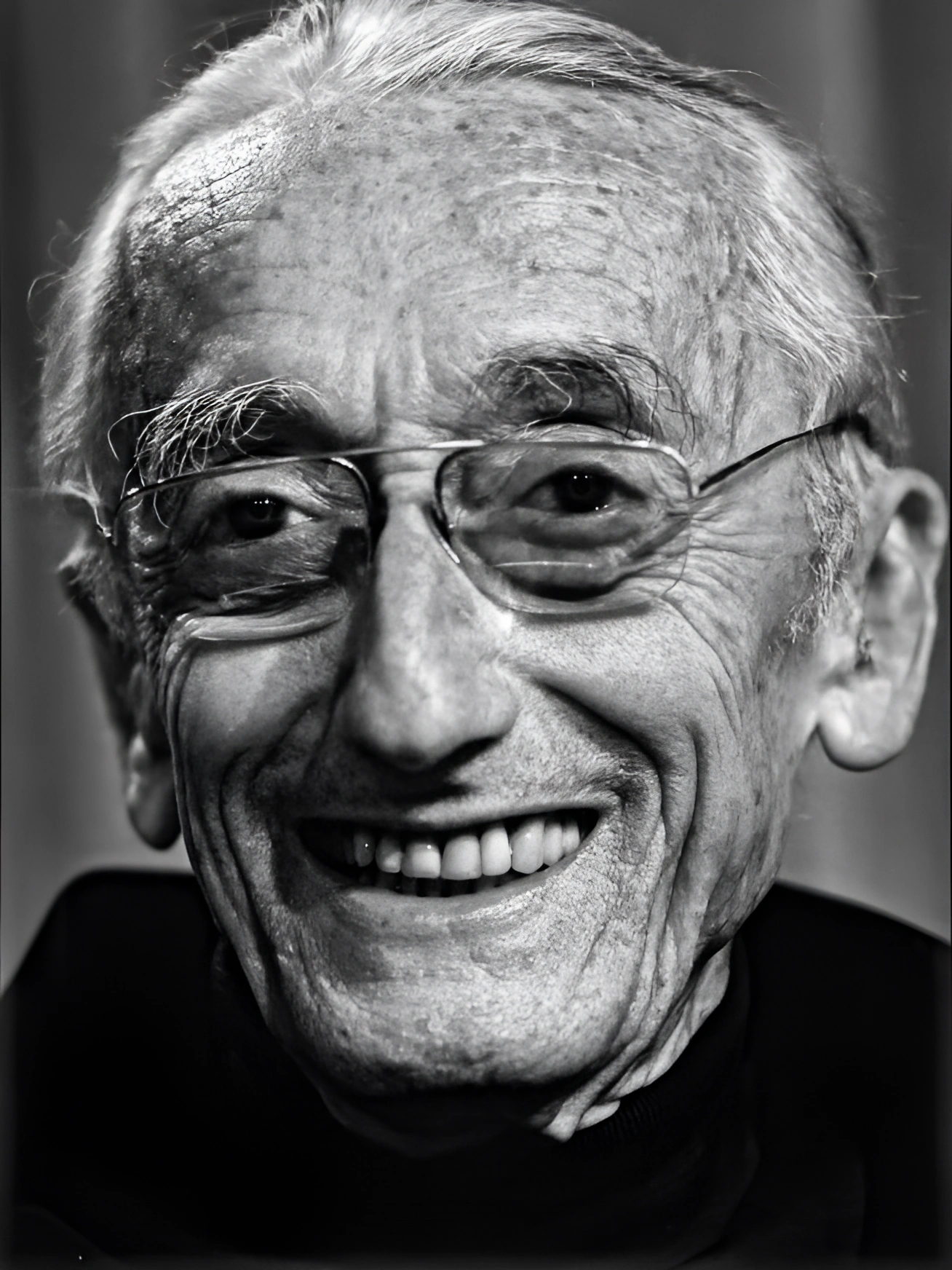
Attr: ArtPhotoLimited.com
| 29 Quotes | |
| Born as | Jacques-Yves Cousteau |
| Occup. | Explorer |
| From | France |
| Born | June 11, 1910 Saint-Andre-de-Cubzac, Gironde, France |
| Died | June 25, 1997 Paris, France |
| Aged | 87 years |
| Cite | |
Citation Formats
APA Style (7th ed.)
Jacques yves cousteau biography, facts and quotes. (2026, February 11). FixQuotes. https://fixquotes.com/authors/jacques-yves-cousteau/
Chicago Style
"Jacques Yves Cousteau biography, facts and quotes." FixQuotes. February 11, 2026. https://fixquotes.com/authors/jacques-yves-cousteau/.
MLA Style (9th ed.)
"Jacques Yves Cousteau biography, facts and quotes." FixQuotes, 11 Feb. 2026, https://fixquotes.com/authors/jacques-yves-cousteau/. Accessed 25 Mar. 2026.
Early Life and Background
Jacques-Yves Cousteau was born on June 11, 1910, in Saint-Andre-de-Cubzac, Gironde, France, into a mobile, outward-looking household shaped by the early 20th century's faith in machines and travel. His father, an international lawyer, moved the family repeatedly, and the boy absorbed a sense of the world as something to be crossed and mapped. Early mishaps - including a childhood accident that left him with lasting physical fragility - fostered a private stubbornness: he learned to treat limits as engineering problems.France between the wars offered both romance and rupture: aviation heroes, colonial sea lanes, and the trauma of mass death that made progress feel morally urgent. Cousteau grew into adulthood with a taste for speed and risk, drawn to the sea not as pastoral scenery but as a frontier where courage could be measured. That temperament - part romantic, part technician - would later let him translate underwater experience into a public narrative at a time when mass media was hungry for new worlds.
Education and Formative Influences
He entered the French Naval Academy (Ecole Navale) in the early 1930s and trained as a naval officer when France still understood power in maritime terms, from Mediterranean strategy to imperial routes. A near-fatal automobile accident redirected him: rehabilitation exercises in the water led to sustained swimming and, eventually, diving, turning convalescence into vocation. Posted to naval and intelligence-related duties during World War II, he cultivated disciplined observation and secrecy, but also a lifelong impatience with bureaucratic caution - traits that later defined his leadership at sea and his readiness to improvise equipment, crews, and missions.Career, Major Works, and Turning Points
In 1943 Cousteau, with engineer Emile Gagnan, co-invented the Aqua-Lung, a demand regulator that made open-circuit scuba practical and transformed diving from brief, surface-tethered labor into extended exploration. After the war he organized the French Navy's underwater research work, then shifted toward public expeditionary science: in 1950 he acquired the former minesweeper Calypso, refitting it into a floating laboratory whose name became synonymous with ocean discovery. His book The Silent World (1953) and the Palme d'Or-winning film adaptation (1956) helped define modern nature documentary; later television series such as The Undersea World of Jacques Cousteau (late 1960s-1970s) made marine ecology a household subject. Turning points included early participation in destructive collection practices - later renounced - and a steady pivot toward conservation advocacy, culminating in the Cousteau Society (1973) and campaigns against pollution and whaling.Philosophy, Style, and Themes
Cousteau's inner life was driven by an almost missionary curiosity - a need to enter the unknown with both a poet's awe and a mechanic's confidence. He framed science as an intensely human drama of attention and humility: “What is a scientist after all? It is a curious man looking through a keyhole, the keyhole of nature, trying to know what's going on”. The line reveals the psychological core of his work: the ocean is not conquered, it is glimpsed, and the glimpse obligates the witness to keep returning, refining tools and language so others can see too.His style fused spectacle with moral pressure, often emphasizing that wonder and warning were inseparable. “Water and air, the two essential fluids on which all life depends, have become global garbage cans”. The bluntness is strategic - he wanted audiences to feel implicated, not merely entertained - but it also hints at his disillusionment with modernity's casual waste, a disappointment sharpened by having watched pristine places change within a single career. Yet he insisted that affection precedes responsibility: “People protect what they love”. In Cousteau's storytelling, love is manufactured through proximity - the camera as a moral instrument - and the explorer as intermediary who converts private wonder into public stewardship.
Legacy and Influence
Cousteau died on June 25, 1997, in Paris, leaving a legacy that is simultaneously technological, cultural, and political: scuba as a mass practice, ocean documentary as a dominant genre, and marine conservation as a mainstream cause. He popularized the idea that the sea is a system tied to human survival, and he helped institutionalize marine research through ships, teams, and foundations that outlived him. Critiques of anthropomorphism, staged scenes, or early ecological harm have not erased his central achievement: he made the underwater world emotionally legible to millions, and he taught that exploration without ethics becomes extraction - a lesson as relevant in the era of deep-sea mining and climate change as it was in the age of Calypso.Our collection contains 29 quotes written by Jacques, under the main topics: Witty One-Liners - Motivational - Ethics & Morality - Wisdom - Justice.
Jacques Yves Cousteau Famous Works
- 1977 The Cousteau Odyssey (Non-fiction)
- 1968 The Undersea World of Jacques Cousteau (Non-fiction)
- 1964 World Without Sun (film) (Screenplay)
- 1956 The Silent World (film) (Screenplay)
- 1953 The Silent World (Book)