
Jaha Dukureh Biography Quotes 10 Report mistakes
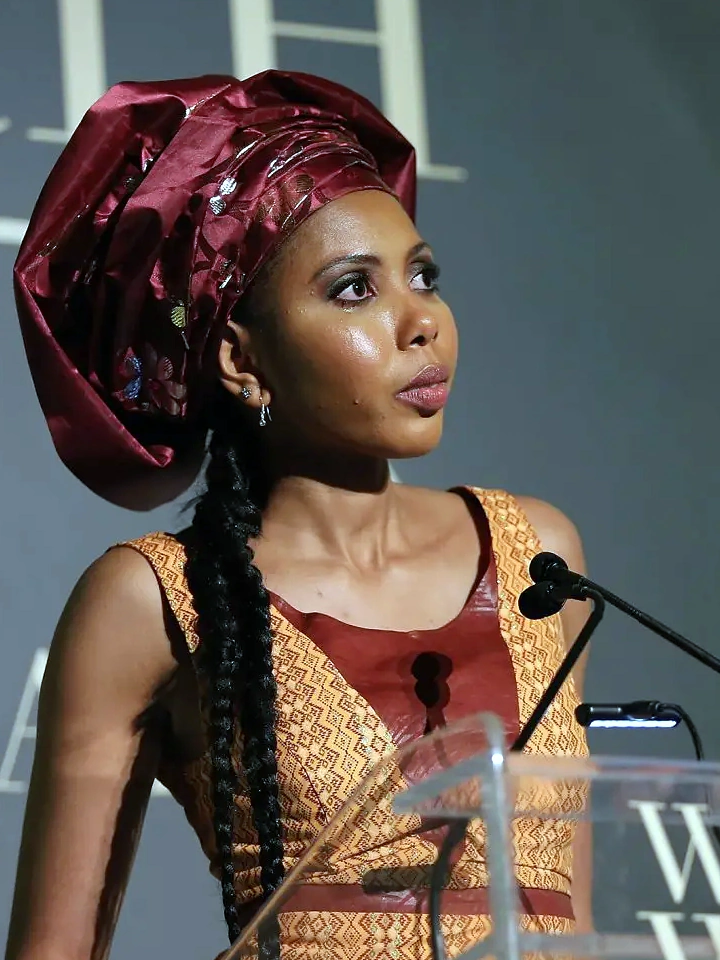
| 10 Quotes | |
| Occup. | Activist |
| From | Gambia |
| Born | 1989 The Gambia |
| Cite | |
Citation Formats
APA Style (7th ed.)
Jaha dukureh biography, facts and quotes. (2026, February 17). FixQuotes. https://fixquotes.com/authors/jaha-dukureh/
Chicago Style
"Jaha Dukureh biography, facts and quotes." FixQuotes. February 17, 2026. https://fixquotes.com/authors/jaha-dukureh/.
MLA Style (9th ed.)
"Jaha Dukureh biography, facts and quotes." FixQuotes, 17 Feb. 2026, https://fixquotes.com/authors/jaha-dukureh/. Accessed 30 Mar. 2026.
Early Life and Background
Jaha Dukureh (born circa 1989) is a Gambian womens rights activist and survivor-advocate whose public life has been shaped by the collision of intimate trauma and transnational migration. Though she is sometimes mistakenly described as Beninese in online summaries, she is widely documented as born and raised in The Gambia, from the Serahule community, and grounded in a Muslim upbringing that she has consistently framed as compatible with womens dignity and bodily autonomy. Her early years unfolded in a region where tradition, extended-family authority, and the pressures of respectability could override a girls consent, leaving limited space to name harm, let alone challenge it.As a child she underwent female genital mutilation (FGM), an experience that later became central to her advocacy as both a source of pain and a lens on how communities normalize violence through silence. In her teens she was subjected to an early, forced marriage and moved to the United States, where distance from home did not lessen the psychological weight of what had happened, but did give her new language, institutions, and allies with which to resist. The dislocation of migration - learning to survive between cultures while carrying an unspoken past - became a turning point: the private ordeal could either calcify into shame or be transformed into public work.
Education and Formative Influences
In the United States, Dukureh built her education through lived experience as much as through classrooms, learning the mechanics of advocacy, media, and policy while navigating the everyday realities of a young immigrant woman rebuilding her life. Exposure to survivor-centered organizing, reproductive health discourse, and the growing global movement against gender-based violence helped her translate personal memory into civic argument. Her formative influences included other African diaspora activists, frontline service providers, and the hard, practical lessons of speaking publicly about taboo practices while still loving the communities where those practices persisted.Career, Major Works, and Turning Points
Dukurehs career crystallized when she chose visibility over safety, speaking out against FGM and child marriage and encouraging other survivors to do the same, a strategy that helped shift the issue from whispered suffering to public accountability. She became closely associated with the campaign to end FGM in The Gambia, working with community leaders, diaspora networks, and international partners while insisting that change must be anchored locally rather than imposed. Her leadership in survivor-led organizing, her collaborations with global institutions, and her high-profile advocacy - including work with UN Women as a regional ambassador - positioned her as a bridge figure: someone able to address both village-level norms and international policy audiences, and to argue that protecting girls is not a Western import but a human obligation.Philosophy, Style, and Themes
Dukurehs philosophy begins with the insistence that rights are not gifts granted by tradition, religion, or the state, but intrinsic claims that must be defended even when doing so provokes backlash. Her public language is deliberately moral and non-negotiable, less a plea for sympathy than a demand for structural change: “Dignity is not negotiable. Equality is not optional. And freedom for all women and girls is not a dream. It is a demand, and we will not stop until it is met”. Psychologically, this tone functions as self-protection and strategy at once - a way to replace the helplessness of childhood with a framework of agency, and a way to deny opponents the comfort of portraying the issue as cultural preference rather than coercion.At the same time, her work is shaped by a survivors pragmatism: she emphasizes economic and educational pathways as the real-world infrastructure of choice, not merely inspirational slogans. “A woman who can provide for herself can make choices. A girl who has an education can build her own future”. That focus reveals an inner life attentive to the fine print of freedom - how dependence traps, how schooling expands imagination, how a paycheck can be a protective device. Yet she is candid about the emotional cost of breaking taboos and confronting ones own community: “It was the hardest thing that I’ve ever done and it’s still the hardest thing I will continue to do”. Her style, therefore, blends confrontation with belonging: she speaks as an insider, refuses to demonize faith, and still names practices that harm girls as incompatible with justice.
Legacy and Influence
Dukurehs enduring influence lies in helping reframe FGM and child marriage from private rites into public human-rights violations while modeling survivor leadership as an ethical standard. She has inspired a generation of advocates in The Gambia and the diaspora to treat testimony as a form of evidence and courage as a civic tool, even when success intensifies threats. By insisting on community-rooted change, amplifying the role of women and youth, and linking bodily autonomy to education and economic power, she has contributed to a broader African feminist arc in which reform is argued not against culture, but for the futures of girls who deserve to grow up unafraid.Our collection contains 10 quotes written by Jaha, under the main topics: Leadership - Learning - Resilience - Kindness - Equality.
Source / external links