
Jahangir Khan Biography Quotes 16 Report mistakes
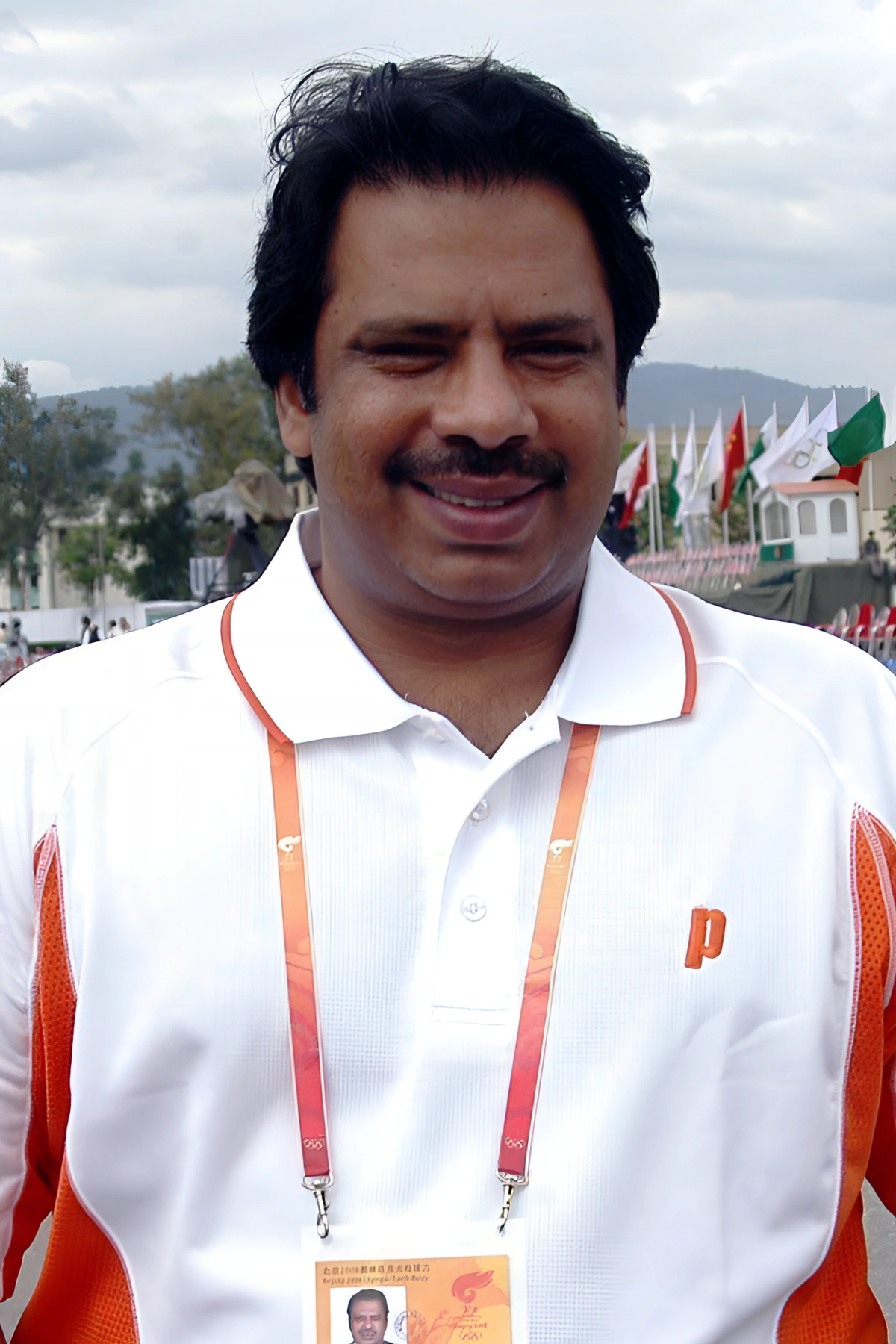
Attr: Alchetron
| 16 Quotes | |
| Occup. | Athlete |
| From | Pakistan |
| Born | December 10, 1963 Karachi, Sindh, Pakistan |
| Age | 62 years |
| Cite | |
Citation Formats
APA Style (7th ed.)
Jahangir khan biography, facts and quotes. (2026, February 11). FixQuotes. https://fixquotes.com/authors/jahangir-khan/
Chicago Style
"Jahangir Khan biography, facts and quotes." FixQuotes. February 11, 2026. https://fixquotes.com/authors/jahangir-khan/.
MLA Style (9th ed.)
"Jahangir Khan biography, facts and quotes." FixQuotes, 11 Feb. 2026, https://fixquotes.com/authors/jahangir-khan/. Accessed 5 Mar. 2026.
Early Life and Background
Jahangir Khan was born on December 10, 1963, in Karachi, Pakistan, into a Pashtun family whose name already carried weight in squash. His father, Roshan Khan, had been a British Open champion, and the sport ran through the household like a second language - not merely a pastime but a vocation, a reputation to protect, and a path out of ordinary limits. In Pakistan of the 1960s and 1970s, sport could still function as soft power; squash in particular had become a national signature, and a gifted boy in Karachi could feel both the lift and the pressure of a tradition that expected greatness.His childhood was shaped by the discipline of courts and corridors rather than the looseness of street play. Khan grew up watching the rituals of training, learning early that talent was only the beginning of an argument with the future. He absorbed a culture where the family name mattered, where elders measured character by consistency, and where the idea of quitting carried social cost. Those forces built an inner life that mixed devotion with severity: the hunger to win, and the fear of letting down a lineage that had already made history.
Education and Formative Influences
Formal schooling never defined him as much as apprenticeship did. Karachi clubs and Pakistan's competitive circuit became his classroom, with older professionals and hard matches serving as teachers. He entered senior-level competition remarkably young and quickly encountered the globalizing landscape of squash, where Pakistani dominance met rising challengers from Australia, England, and New Zealand. The sport was evolving into a more athletic, punishing game; that shift rewarded the kind of relentless conditioning and mental control that would become his trademarks.Career, Major Works, and Turning Points
Khan turned professional as a teenager and soon transformed the sport's center of gravity. He won the World Open multiple times (notably in the 1980s and early 1990s) and captured the British Open repeatedly, a period when those titles were effectively the sport's highest proof. His defining feat was an unprecedented unbeaten run - widely recorded at 555 consecutive matches - that stretched across years and continents, turning routine tour stops into episodes of a single extended test. The streak ended in 1986 in Toulouse, France, when New Zealander Ross Norman played with icy patience to break the spell, a defeat that became less an embarrassment than a historical marker: the moment the impossible returned to the human. Khan continued winning major championships afterward, but retirement in the early 1990s closed the era in which one athlete's will could seem to govern an entire sport.Philosophy, Style, and Themes
Khan's philosophy was built on a businesslike understanding of survival at the top. He framed dominance not as romance but as responsibility, explaining, “Squash was my livelihood and as in business, I had to stay on top”. That line reveals his psychology: a man who treated excellence as employment, where complacency meant bankruptcy. His training became a form of moral accounting - hours logged, pain accepted, distractions refused - because he believed superiority had to be earned again each day. The same practical severity shows in his blunt creed, “Without hard work and discipline it is difficult to be a top professional”. He did not sell the myth of effortless genius; he advertised labor as the only reliable currency.On court, his style married relentless retrieval with suffocating accuracy, turning rallies into slow constrictions that broke opponents' timing and pride. The unbeaten streak, often reduced to a statistic, also exposes his inner engine: “It wasn't my plan to create such a record. All I did was put in the effort to win every match I played and it went on for weeks, months and years until my defeat to Ross Norman in Toulouse in 1986”. The key phrase is "every match" - a mindset that refused to rank events by prestige and instead demanded total attention, a psychological habit that can feel like freedom to the disciplined and like captivity to everyone else. His themes, across interviews and later mentoring, returned to control: control of diet, sleep, temper, and fear; control of the court's geometry; control of the narrative that pressure tries to write for a champion.
Legacy and Influence
Jahangir Khan remains a defining benchmark for greatness in squash, his streak and major titles still used as the sport's measuring stick for dominance and mental endurance. He helped set modern expectations for fitness, professionalism, and tactical patience, influencing training methods far beyond Pakistan. After his competitive peak, he became a public advocate for infrastructure and talent development, pushing for academies and for squash's broader recognition on the world stage. In Pakistan, he stands as both proof and challenge - proof of what national systems and family traditions once produced, and a challenge to rebuild pathways so that the next generation can compete in a sport he once made seem inevitable.Our collection contains 16 quotes written by Jahangir, under the main topics: Never Give Up - Victory - Sports - Work Ethic - Training & Practice.
Frequently Asked Questions
- Jahangir Khan record: Unbeaten in 555 consecutive matches; youngest World Open champion; 10 British Open titles.
- Jahangir Khan stats: 6 World Opens, 10 British Opens, 555-match unbeaten run (1981–86); World No. 1 through much of the 1980s.
- Jahangir Khan Wife: Spouse: Rubina (m. 2000).
- Jahangir Khan Actor: Not an actor; he is a Pakistani squash legend.
- Jahangir Khan cricketer: Different person: Jahangir Khan (1910–1988) was an Indian Test cricketer; not the squash legend.
- How old is Jahangir Khan? He is 62 years old
Source / external links