
James A. Garfield Biography Quotes 31 Report mistakes
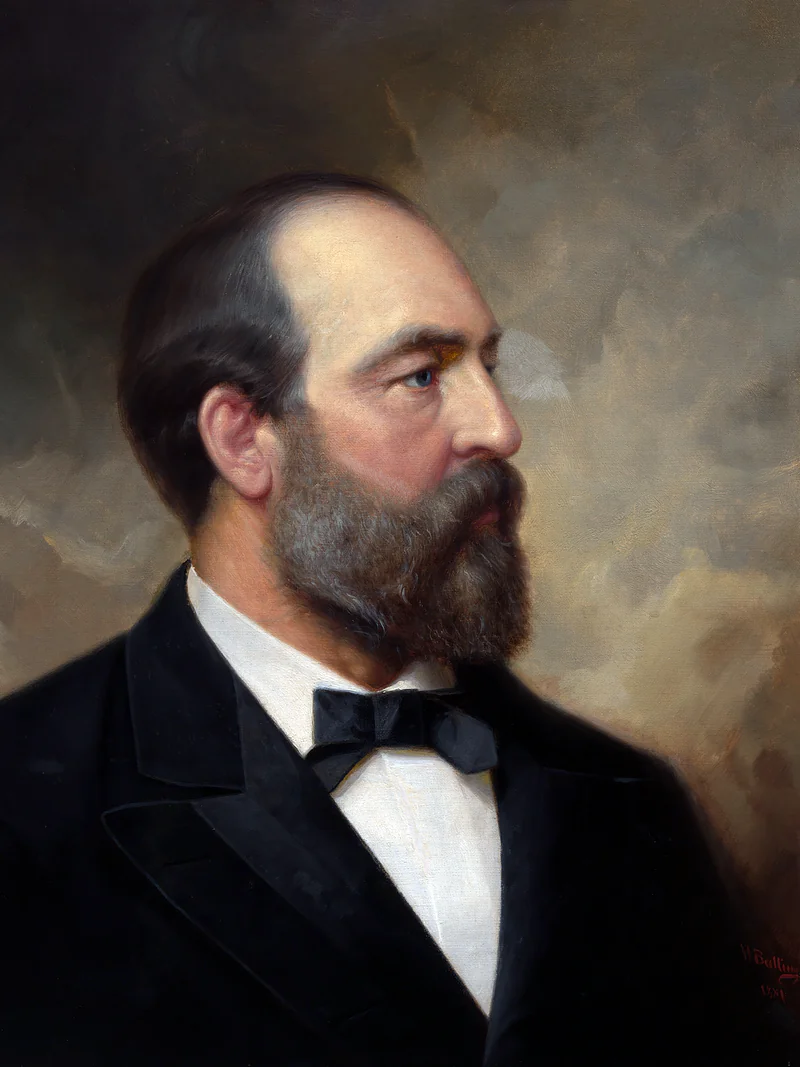
| 31 Quotes | |
| Born as | James Abram Garfield |
| Known as | James Garfield |
| Occup. | President |
| From | USA |
| Born | November 19, 1831 Orange, Ohio, United States |
| Died | September 19, 1881 Elberon (Long Branch), New Jersey, United States |
| Cause | Assassination (gunshot wounds leading to infection) |
| Aged | 49 years |
| Cite | |
Citation Formats
APA Style (7th ed.)
James a. garfield biography, facts and quotes. (2026, February 11). FixQuotes. https://fixquotes.com/authors/james-a-garfield/
Chicago Style
"James A. Garfield biography, facts and quotes." FixQuotes. February 11, 2026. https://fixquotes.com/authors/james-a-garfield/.
MLA Style (9th ed.)
"James A. Garfield biography, facts and quotes." FixQuotes, 11 Feb. 2026, https://fixquotes.com/authors/james-a-garfield/. Accessed 4 Mar. 2026.
Early Life and Background
James Abram Garfield was born on November 19, 1831, in a log cabin in Orange Township, Cuyahoga County, Ohio (later part of Lakewood), the youngest child of Abram Garfield and Eliza Ballou Garfield. His father died when James was an infant, leaving Eliza to hold the family together on marginal farm income and relentless labor. The emotional architecture of Garfield's life began there: a hunger for stability, an early intimacy with hardship, and a fierce conviction that character could be built, not inherited.As a boy he worked fields, split rails, and took jobs that pulled him toward the wider world, including a stint on the Ohio and Erie Canal where he learned quickly how fragile ambition could be amid drink, danger, and drifting men. Religion and community in the Western Reserve - steeped in New England moral seriousness - shaped him into a young man who treated self-control as both virtue and strategy. He was never merely "from poverty"; he was from the psychological pressure of poverty, the sense that one lapse could undo years of effort.
Education and Formative Influences
Garfield clawed his way into learning through the Geauga Seminary in Chester, then the Western Reserve Eclectic Institute at Hiram (later Hiram College), where he studied and taught, and finally Williams College in Massachusetts, graduating in 1856. At Williams he encountered the disciplined classical curriculum and the ideal of public service as a moral calling; the experience translated his raw intelligence into a professional mind. His formation blended evangelical seriousness, a teacher's feel for audiences, and a reader's appetite for history and political economy - habits that would make him unusually articulate for a 19th-century politician and unusually restless for a 19th-century partisan.Career, Major Works, and Turning Points
Garfield returned to Hiram as a teacher and then president of the Institute, entered Ohio politics as a state senator in 1859, and was pulled into the Civil War as a Union officer, rising to major general after actions that included the campaign in eastern Kentucky and service at Shiloh and Chickamauga. Elected to Congress in 1862, he became a central Republican figure for nearly two decades, arguing for Union war aims, emancipation, and later for a hard-money, credit-conscious national policy. The turning point came in 1880: a compromise candidate at the Republican convention after a deadlock, he won the presidency and entered office in March 1881 determined to curb the spoils system and assert presidential authority over party machines. His term was cut short when Charles J. Guiteau shot him on July 2, 1881; after a long, agonizing decline worsened by medical mismanagement, Garfield died on September 19, 1881.Philosophy, Style, and Themes
Garfield's inner life was organized around self-making: a belief that disciplined effort could convert deprivation into moral authority. He wrote constantly - letters, diaries, speeches - as if to keep his own impulses under review. This habit produced a public style that sounded less like courthouse bluster and more like a classroom in session: careful definitions, historical analogies, and a preference for argument over intimidation. The teacher in him never vanished, and his politics often carried the texture of instruction rather than mere persuasion.Yet he was not naive about suffering or power. “The truth will set you free, but first it will make you miserable”. That sentence fits the Garfield who endured war, party intrigue, and the slow corrosion of idealism without surrendering the need to look directly at painful facts. Likewise, “Right reason is stronger than force”. This was more than piety: it was a governing faith in constitutional process, in debate, and in the ability of institutions to civilize conflict after the trauma of slavery and civil war. Even his optimism had the structure of a coping mechanism: “I have had many troubles in my life, but the worst of them never came”. It reads as a self-administered discipline, a way to keep dread from mastering a mind that had seen both battlefields and backroom bargaining.
Legacy and Influence
Garfield's presidency is remembered less for enacted policy than for the moral direction it pointed: a federal government that could resist patronage absolutism and treat competence as a democratic value. His assassination helped catalyze civil service reform, culminating in the Pendleton Civil Service Reform Act of 1883 under Chester A. Arthur, a reform that aligned with Garfield's insistence that public office should not be mere partisan loot. In the longer view, Garfield endures as a rare synthesis in American political biography - a canal boy turned classics-trained educator, a general who preferred reasoned governance to martial posturing, and a president whose curtailed life intensified the sense of unfinished work in the Gilded Age.Our collection contains 31 quotes written by James, under the main topics: Witty One-Liners - Motivational - Wisdom - Truth - Justice.
Other people related to James: John Philip Sousa (Musician), Winfield Scott Hancock (Soldier), Sarah Vowell (Author), William H. Hunt (Soldier)