
James Anthony Froude Biography Quotes 22 Report mistakes
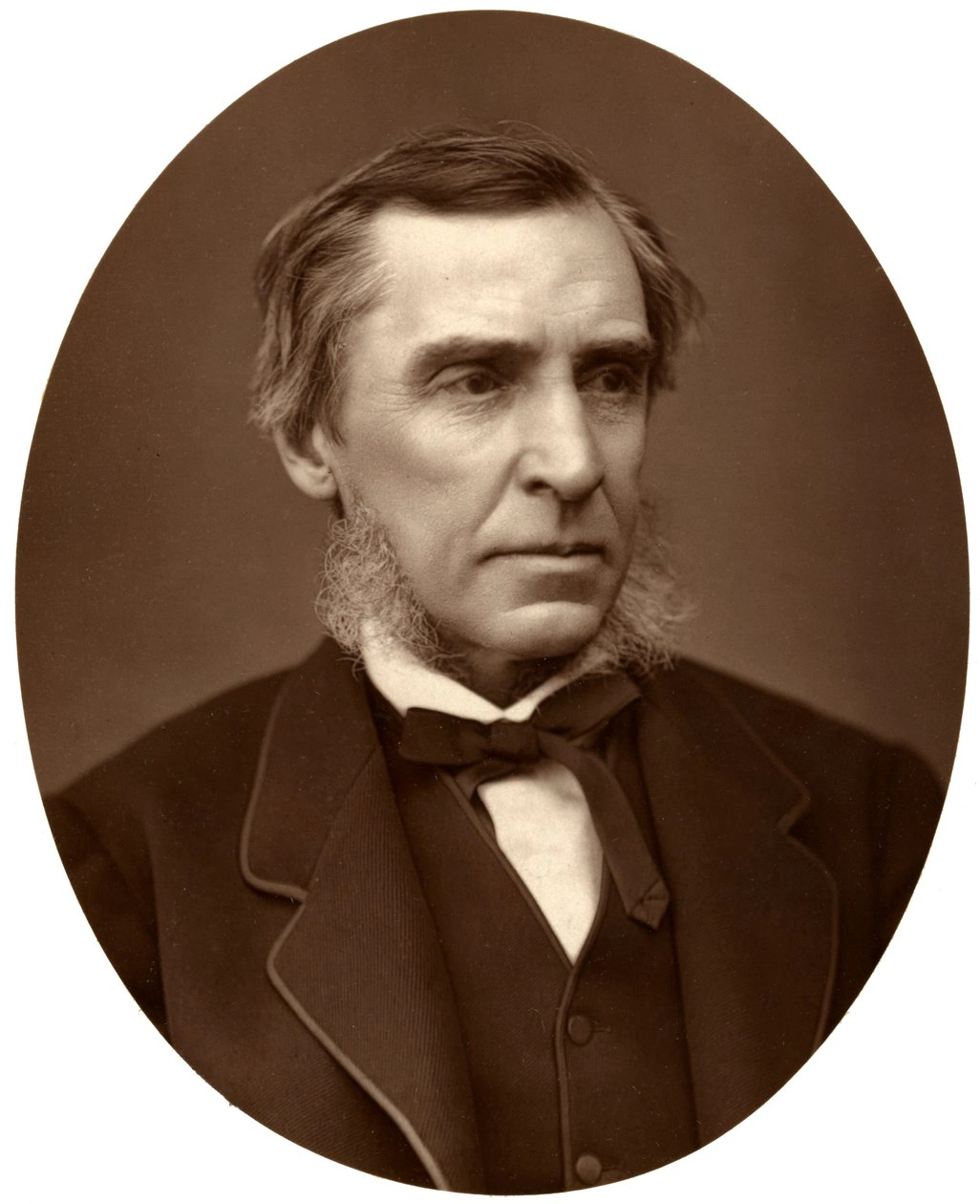
Attr: British historian
| 22 Quotes | |
| Occup. | Historian |
| From | England |
| Born | April 23, 1818 Dartington, Devon, England |
| Died | October 20, 1894 Salcombe, Devon, England |
| Aged | 76 years |
| Cite | |
Citation Formats
APA Style (7th ed.)
James anthony froude biography, facts and quotes. (2026, February 11). FixQuotes. https://fixquotes.com/authors/james-anthony-froude/
Chicago Style
"James Anthony Froude biography, facts and quotes." FixQuotes. February 11, 2026. https://fixquotes.com/authors/james-anthony-froude/.
MLA Style (9th ed.)
"James Anthony Froude biography, facts and quotes." FixQuotes, 11 Feb. 2026, https://fixquotes.com/authors/james-anthony-froude/. Accessed 27 Mar. 2026.
Early Life and Background
James Anthony Froude was born on 23 April 1818 at Dartington in Devon, into the rectory world of the Church of England and the anxious afterglow of the Napoleonic era. His father, Robert Hurrell Froude, was archdeacon of Totnes; his household was clerical, bookish, and morally braced, but also marked by grief and intensity. The early death of his mother and the strong presence of older siblings shaped him toward inwardness rather than ease. His brother Richard Hurrell Froude, brilliant and severe, became one of the sparks of the Oxford Movement before dying young in 1836, leaving behind a legacy that would haunt and provoke James.Devon also gave him a geography of cliffs, sea routes, and insular loyalties that later colored his sense of England as a maritime power and a providential story. Yet the young Froude absorbed, early, a second landscape: that of spiritual pressure. In a clerical family that valued conviction, he learned how belief can discipline the emotions - and how dissent can isolate a person within his own home. That tension between obedience and personal honesty would become the emotional engine of his later writing.
Education and Formative Influences
Froude was educated at Westminster School and then at Oriel College, Oxford, arriving as Tractarianism rose under John Henry Newman, Edward Bouverie Pusey, and - in his own family - his brother Hurrell. Ordained deacon in 1845, he tried briefly to live inside the Church's intellectual authority, but doubts about doctrine and a growing moral realism pushed him away. His break, painful and public, culminated in The Nemesis of Faith (1849), a novel of religious crisis that was condemned and burned by Oxford authorities; he resigned his fellowship at Exeter College soon after. Oxford gave him not only a training in classical argument and English prose, but also a lifelong theme: the cost of truthfulness when institutions demand unanimity.Career, Major Works, and Turning Points
After the Oxford rupture, Froude recast himself as a historian and polemicist in Victorian London, closely associated with Thomas Carlyle, whose heroic view of history sharpened Froude's sense of character as destiny. His defining work, History of England from the Fall of Wolsey to the Defeat of the Spanish Armada (1856-1870), made the Tudor state - especially Henry VIII and Elizabeth I - a stage for questions about conscience, authority, and national survival. Later he wrote The English in Ireland in the Eighteenth Century (1872-1874), a fiercely contested interpretation of Anglo-Irish relations; travelled and published travel-political books on the Cape and Australia; and after Carlyle's death became both his literary executor and biographer, producing the monumental Life of Carlyle (1882-1884) and editing Reminiscences. In 1892 he succeeded Edward Augustus Freeman as Regius Professor of Modern History at Oxford, a late reconciliation with the university that had once exiled him, though controversy never left his wake.Philosophy, Style, and Themes
Froude wrote history as moral drama - a Victorian craft in which narrative force and ethical judgment were not ornaments but instruments of interpretation. His prose is quick, unabstract, and atmospheric: scenes move, motives are weighed, and events feel decided by human choices under pressure. He distrusted systems that excused cruelty as necessity or reduced conscience to circumstance; his best pages argue that political order collapses when inner discipline fails. That is why his histories return obsessively to apostasy, loyalty, and the uses of power - not as categories, but as lived tests that either harden or refine a person.Psychologically, the ex-clergyman in him never vanished. He is drawn to solitude, to responsibility, and to the idea that a life is finally accountable not to applause but to moral law. “We enter the world alone, we leave the world alone”. The line reads less like resignation than a historian's reminder that crowds cannot carry an individual's ethical burden. Likewise, his belief in will and judgment underwrites his impatience with soft determinisms: “To deny the freedom of the will is to make morality impossible”. He could be severe, even combative, because he feared the moral evasions that breed violence; when he warns that “Fear is the parent of cruelty”. , he is diagnosing both persecutors in his Tudor chapters and the modern conscience that rationalizes coercion in the name of security.
Legacy and Influence
Froude's standing has always been double-edged: admired for narrative power and condemned for partisan argument, selective evidence, and the political uses of history. Yet his influence is durable in the English-language tradition that treats history as literature with teeth - a craft of scenes, judgments, and character rather than footnote-driven reconstruction alone. His Tudor volumes helped fix popular images of the Reformation state; his writings on Ireland helped harden certain Victorian attitudes while provoking sustained rebuttal; and his Carlyle biography, scandalous for its candor, helped inaugurate modern expectations that a biographer must reveal the private costs behind public greatness. He remains, at his best, a case study in how intellectual honesty can free a writer - and how that freedom can also sharpen every controversy around him.Our collection contains 22 quotes written by James, under the main topics: Ethics & Morality - Truth - Wisdom - Justice - Mortality.
Source / external links