
James Baldwin Biography Quotes 15 Report mistakes
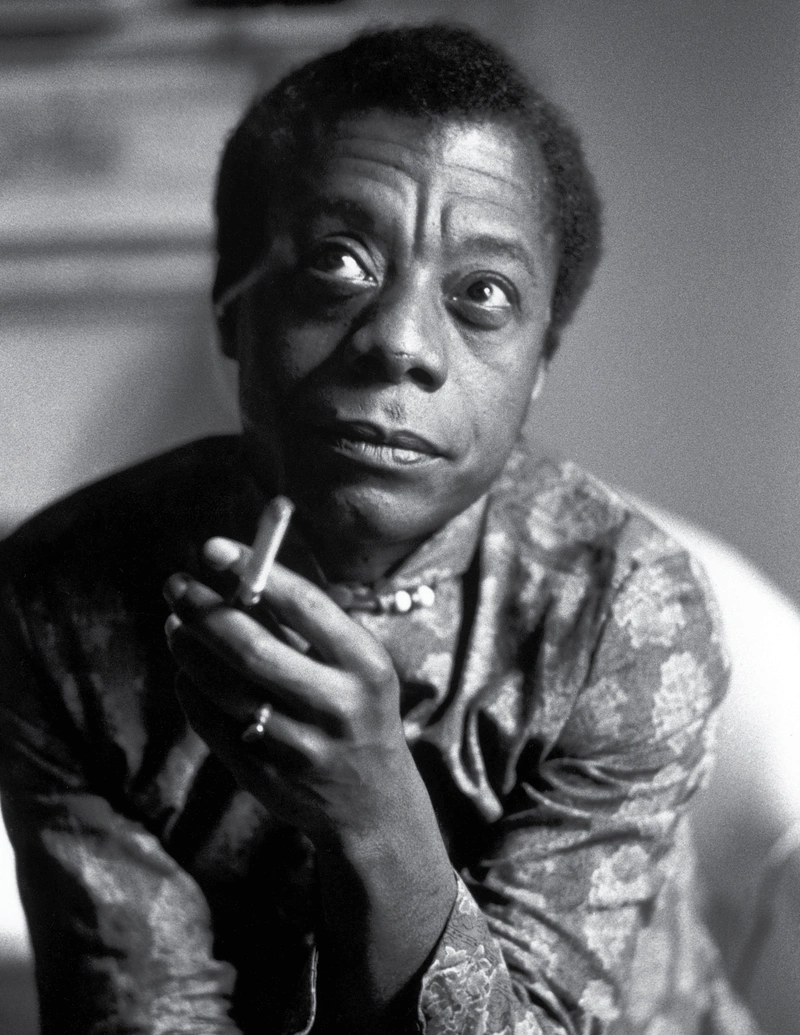
| 15 Quotes | |
| Occup. | Educator |
| From | USA |
| Born | 1841 |
| Died | 1925 |
| Cite | |
Citation Formats
APA Style (7th ed.)
James baldwin biography, facts and quotes. (2026, February 11). FixQuotes. https://fixquotes.com/authors/james-baldwin/
Chicago Style
"James Baldwin biography, facts and quotes." FixQuotes. February 11, 2026. https://fixquotes.com/authors/james-baldwin/.
MLA Style (9th ed.)
"James Baldwin biography, facts and quotes." FixQuotes, 11 Feb. 2026, https://fixquotes.com/authors/james-baldwin/. Accessed 12 Feb. 2026.
Early Life and Background
James Baldwin was born on August 2, 1924, in Harlem, New York City, and died on December 1, 1987, in Saint-Paul-de-Vence, France. He was an essayist, novelist, and public intellectual whose most enduring work treated the moral and psychological costs of American racism. Although he spent long stretches abroad, he remained a distinctly American educator in the broad sense - a teacher of the national conscience - shaping how readers, students, clergy, and activists understood power, intimacy, and the stories a country tells itself.Baldwin grew up in the aftershock of the Great Migration, amid Harlem's storefront churches, overcrowded apartments, and the daily humiliations of segregated opportunity. He was raised largely by his mother, Emma Berdis Jones, and his stepfather, David Baldwin, a strict Pentecostal preacher whose religious authority coexisted with poverty, rage, and fear. That domestic climate - love braided with coercion - seeded Baldwin's lifelong suspicion of moral certainty and his fascination with the ways people protect themselves by hardening into roles.
Education and Formative Influences
Baldwin attended Frederick Douglass Junior High and DeWitt Clinton High School in the Bronx, where he worked on the school magazine with the future photographer Richard Avedon and absorbed the discipline of sentence-making as a form of self-rescue. He read voraciously - Dickens, Dostoevsky, and the Bible, along with Black writers and the Harlem literary inheritance - while also learning the city's unspoken curriculum: which neighborhoods to avoid, which jobs were closed, and how quickly a body could be recast as a threat. His early years as a teenage preacher sharpened his ear for cadence and confession, but he left the pulpit when he felt religion could become another theater of control rather than liberation.Career, Major Works, and Turning Points
In the 1940s Baldwin wrote criticism and essays in New York while struggling to survive precarious work; in 1948 he left for Paris, seeking distance from what he called the "racial nightmare" and space to write. The breakthrough was Go Tell It on the Mountain (1953), a semi-autobiographical novel that turned family and church into a crucible of American history. Notes of a Native Son (1955) established his authority as an essayist able to marry lyricism to indictment, and Giovanni's Room (1956) expanded his moral range by treating desire and shame without sociological alibis. Returning repeatedly to the United States during the civil rights era, he became a public educator through speeches, debates, and television appearances, culminating in The Fire Next Time (1963), a compact, prophetic argument that made his private voice a national instrument. Later works - Another Country (1962), No Name in the Street (1972), and Just Above My Head (1979) - tracked the costs of political disillusionment, state violence, and the intimate betrayals that movements can conceal.Philosophy, Style, and Themes
Baldwin's central subject was not race as a statistic but race as an interior weather system - a set of pressures that shapes perception, desire, fear, and the stories people accept as "real". He insisted that identity is made through treatment and narration, and he articulated the mechanism with chilling clarity: "If you're treated a certain way you become a certain kind of person. If certain things are described to you as being real they're real for you whether they're real or not". That insight fueled his pedagogy: the work of emancipation begins with unlearning, and unlearning requires emotional courage as much as political analysis. Baldwin wrote to expose how innocence becomes a weapon - how those who benefit from racial order often defend it by refusing to know what it costs others.His prose fused sermonic rhythm, novelistic scene, and philosophical argument, moving by accumulation and moral pressure rather than by slogan. For Baldwin, education was never neutral; it either trained compliance or awakened scrutiny, and he named the pivot point: "The paradox of education is precisely this; that as one begins to become conscious one begins to examine the society in which he is being educated". Because consciousness threatens established hierarchies, his writing kept returning to power's spiritual deficit and to the self-deceptions that make domination seem natural. He warned that authority untethered from ethical restraint corrodes itself: "But the relationship of morality and power is a very subtle one. Because ultimately power without morality is no longer power". In Baldwin's work, the true drama is inward - whether a person can bear the truth about what they have done, what they have feared, and what they have refused to love.
Legacy and Influence
Baldwin endures as one of the United States' most piercing civic teachers, shaping literature, theology, queer writing, and antiracist thought while refusing the comfort of easy absolution. His influence runs through later essayists and novelists who treat identity as lived experience rather than abstraction, and through educators who use his work to teach close reading alongside moral reckoning. In an era still marked by contested histories and manufactured realities, Baldwin remains a model of intellectual courage: a writer who treated language as a tool of liberation, and who insisted that the nation's unfinished task is not merely legal reform but the education of the heart.Our collection contains 15 quotes written by James, under the main topics: Ethics & Morality - Truth - Art - Justice - Writing.
Other people related to James: William F. Buckley, Jr. (Journalist), Dick Cavett (Entertainer), Countee Cullen (Poet), William Styron (Novelist), Lorraine Hansberry (Playwright), Carl Van Vechten (Writer), James Hal Cone (Theologian)