
James Beard Biography Quotes 5 Report mistakes
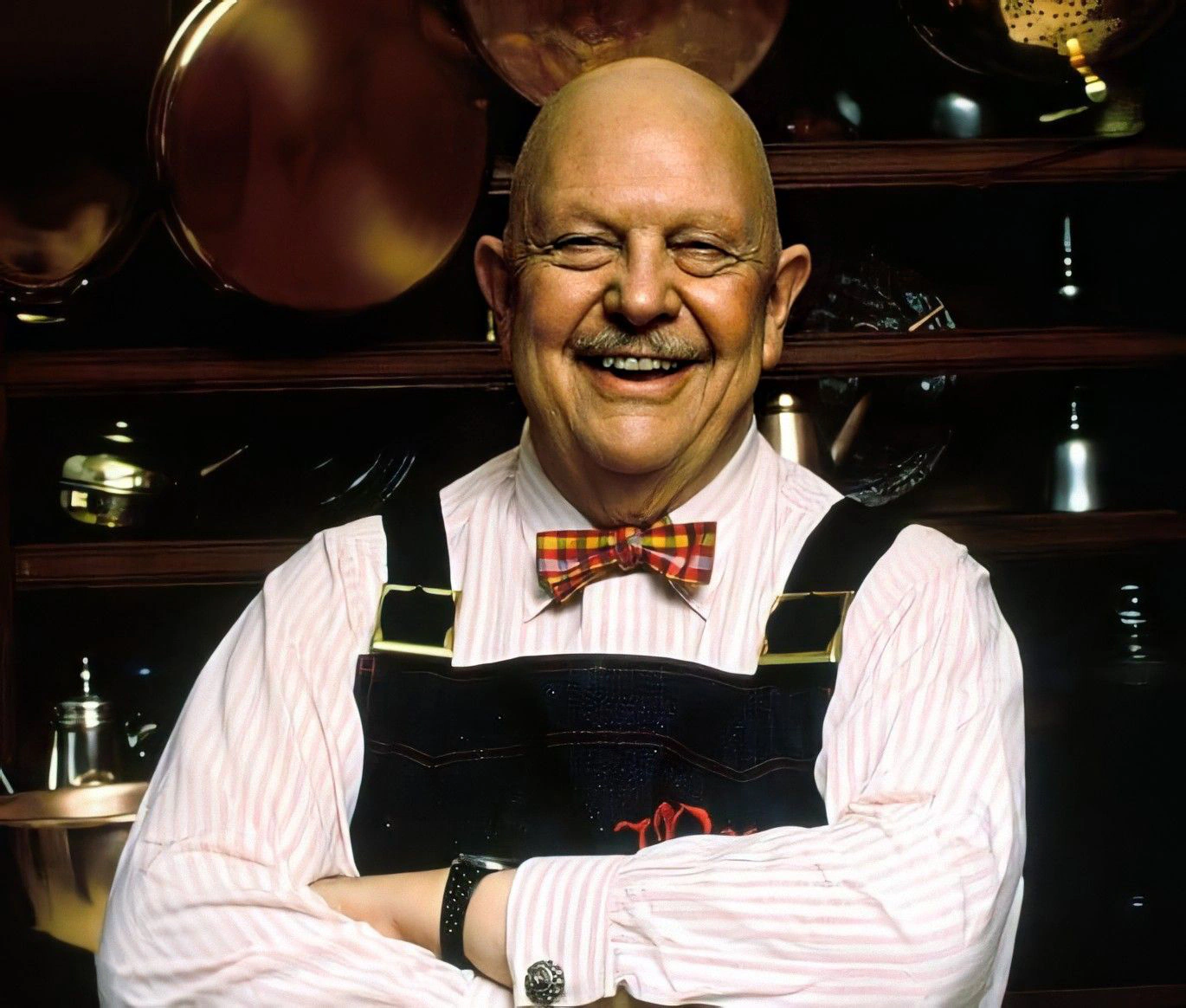
| 5 Quotes | |
| Born as | James Andrew Beard |
| Occup. | Author |
| From | USA |
| Born | May 5, 1903 Portland, Oregon, USA |
| Died | January 21, 1985 New York City, New York, USA |
| Cause | Esophageal cancer |
| Aged | 81 years |
| Cite | |
Citation Formats
APA Style (7th ed.)
James beard biography, facts and quotes. (2026, February 11). FixQuotes. https://fixquotes.com/authors/james-beard/
Chicago Style
"James Beard biography, facts and quotes." FixQuotes. February 11, 2026. https://fixquotes.com/authors/james-beard/.
MLA Style (9th ed.)
"James Beard biography, facts and quotes." FixQuotes, 11 Feb. 2026, https://fixquotes.com/authors/james-beard/. Accessed 12 Feb. 2026.
Early Life and Background
James Andrew Beard was born on May 5, 1903, in Portland, Oregon, a port city where timber wealth, rail lines, and maritime trade brought in oysters, salmon, and citrus alongside the region's wild berries and game. His father, a customs house inspector, provided steadiness; his mother, Elizabeth, ran a boardinghouse and was the household's culinary force, feeding travelers and teaching her son that hospitality was a craft with standards. Beard grew up amid the practical abundance of the Pacific Northwest - not a gilded dining culture, but an ingredients-first sensibility shaped by markets, seasons, and the sheer scale of American produce.Early on he showed a double appetite: for performance and for the table. He sang, acted, and pursued theater with the same intensity he later applied to food, learning how an audience responds to pacing, confidence, and a generous gesture. A childhood illness affected his voice and redirected his ambitions; what might have become a full-time stage career turned into something subtler - the performance of the teacher, the raconteur, the host. That pivot mattered psychologically: Beard's later persona, expansive and reassuring, reads as both armor and invitation, turning private uncertainty into public warmth.
Education and Formative Influences
Beard studied briefly at Reed College in Portland but did not settle into a conventional academic track; instead he educated himself through travel, theater work, and the disciplined observation of professionals. In the 1920s he spent formative time in Europe, including France, absorbing restaurant culture and market shopping while also training in acting and song. The Europe he met was not only a culinary reference point but a lesson in how tradition can be lived rather than museumed - an idea he later translated for American home cooks, insisting that technique exists to serve pleasure, not status.Career, Major Works, and Turning Points
Returning to the United States, Beard moved through New York's cultural world, working in theater and radio before food claimed the center of his life. A key turning point came in the late 1930s with Hors d'Oeuvre, Inc., a catering company he ran with friends that turned the cocktail party into a serious culinary occasion, aligning his showman's instincts with a growing urban appetite for sophistication. He became a national voice through cookbooks and television: his early best-seller Hors d'Oeuvre and Canapes (1940) helped set midcentury entertaining standards; later works such as James Beard's American Cookery (1972) argued for a confident national cuisine grounded in regional realities. In 1946 he helped found the James Beard Cooking School in New York, and in the 1950s he became one of the first American television cooking teachers, using the new medium to demystify technique. By the 1960s and 1970s, as America debated convenience foods, health fads, and the meaning of "gourmet", Beard stood for pleasure without apology and knowledge without snobbery.Philosophy, Style, and Themes
Beard's writing and teaching fused democratic appetite with an insistence on standards. He distrusted culinary tribalism and the anxieties that turn eating into a moral test, preferring a plainspoken hierarchy: taste, texture, generosity, and context. "I don't like gourmet cooking or "this" cooking or "that" cooking. I like good cooking". That line is more than a slogan - it reveals a temperament wary of exclusion, someone who built authority by refusing to sound like an authority. In an era when French technique still served as a cultural gatekeeper, he reframed expertise as practical competence available to anyone willing to pay attention.Underneath the bonhomie sat a shrewd understanding of desire - for comfort, for elegance, for belonging. Beard often used humor to puncture shame, especially the calorie-counting, virtue-signaling approach to food that was gaining traction in postwar America. "A gourmet who thinks of calories is like a tart who looks at her watch". The joke carries a worldview: appetite is part of adulthood, and pleasure requires a little abandon. Yet he was not merely hedonistic; he treated the table as a civic space, a place where private lives become legible and differences soften. "Food is our common ground, a universal experience". Read psychologically, that conviction hints at his own need for community, and at the way hosting allowed him to convert vulnerability into connection - a theme that recurs across his recipes, which often read like invitations rather than instructions.
Legacy and Influence
Beard died on January 21, 1985, in New York City, but his influence has only widened: he helped define what Americans mean by "American food" as a tapestry of regions, immigrant traditions, and local produce rather than a second-rate copy of Europe. The James Beard Foundation, established after his death and centered on his former Greenwich Village home, became a major institution through its awards, events, and advocacy, shaping restaurant culture and culinary media for decades. More quietly, his enduring legacy is a posture toward eating: rigorous about ingredients and technique, suspicious of pretension, and emotionally fluent about what a shared meal can do for a society that often struggles to talk across its differences.Our collection contains 5 quotes written by James, under the main topics: Witty One-Liners - Dark Humor - Cooking - Food.
Other people related to James: Mimi Sheraton (American), M. F. K. Fisher (Writer)
James Beard Famous Works
- 1983 Beard on Pasta (Book)
- 1981 The New James Beard (Book)
- 1977 James Beard's Theory and Practice of Good Cooking (Book)
- 1973 Beard on Bread (Book)
- 1972 James Beard's American Cookery (Book)
- 1959 The James Beard Cookbook (Book)
- 1940 Hors d'Oeuvre and Canapés (Book)
Source / external links