
James Cameron Biography Quotes 26 Report mistakes
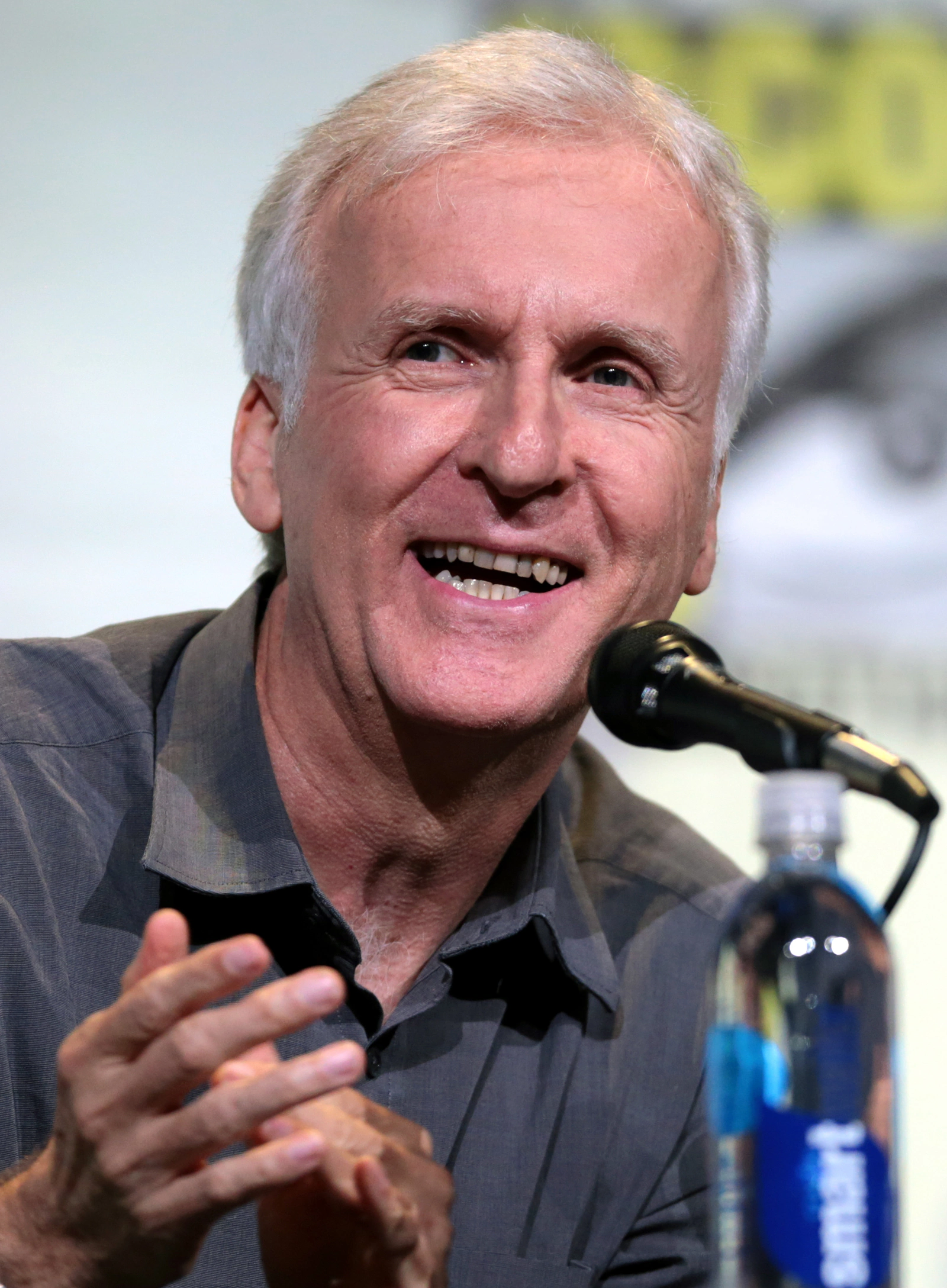
Attr: Gage Skidmore, CC BY-SA 3.0
| 26 Quotes | |
| Born as | James Francis Cameron |
| Occup. | Director |
| From | Canada |
| Born | August 16, 1954 Kapuskasing, Ontario, Canada |
| Age | 71 years |
| Cite | |
Citation Formats
APA Style (7th ed.)
James cameron biography, facts and quotes. (2026, February 11). FixQuotes. https://fixquotes.com/authors/james-cameron/
Chicago Style
"James Cameron biography, facts and quotes." FixQuotes. February 11, 2026. https://fixquotes.com/authors/james-cameron/.
MLA Style (9th ed.)
"James Cameron biography, facts and quotes." FixQuotes, 11 Feb. 2026, https://fixquotes.com/authors/james-cameron/. Accessed 5 Mar. 2026.
Early Life and Education
James Francis Cameron was born on August 16, 1954, in Kapuskasing, Ontario, Canada. His family later moved to the Niagara Falls region before settling in Southern California during his teens, a relocation that exposed him to the heart of the film industry while he was still forming his interests. He briefly attended college in California, studying science and the arts, but left to pursue filmmaking directly. To support himself, he worked a series of jobs, including driving a truck, while spending off-hours studying camera systems, optical effects, and screenwriting. The blend of self-teaching and curiosity about engineering and storytelling would define his approach for decades.Apprenticeship and First Features
Cameron entered the industry through the world of low-budget genre filmmaking, notably at Roger Corman's New World Pictures. There he learned to work quickly and innovate with limited resources, contributing to miniatures, set design, and visual effects on projects such as Battle Beyond the Stars and Galaxy of Terror. His first credited feature as a director, Piranha II: The Spawning, was a difficult initiation, but the experience sharpened his resolve to control both the technical and narrative aspects of his films.In the early 1980s he wrote and directed The Terminator, partnering with producer Gale Anne Hurd, who also became his spouse for a period. The film starred Arnold Schwarzenegger, Linda Hamilton, and Michael Biehn, and its lean, relentless storytelling carried Cameron's signature: rigorous world-building, muscular pacing, and practical effects enhanced by innovative visuals. The success of The Terminator established him with studios and audiences, and it cemented relationships he would return to for years.
Breakthrough and Technical Innovation
Cameron followed with Aliens, collaborating closely with Sigourney Weaver on a performance that brought nuance and intensity to a large-scale action sequel. His partnership with creature-effects master Stan Winston elevated the film's tactile realism, while his attention to military hardware, production design, and ensemble dynamics added depth to a genre piece. The Abyss expanded his ambitions underwater, requiring new techniques and pioneering digital effects work with artists at Industrial Light & Magic. Performers such as Ed Harris and Mary Elizabeth Mastrantonio anchored that production while Cameron explored a blend of intimacy, spectacle, and cutting-edge technology.Blockbusters of the 1990s
The 1990s brought a string of influential hits. Terminator 2: Judgment Day advanced digital metamorphosis with the liquid-metal antagonist, again in concert with ILM and Stan Winston's team, and featured returning collaborators Arnold Schwarzenegger and Linda Hamilton. True Lies, photographed by Russell Carpenter and co-starring Jamie Lee Curtis, displayed Cameron's comfort with large-scale action fused to humor and character.During this period he helped launch Digital Domain with Stan Winston and Scott Ross, a visual effects studio that would become central to many high-profile productions. His interest in pushing the medium encompassed not only the images on screen but also the infrastructure that produced them.
Titanic and Global Recognition
Titanic fused meticulous research, innovative engineering, and intimate drama on an unprecedented scale. Produced with Jon Landau, and photographed by Russell Carpenter, the film starred Leonardo DiCaprio and Kate Winslet and featured a celebrated score by composer James Horner. Cameron's insistence on historical detail and immersive visuals, including extensive practical sets and then-advanced digital water and crowd systems, resulted in a cultural phenomenon. Titanic tied the record for the most Academy Awards won by a single film, and Cameron himself received Oscars for Best Director, Best Film Editing, and as producer of Best Picture. The success confirmed his stature as a filmmaker capable of marrying technology to emotion in ways that reached audiences worldwide.Exploration, Documentary, and Engineering
After Titanic, Cameron invested time and resources in undersea exploration and nonfiction storytelling. Working with partners such as Andrew Wight and cinematographer Mike deGruy, he collaborated with National Geographic on documentaries including Expedition: Bismarck, Ghosts of the Abyss, and Aliens of the Deep. These projects merged science communication with filmmaking craft, and they drew on Cameron's growing team of engineers and camera specialists.He spearheaded the development of deep-ocean vehicles and imaging systems, collaborating with experts such as engineer Ron Allum. In 2012 he achieved a solo dive to the Challenger Deep in the Mariana Trench in the Deepsea Challenger submersible, capturing scientific data and 3D imagery. He subsequently supported ocean research by contributing technology and vehicles to institutions dedicated to marine science.
Avatar and the Expansion of 3D Cinema
Cameron's return to narrative features with Avatar introduced a comprehensive pipeline for performance capture, virtual production, and stereoscopic cinematography. He partnered with Vince Pace to develop camera systems and with Weta Digital in New Zealand on the film's revolutionary visual effects. Producer Jon Landau again played a central role, as did a cast led by Sam Worthington, Zoe Saldana, and Sigourney Weaver. Composer James Horner reunited with Cameron for the score, continuing a collaboration that had begun with Aliens. Avatar became a world-beating box-office success and broadened the commercial and artistic horizons for 3D exhibition.Building on its technological architecture, Cameron spent years refining tools for real-time visualization and performance capture. He continued to mentor and collaborate with visual effects leaders, and Weta's advancements under figures such as Joe Letteri aligned with his pursuit of photoreal digital characters and environments integrated with live-action elements.
Continuing the Saga and Evolving Methods
Avatar: The Way of Water extended the world of Pandora while advancing underwater performance capture techniques. The project reunited Cameron with actors including Sam Worthington, Zoe Saldana, and Sigourney Weaver, and brought Kate Winslet into the ensemble, linking back to their work on Titanic. The production demanded new training regimens, specialized camera housings, and sophisticated simulation of water, all realized alongside Weta's artists and a seasoned crew of technicians.Throughout these years, Cameron remained tied to large-scale production through Lightstorm Entertainment. He also wrote and produced Alita: Battle Angel with director Robert Rodriguez, demonstrating his continuing interest in translating ambitious visual worlds to the screen. The passing of his longtime producing partner Jon Landau in 2024 marked the end of one of modern cinema's most consequential creative partnerships.
Advocacy, Entrepreneurship, and Personal Life
Beyond film sets and research vessels, Cameron became an outspoken advocate for environmental stewardship. Together with his spouse Suzy Amis Cameron, he supported sustainability initiatives, education, and plant-forward solutions aimed at reducing environmental impact. Their projects have included investments in clean technologies and support for educational programs that integrate environmental awareness into curricula. Cameron has also served as an executive producer on nonfiction projects about climate and nutrition, aligning his public platform with advocacy.Cameron has maintained professional relationships with many of his former collaborators and spouses. Gale Anne Hurd was instrumental in launching his early career as a producer. Kathryn Bigelow, herself a trailblazing filmmaker, represents a personal and professional link to a generation redefining action and suspense cinema. Linda Hamilton became an indelible part of his cinematic universe through The Terminator films, and his ongoing partnership with Suzy Amis Cameron has encompassed family life and shared ventures in sustainability. Creative colleagues such as Stan Winston, James Horner, and Andrew Wight, all of whom have passed away, remain central to his story through their enduring contributions to his films and expeditions.
Legacy
James Cameron's legacy rests on the fusion of engineering rigor with storytelling that foregrounds human stakes, often through resilient protagonists facing vast forces, whether technological, environmental, or extraterrestrial. He has repeatedly assembled and led teams of artists, scientists, and engineers to overcome practical limits, turning constraints into catalysts for invention. The network around him, from producers like Jon Landau, to actors such as Sigourney Weaver, Arnold Schwarzenegger, Kate Winslet, and Zoe Saldana, to technical collaborators including Vince Pace and the crews at Digital Domain and Weta, illustrates how his films function as collective achievements guided by an exacting vision. As an artist, technologist, and explorer, he has helped redefine what large-scale cinema can accomplish, leaving a durable imprint on both popular culture and the tools that make it.Our collection contains 26 quotes written by James, under the main topics: Witty One-Liners - Motivational - Never Give Up - Nature - Writing.
Other people related to James: Gloria Stuart (Actress), Giovanni Ribisi (Actor), Celine Dion (Musician), Alan Dean Foster (Author), David Thewlis (Actor), Ed Harris (Actor), Paul Reiser (Comedian), Michelle Rodriguez (Actress), Jennifer Connelly (Actress), Edward Furlong (Actor)
Source / external links