
James Cash Penney Biography Quotes 47 Report mistakes
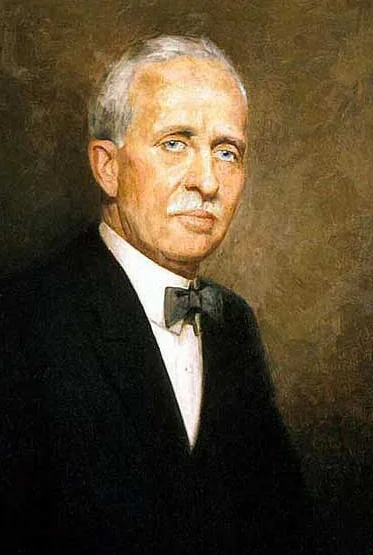
| 47 Quotes | |
| Born as | James Cash Penney, Jr. |
| Occup. | Businessman |
| From | USA |
| Born | September 16, 1875 Hamilton, Missouri, U.S. |
| Died | February 12, 1971 New York City, New York, U.S. |
| Aged | 95 years |
| Cite | |
Citation Formats
APA Style (7th ed.)
James cash penney biography, facts and quotes. (2026, February 2). FixQuotes. https://fixquotes.com/authors/james-cash-penney/
Chicago Style
"James Cash Penney biography, facts and quotes." FixQuotes. February 2, 2026. https://fixquotes.com/authors/james-cash-penney/.
MLA Style (9th ed.)
"James Cash Penney biography, facts and quotes." FixQuotes, 2 Feb. 2026, https://fixquotes.com/authors/james-cash-penney/. Accessed 20 Mar. 2026.
Early Life and Background
James Cash Penney, Jr. was born on September 16, 1875, near Hamilton, Caldwell County, Missouri, the son of James Cash Penney, a Baptist minister and part-time farmer, and Mary Frances Paxton Penney. The household was devout, disciplined, and economically modest, shaped by the practical ethics of rural Protestant life. Penney absorbed early the idea that character was a form of capital - a belief that would later become a corporate creed as much as a private compass.As a boy he raised pigs and learned the hard arithmetic of profit and loss, but also the social arithmetic of trust: neighbors extended credit, watched reputations, and remembered who kept their word. Recurring illness and financial strain in the family impressed on him both vulnerability and responsibility. Those tensions - between aspiration and insecurity, independence and duty - would shadow his adult life, even as his name became synonymous with the democratization of dry goods retailing in small-town America.
Education and Formative Influences
Penney attended local schools and briefly studied at the University of Missouri, but his decisive education came through work. In 1897 he moved to Junction City, Kansas, to clerk for J.M. Hale, learning the emerging discipline of fixed prices, high turnover, and meticulous merchandising. Soon after, in the boomtown environment of Colorado and Wyoming, he joined Thomas Callahan and Guy Johnson in the "Golden Rule" stores, where moral language was fused to retail method. That fusion did not feel like branding to Penney; it was a way to reconcile commerce with conscience at a time when chain stores and mass distribution were reshaping how Americans bought and imagined everyday life.Career, Major Works, and Turning Points
In 1902 Penney opened his first store in Kemmerer, Wyoming - the "Golden Rule Store" - using a partnership model that allowed trusted managers to become part owners, aligning incentives with local knowledge. From that frontier beginning he built J.C. Penney into a national chain, formally adopting the name in 1913 and moving headquarters to New York City in 1914 as the company scaled with the rail network, mail-order competition, and the rising consumer economy. By the 1920s the chain numbered in the hundreds; by the eve of the Depression it exceeded a thousand. Penney, intensely optimistic and personally liable for loans tied to expansion, was hit brutally by the early 1930s collapse, suffering near-bankruptcy and a widely noted emotional and physical breakdown. Recovery came with restructuring, a renewed emphasis on operations, and a turn toward a more systematized corporation, though he remained, at heart, a merchant moralist. In later decades the company adapted to automobiles and suburbs with larger stores and diversified lines, while Penney - increasingly a symbol rather than an operator - watched his creation enter the era of postwar mass retail.Philosophy, Style, and Themes
Penney built a business psychology around the conviction that decency could be operationalized. He treated the store as a civic space in which manners were strategy: “Courteous treatment will make a customer a walking advertisement”. The line reveals more than a service tip; it shows Penney's faith that reputation travels socially and that a firm can earn loyalty without spectacle. In his inner life, this linked to a deeper need for moral coherence - a desire to believe that prosperity could be justified through everyday kindness rather than sharp practice.Just as central was his belief in coordinated autonomy. He disliked coercive hierarchy, preferring a network of capable managers bound by shared standards and mutual advantage: “The best teamwork comes from men who are working independently toward one goal in unison”. That ideal mirrored his partnership system and his almost pastoral view of leadership as guidance rather than domination. Yet Penney also knew that harmony required active maintenance, especially in large organizations: “The keystone of successful business is cooperation. Friction retards progress”. The statement reads like an internal warning, shaped by the stresses of rapid growth, the Depression's humiliations, and his own sensitivity to conflict. For Penney, cooperation was not softness; it was a technology of scale and a moral defense against the dehumanizing tendencies of modern capitalism.
Legacy and Influence
Penney died on February 12, 1971, in New York City, having lived to see his company become one of the defining general merchandise retailers of the 20th century. His enduring influence lies less in a single invention than in a system: fixed-price integrity, manager ownership as motivation, and a service ethic that treated customers as neighbors even inside a chain. In an era when American retail shifted from Main Street counters to national networks, Penney helped normalize the idea that mass commerce could still speak the language of trust, and that organizational success could be argued as a moral achievement as well as a financial one.Our collection contains 47 quotes written by James, under the main topics: Motivational - Ethics & Morality - Leadership - Live in the Moment - Reason & Logic.
James Cash Penney Famous Works
- 1963 View from the Ninth Decade (Book)
- 1950 Fifty Years with The Golden Rule (Book)
- 1948 Main Street Merchant (Book)
Source / external links