
James Hogg Biography Quotes 6 Report mistakes
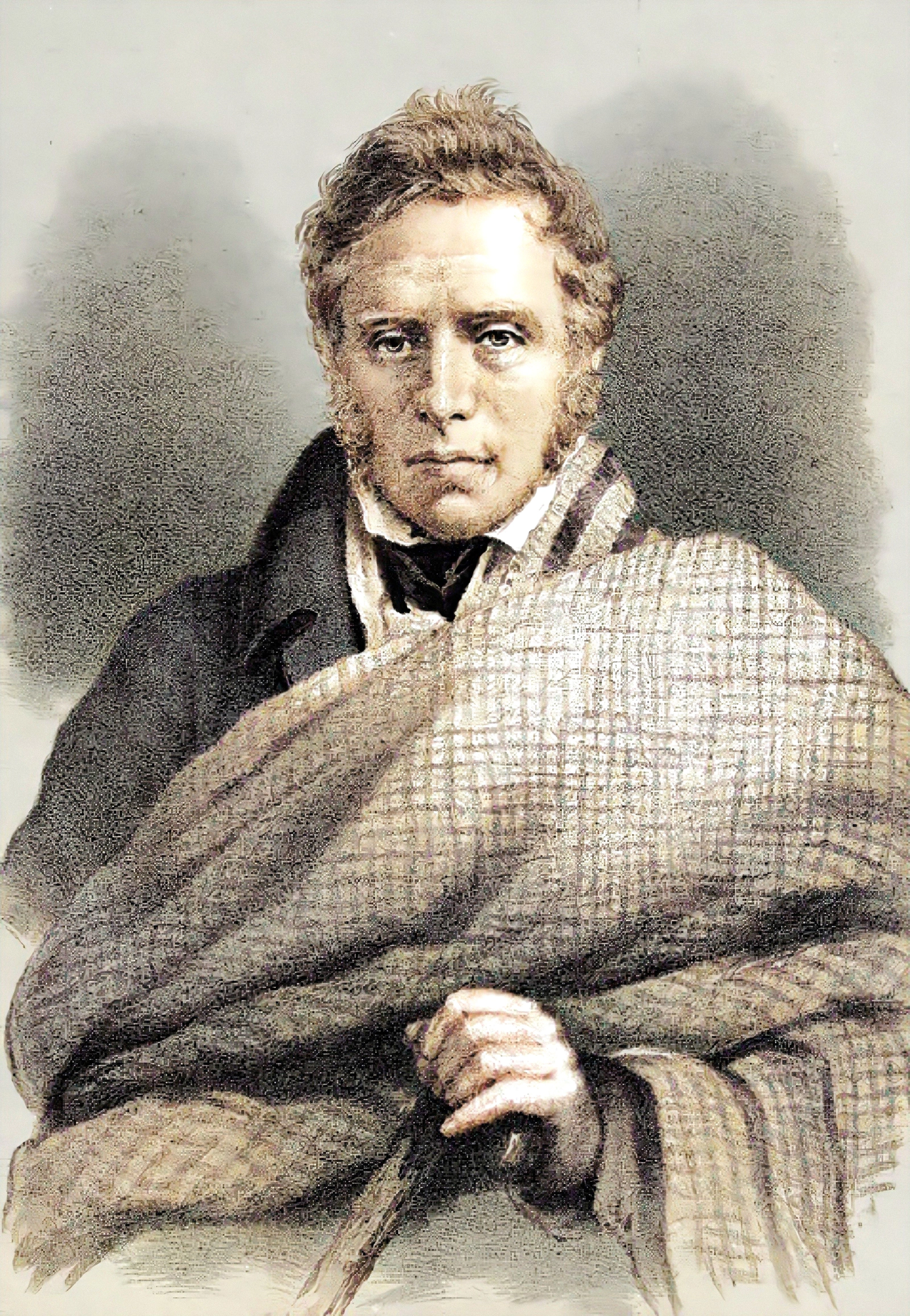
| 6 Quotes | |
| Known as | The Ettrick Shepherd |
| Occup. | Poet |
| From | Scotland |
| Born | December 11, 1770 Ettrick, Scotland, Kingdom of Great Britain |
| Died | November 21, 1835 Ettrick, Scotland, United Kingdom |
| Aged | 64 years |
| Cite | |
Citation Formats
APA Style (7th ed.)
James hogg biography, facts and quotes. (2026, February 11). FixQuotes. https://fixquotes.com/authors/james-hogg/
Chicago Style
"James Hogg biography, facts and quotes." FixQuotes. February 11, 2026. https://fixquotes.com/authors/james-hogg/.
MLA Style (9th ed.)
"James Hogg biography, facts and quotes." FixQuotes, 11 Feb. 2026, https://fixquotes.com/authors/james-hogg/. Accessed 6 Mar. 2026.
Early Life and Background
James Hogg was born on 11 December 1770 at Ettrickhall in Ettrick, Selkirkshire, in the Scottish Borders, a region where pastoral work, oral song, and covenanting memory still structured everyday life. His parents were tenant-farm laborers, and Hogg grew up amid the seasonal pressures of herding and the hard arithmetic of rents and markets, long before Romanticism made rural Scotland fashionable. The landscape that later became his signature - hills, storms, lonely shielings, and the social intimacy of farm-kirks and fairs - was not scenery to him but a workplace, and he carried into literature the physical knowledge of weather, sheep, and exhaustion.From boyhood he moved in and out of service as a herd and shepherd, often with little more than a day's instruction and whatever stories older men told at the fireside. He absorbed ballads and folk belief as living currency, not antiquarian material, and he learned early how quickly dignity could be granted or withdrawn in a society that prized education yet relied on unlettered skill. That tension - pride in native competence, resentment of condescension, and hunger for recognition - became a lifelong engine in his writing and his public persona as the "Ettrick Shepherd".
Education and Formative Influences
Hogg had limited formal schooling, learning to read in short bursts and educating himself through whatever books circulated in the Borders, including the Bible, popular poetry, and song collections; his deeper education was the oral tradition, working knowledge, and the disciplined solitude of night herding. A crucial turning point came when he entered the orbit of Walter Scott in the late 1790s while Scott was gathering materials for the Minstrelsy of the Scottish Border (1802-03); Hogg served as guide, informant, and fellow collector, gaining both access to literary networks and a sharpened awareness that his own lived culture could be transformed into art - and also commodified by others.Career, Major Works, and Turning Points
Hogg published early poems at the century's turn and rose to wider notice with The Mountain Bard (1807), establishing a voice that mixed ballad directness with Romantic ambition; he followed with The Queen's Wake (1813), a framed contest of bards at Mary, Queen of Scots' court that became his breakout success and fixed his public identity as a rustic genius. Over time he expanded into prose and periodical writing, producing tales, songs, and satirical pieces while negotiating the Edinburgh literary economy that alternately celebrated and mocked him; he contributed to Blackwood's Magazine, where the "Noctes Ambrosianae" both amplified his fame and caricatured him. His greatest late work, The Private Memoirs and Confessions of a Justified Sinner (1824), marked a decisive shift from pastoral celebrity to psychological and theological daring, showing he could turn Border Calvinism and folk supernaturalism into a modern, unstable narrative about obsession, doubles, and moral delusion.Philosophy, Style, and Themes
Hogg's imagination was built from work: not "nature" as a refined moral backdrop but nature as obligation, risk, and a web of dependence between human and animal. His shepherding knowledge supplied more than local color; it encoded a philosophy of competence under pressure, where survival depends on attentiveness and partnership. When he insists, “Without the shepherd's dog, the whole of the open mountainous land in Scotland would not be worth a sixpence”. , the sentence is economic and metaphysical at once: it measures value in labor, but it also reveals his sense that the Highlands and Borders are animated by relationships - between handler and dog, shepherd and flock, human intention and animal intelligence. That relational realism undercuts sentimental pastoral and helps explain why his rural scenes often feel tense, vigilant, and edged with menace.Psychologically, Hogg wrote from the ache of being both insider and outsider - a working shepherd who wanted to stand among Edinburgh's men of letters without surrendering the authority of experience. His humor frequently masks anxiety about status and dependence, and his best work turns that anxiety into narrative friction. “A shepherd may be a very able, trusty, and good shepherd, without a sweetheart - better, perhaps, than with one. But what is he without his dog?” carries a comic shrug, yet it also exposes his deeper preoccupation with loyalty, companionship, and the fear of being unmoored. In Confessions, that fear becomes metaphysical: the self is split, tempted, and hunted by an intimate presence it cannot master. Even in his seemingly straightforward recollections of rural life, he returns to the discipline of duty and the costs of mismanagement - “It would require more hands to manage a stock of sheep, gather them from the hills, force them into houses and folds, and drive them to markets, than the profits of the whole stock were capable of maintaining”. - a bleak clarity that parallels his literary career, where the labor of writing rarely matched its financial reward.
Legacy and Influence
Hogg died on 21 November 1835 at Altrive in Ettrick, having secured fame yet never full security, and his reputation long suffered from the very persona that made him marketable. In the 20th and 21st centuries he has been re-centered as a major Romantic and post-Enlightenment writer: a bridge between oral culture and print, between folk supernaturalism and sophisticated narrative experiment, and a key interpreter of Scottish Calvinist psychology. The Queen's Wake preserved and reinvented national song, while Confessions became a touchstone for Gothic and psychological fiction, anticipating later explorations of the unreliable narrator and the double. More than a picturesque "peasant poet", Hogg endures as a writer who understood how a landscape of work, belief, and social shame could produce art at once comic, fierce, and unsettlingly modern.Our collection contains 6 quotes written by James, under the main topics: Nature - Learning - Business - Dog - Family.
Other people related to James: Allan Cunningham (Poet), John Wilson (Writer)
James Hogg Famous Works
- 1824 The Private Memoirs and Confessions of a Justified Sinner (Novel)
- 1822 The Three Perils of Man: War, Women, and Witchcraft (Novel)
- 1818 The Brownie of Bodsbeck and Other Tales (Novella)
- 1807 The Mountain Bard: Consisting of Ballads and Songs (Poetry)
Source / external links