
James Inhofe Biography Quotes 8 Report mistakes
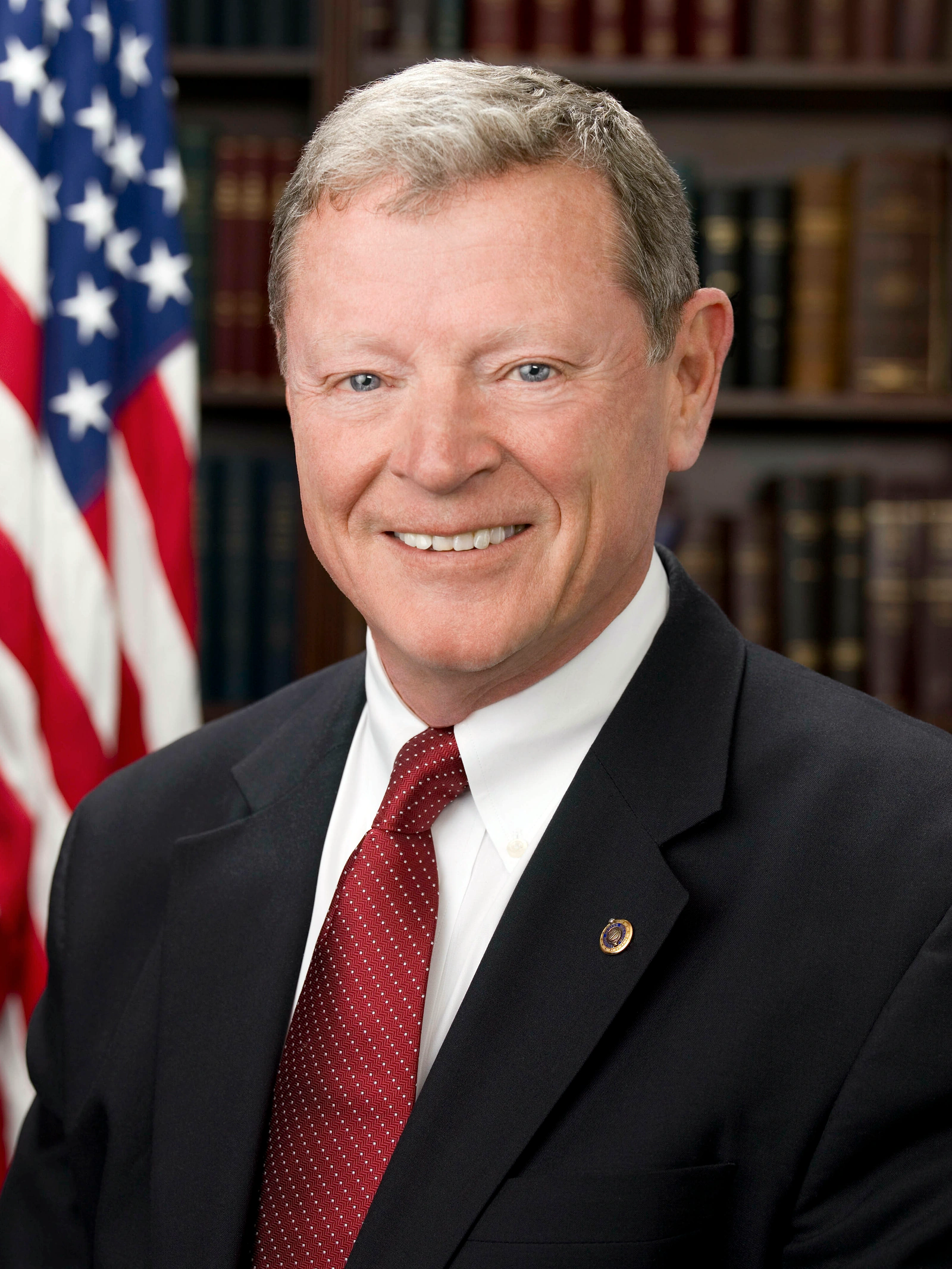
Attr: Senate, Public domain
| 8 Quotes | |
| Born as | James Mountain Inhofe |
| Occup. | Politician |
| From | USA |
| Born | November 17, 1934 Des Moines, Iowa, USA |
| Died | July 9, 2024 Tulsa, Oklahoma, USA |
| Aged | 89 years |
| Cite | |
Citation Formats
APA Style (7th ed.)
James inhofe biography, facts and quotes. (2026, February 27). FixQuotes. https://fixquotes.com/authors/james-inhofe/
Chicago Style
"James Inhofe biography, facts and quotes." FixQuotes. February 27, 2026. https://fixquotes.com/authors/james-inhofe/.
MLA Style (9th ed.)
"James Inhofe biography, facts and quotes." FixQuotes, 27 Feb. 2026, https://fixquotes.com/authors/james-inhofe/. Accessed 6 Mar. 2026.
Early Life and Background
James Mountain Inhofe was born on November 17, 1934, in Des Moines, Iowa, and grew up as the United States was remaking itself through war, postwar prosperity, and the long argument over federal power. His family moved to Tulsa, Oklahoma, where the culture of the oil patch, the church, and the small-business economy formed a durable civic grammar: skepticism of Washington, esteem for private enterprise, and the idea that patriotism was a daily practice rather than a slogan.Inhofe became a public figure in Oklahoma at a moment when the state was shifting from Democratic populism to modern conservatism. That transition was not abstract to him. Tulsa in the 1950s and 1960s was a city of growth and segregation, of aerospace and drilling rigs, and of civic boosterism shadowed by national turmoil. He learned politics as a local craft - zoning fights, municipal budgets, roads and police - long before he became a national ideologue in the Senate.
Education and Formative Influences
After high school in Tulsa, he attended the University of Tulsa (without completing a degree) and later earned a bachelors degree in economics from Drury University in Springfield, Missouri, in 1973. Between those bookends, he built an insurance and real estate business and absorbed the mid-century Sunbelt lesson that regulation and taxation were not merely policy questions but threats to mobility and independence; his later rhetoric, even when directed at foreign wars or climate science, carried the cadence of a businessman guarding the conditions of growth.Career, Major Works, and Turning Points
Inhofe entered elected office in Tulsa, serving on the city council (1970-1974) and as mayor (1978-1984), then moved to Washington through the U.S. House (1987-1994) and the U.S. Senate from Oklahoma (1994-2023). In the Senate he chaired, at different times, the Environment and Public Works Committee and the Armed Services Committee, positions that defined his public identity: an aggressive skeptic of climate regulation and a hawkish defender of military primacy. His tenure spanned the post-Cold War search for purpose, the shock of 9/11, the Iraq and Afghanistan wars, and the partisan hardening of Congress; he became a reliable conservative vote, but also an institutionalist who, late in life, defended bipartisan defense bills and urged Republicans to keep faith with alliances. He died on July 9, 2024.Philosophy, Style, and Themes
Inhofes inner life as a politician was structured around moral certainty and a combative sense of guardianship - of nation, of tradition, of an American story he believed was exceptional and exportable. On national security he framed U.S. power as both necessity and virtue, insisting that freedom required assertive defense and that democracies had obligations beyond their borders. He argued, “We must never forget that many around the globe are denied the basic rights we enjoy as Americans. If we are to continue enjoying these privileges and freedoms we must accept our mission of expanding democracy around the globe”. The psychology here is less about conquest than duty: he cast American action as a moral transaction in which security at home depended on activism abroad, a belief that made him resilient to war-weariness and skeptical of restraint.His most enduring thematic signature, however, was opposition to environmental regulation, especially the scientific and policy consensus on climate change. He treated the climate debate as a cultural and epistemic contest - elites versus ordinary citizens, modeling versus lived experience - and used provocation as a tool to delegitimize opponents. “Much of the debate over global warming is predicated on fear, rather than science”. That sentence reveals a core method: redefine the argument as psychology (fear) rather than empiricism (science), then present himself as the defender of common-sense realism. Inhofes style was plainspoken, sometimes abrasive, and deliberately symbolic; he preferred gestures and sharp frames to technocratic nuance, an approach that bonded him to conservative media ecosystems and made him a durable antagonist to the regulatory state.
Legacy and Influence
Inhofe left a legacy that is inseparable from late-20th and early-21st century Republican realignment: the rise of Oklahoma as a conservative stronghold, the fusion of pro-defense internationalism with domestic deregulatory zeal, and the sharpening of climate politics into a proxy war over expertise. Admirers remember him as a steadfast advocate for the military and a champion of limited government; critics remember him as a central architect of climate denialism in Congress and a voice for culture-war governance. Either way, he helped set the terms of debate - on energy, on the meaning of American power, and on how a senator can use certainty, conflict, and symbolism to shape an era long after specific votes fade from memory.Our collection contains 8 quotes written by James, under the main topics: Justice - Equality - Science - Human Rights - War.
Source / external links