
James Joseph Sylvester Biography Quotes 4 Report mistakes
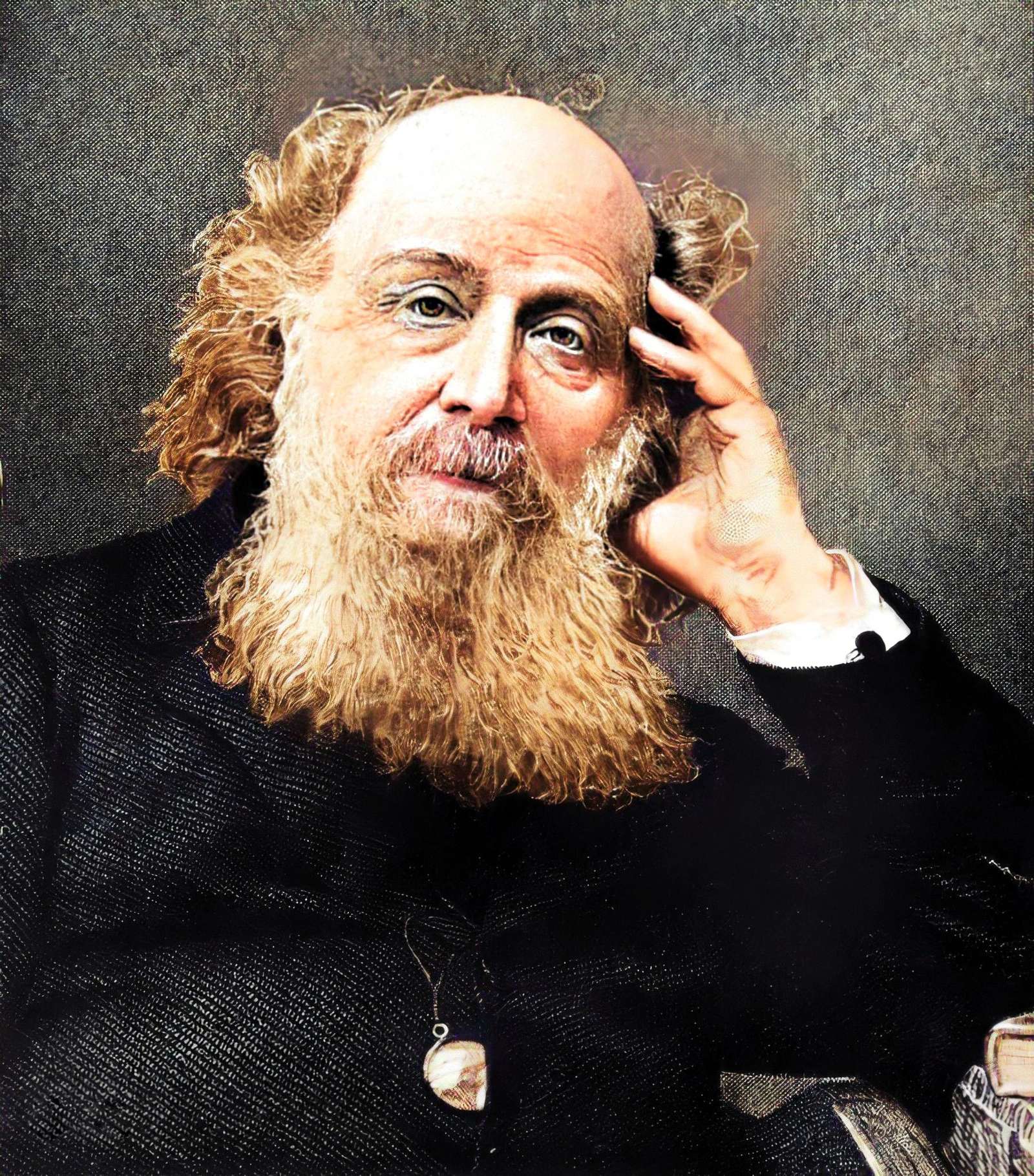
| 4 Quotes | |
| Known as | James Joseph |
| Occup. | Mathematician |
| From | England |
| Born | September 3, 1814 London, England, UK |
| Died | March 15, 1897 Oxford, Oxfordshire, England |
| Aged | 82 years |
| Cite | |
Citation Formats
APA Style (7th ed.)
James joseph sylvester biography, facts and quotes. (2026, February 11). FixQuotes. https://fixquotes.com/authors/james-joseph-sylvester/
Chicago Style
"James Joseph Sylvester biography, facts and quotes." FixQuotes. February 11, 2026. https://fixquotes.com/authors/james-joseph-sylvester/.
MLA Style (9th ed.)
"James Joseph Sylvester biography, facts and quotes." FixQuotes, 11 Feb. 2026, https://fixquotes.com/authors/james-joseph-sylvester/. Accessed 26 Mar. 2026.
Early Life and Background
James Joseph Sylvester was born on September 3, 1814, in London, England, into an Ashkenazi Jewish family in an era when English universities still imposed religious tests that hemmed in dissenters and Jews. That friction between talent and gatekeeping would become a defining pressure in his inner life: ambitious, combative, and quick to feel slighted, he developed the habit of seeking intellectual arenas where ability could not be ignored, even as institutions repeatedly tried to make him wait outside the door.Victorian Britain was industrializing, professionalizing, and measuring itself by scientific prestige, yet the mathematical profession was still small, its status tied to Cambridge examinations and to a gentlemanly ideal Sylvester did not fully fit. He grew into a mathematician with the temperament of a poet and polemicist - socially alert, sensitive to exclusion, and drawn to the idea that pure thought could be both refuge and public achievement. The result was a life of sharp turns: bursts of creative productivity followed by forced migrations across the Atlantic and back, each move reshaping the tone and audience of his work.
Education and Formative Influences
Sylvester studied at the University of London (later University College London) before entering St. Johns College, Cambridge, where he became Second Wrangler in 1837, one of the highest mathematical distinctions of the day. Yet he could not take the Cambridge degree then because he refused to subscribe to the Thirty-Nine Articles, a barrier that left him both decorated and officially incomplete. In the early 1840s he traveled to France and met leading continental mathematicians, absorbing newer algebraic currents that differed from the geometry-heavy Cambridge tradition; those contacts, together with his admiration for analytic ingenuity, helped shape his later work in invariants and forms.Career, Major Works, and Turning Points
After brief, uneasy starts - including a short appointment at University College London and legal studies at the Inner Temple - he became professor of mathematics at the University of Virginia (1841), leaving after student conflict, then taught at the Royal Military Academy, Woolwich (1855-1870), where he produced major research while educating artillery officers. His deepest mathematical legacy grew from the mid-century partnership and friendly rivalry with Arthur Cayley: together they forged invariant theory, studying how algebraic forms retain structure under change of variables, and Sylvester coined enduring terms such as "matrix" (1850), framing arrays as objects in their own right. In 1876 he crossed again to the United States to become the first professor of mathematics at Johns Hopkins University, building one of the first American research schools in the subject and founding the American Journal of Mathematics (1878). Returning to England in 1883, he became Savilian Professor of Geometry at Oxford, finally gaining a platform worthy of his fame; he remained intellectually restless until his death on March 15, 1897.Philosophy, Style, and Themes
Sylvesters mathematics was driven less by quiet system-building than by imaginative leaps, linguistic invention, and a belief that symbolism could capture the minds own laws. He treated research as a creative art: “May not music be described as the mathematics of the sense, mathematics as music of the reason? The musician feels mathematics, the mathematician thinks music: music the dream, mathematics the working life”. The line is revealing not as decoration but as self-portrait - he experienced discovery as a kind of inner audition, where pattern and rhythm precede proof, and where the discipline of calculation turns that dream into public form.He also carried a lifelong ambivalence toward inherited pedagogy. “The early study of Euclid made me a hater of geometry”. Coming from Oxford's later Savilian Professor of Geometry, the confession signals how intensely he resisted rote, diagram-bound tradition and preferred the generative power of algebraic language. That preference shaped his work on invariants, partitions, and combinatorial identities, and even his prose, which often reads like a manifesto. His loftiest program tied mathematics to cognition itself: “The object of pure physics is the unfolding of the laws of the intelligible world; the object of pure mathematics that of unfolding the laws of human intelligence”. In a century that increasingly prized applications, he defended purity not as escapism but as psychology - a study of what the mind can know when it speaks in symbols.
Legacy and Influence
Sylvester helped turn nineteenth-century algebra from an assortment of techniques into a self-conscious language of structures, and his terms, institutions, and students carried that transformation forward. The concept of matrices became foundational to linear algebra and modern applied mathematics; invariant theory fed directly into representation theory and algebraic geometry; and his Johns Hopkins years proved that the United States could sustain first-rate mathematical research. Just as importantly, his life dramatized the costs of exclusion and the power of persistence: a brilliant outsider who kept building new stages when old ones were closed, leaving behind not only results but a model of mathematical culture as an international, creative, and fiercely human enterprise.Our collection contains 4 quotes written by James, under the main topics: Music - Learning - Reason & Logic.
Other people related to James: Jimmy Chamberlin (Musician), Gene Tunney (Athlete)
Frequently Asked Questions
- James Sylvester Gamefowl: James Joseph Sylvester was not associated with gamefowl; his legacy is mainly in the field of mathematics.
- James sylvester Football: There is no known association between James Joseph Sylvester and football; he was primarily known for his contributions to mathematics.
- James Sylvester matrix: A Sylvester matrix is a type of matrix named after James Joseph Sylvester, used in solving polynomial equations.
- How old was James Joseph Sylvester? He became 82 years old
Source / external links