
James Joyce Biography Quotes 33 Report mistakes
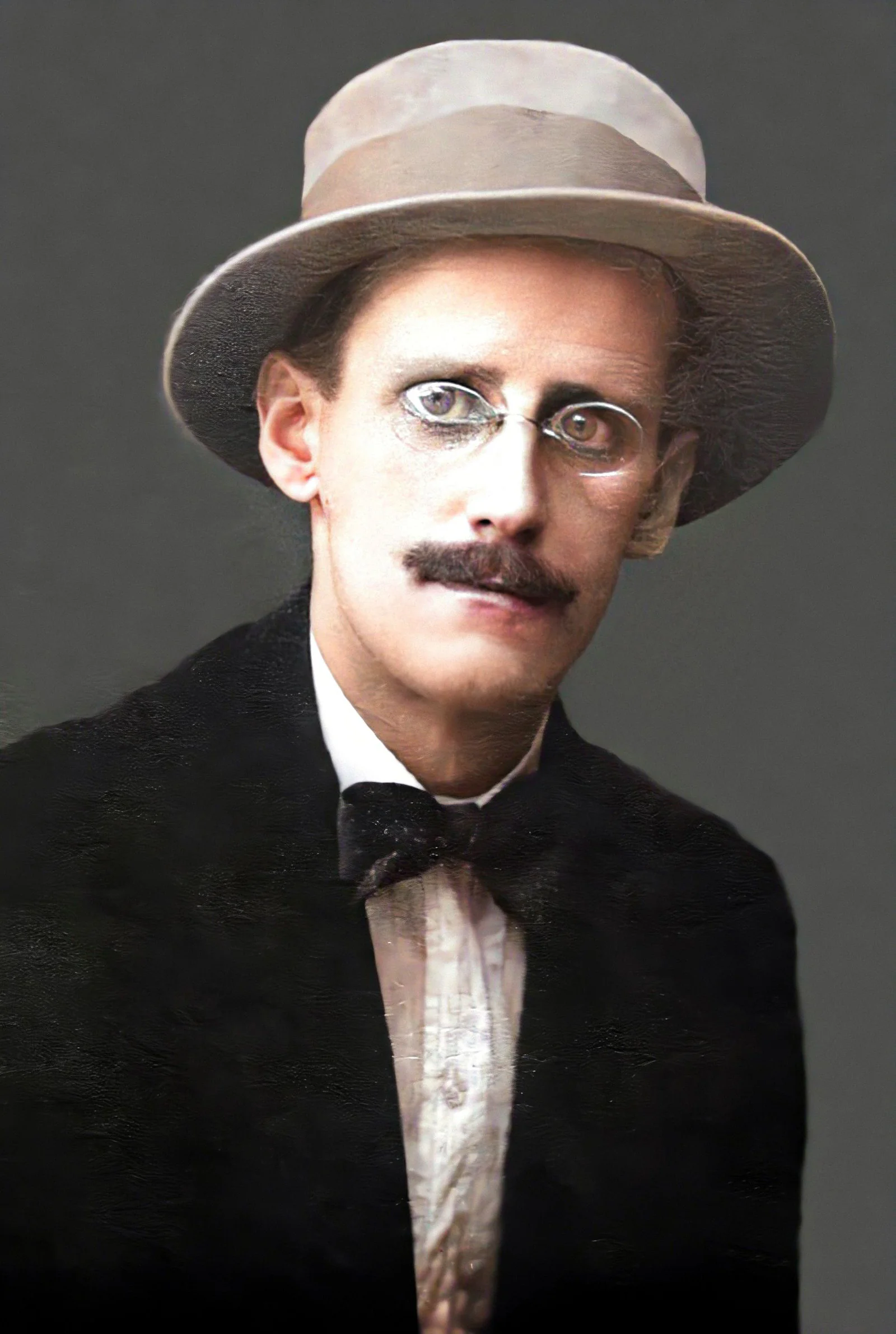
| 33 Quotes | |
| Born as | James Augustine Aloysius Joyce |
| Occup. | Novelist |
| From | Ireland |
| Born | February 2, 1882 Dublin, Irland |
| Died | January 13, 1941 Zürich, Switzerland |
| Aged | 58 years |
| Cite | |
Citation Formats
APA Style (7th ed.)
James joyce biography, facts and quotes. (2026, February 1). FixQuotes. https://fixquotes.com/authors/james-joyce/
Chicago Style
"James Joyce biography, facts and quotes." FixQuotes. February 1, 2026. https://fixquotes.com/authors/james-joyce/.
MLA Style (9th ed.)
"James Joyce biography, facts and quotes." FixQuotes, 1 Feb. 2026, https://fixquotes.com/authors/james-joyce/. Accessed 25 Mar. 2026.
Early Life and Background
James Augustine Aloysius Joyce was born on 2 February 1882 in Rathgar, Dublin, into a large, volatile Catholic family whose fortunes rose and fell with his father John Stanislaus Joyce - a gifted talker, singer, and spender - and his mother Mary Jane Murray, devout and musically trained. The Joyces moved repeatedly as money ran out, a childhood rhythm that made the city itself Joyce's true stable address: streets, pubs, churches, shops, and river quays lodged in memory with near-cartographic precision.Late Victorian Dublin was simultaneously imperial province and cultural pressure cooker - nationalist aspiration, clerical authority, and middle-class respectability tightening around private life. Joyce absorbed that atmosphere as both participant and dissident. Early on he learned how quickly public pieties could sour into coercion, and how family affection could coexist with humiliation, debt, and a hardening of the heart - the domestic seedbed for the later Joycean themes of paralysis, exile, and the fierce, comic stubbornness of the self.
Education and Formative Influences
Joyce's formal education moved through Jesuit excellence: Clongowes Wood College, Belvedere College, then University College Dublin, where he studied modern languages and trained his ear on the musicality of speech as much as on literature. He read Ibsen with missionary intensity (earning notice for an early essay), absorbed Aquinas as an intellectual sparring partner, and learned from Dante, Flaubert, and the Symbolists how style could become an ethics of attention. By 1904, rejecting a conventional Irish career and the claims of church and nation, he chose self-exile as a working method, leaving Dublin with Nora Barnacle, the companion of his life.Career, Major Works, and Turning Points
Joyce lived mostly on the European continent - Trieste, Zurich, Paris - teaching languages, scraping by on patrons, and writing with an exacting slowness intensified by chronic eye disease and repeated surgeries. Dubliners was completed by 1907 but published only in 1914 after years of censorship anxiety; its cool naturalism and moral sting made the city a laboratory of stalled desire. A Portrait of the Artist as a Young Man (serialized 1914-1915; book 1916) refined his alter ego Stephen Dedalus and dramatized the artist's break for "silence, exile, and cunning". Ulysses, composed through the upheaval of World War I and finished in 1921, remade the modern novel by compressing epic range into a single day in Dublin, 16 June 1904; after obscenity battles it appeared in full in 1922 with Sylvia Beach in Paris. Finnegans Wake (1939), written across two decades amid deteriorating health and family strain, pushed language into dream-logic and polyglot punning. Joyce died in Zurich on 13 January 1941, far from Ireland yet never truly away from it.Philosophy, Style, and Themes
Joyce's inner life was ruled by a double compulsion: to escape Dublin and to re-enter it in art more completely than any loyalist could. His critique of Irish nationalism and clerical power was not abstract but visceral, the anger of someone who felt love contaminated by constraint: “Ireland is the old sow that eats her farrow”. That sentence concentrates a psychology of wounded attachment - the country as parent and predator - and helps explain why his fiction treats home as both origin and threat, a place that produces talent and then tries to keep it small.His style is the record of a mind refusing simplification. In Dubliners the sentences are hard-edged, built for epiphany; in Ulysses the technique expands into interior monologue, parody, and encyclopedic realism; in Finnegans Wake meaning becomes a wakeful dream where history, gossip, and myth blend in a single river of sound. Joyce understood art as a long-term wager against disappearance, even teasing posterity with the maker's vanity and dread: “I've put in so many enigmas and puzzles that it will keep the professors busy for centuries arguing over what I meant, and that's the only way of insuring one's immortality”. Under the bravado sits a darker self-audit - fear of waste, of decline, of being stranded between ambition and incapacity - and his books repeatedly stage that tension as characters trapped between heroic myth and bodily fact.
Legacy and Influence
Joyce permanently altered what a novel could do: his mapping of consciousness shaped Woolf and Faulkner, his structural audacity fed Borges and Nabokov, and his linguistic extremity opened paths for Beckett, Pynchon, and countless experimenters. Bloomsday rituals, scholarly industries, and new translations testify not only to difficulty but to pleasure - the comedy, tenderness, and radical empathy he granted ordinary lives. He turned one city and one day into a model of the modern world, proving that the local, rendered without compromise, can become inexhaustibly universal.Our collection contains 33 quotes written by James, under the main topics: Witty One-Liners - Wisdom - Art - Dark Humor - Friendship.
Other people related to James: Samuel Beckett (Playwright), Virginia Woolf (Author), Joseph Campbell (Author), Ezra Pound (Poet), Jack Kerouac (Novelist), Bennett Cerf (Journalist), Hermann Broch (Writer), Edna O'Brien (Novelist), Hugh MacDiarmid (Poet), William Irwin Thompson (Philosopher)
James Joyce Famous Works
- 1939 Finnegans Wake (Novel)
- 1922 Ulysses (Novel)
- 1918 Exiles (Play)
- 1916 A Portrait of the Artist as a Young Man (Novel)
- 1914 Dubliners (Short Stories)
Source / external links