
James K. Polk Biography Quotes 14 Report mistakes
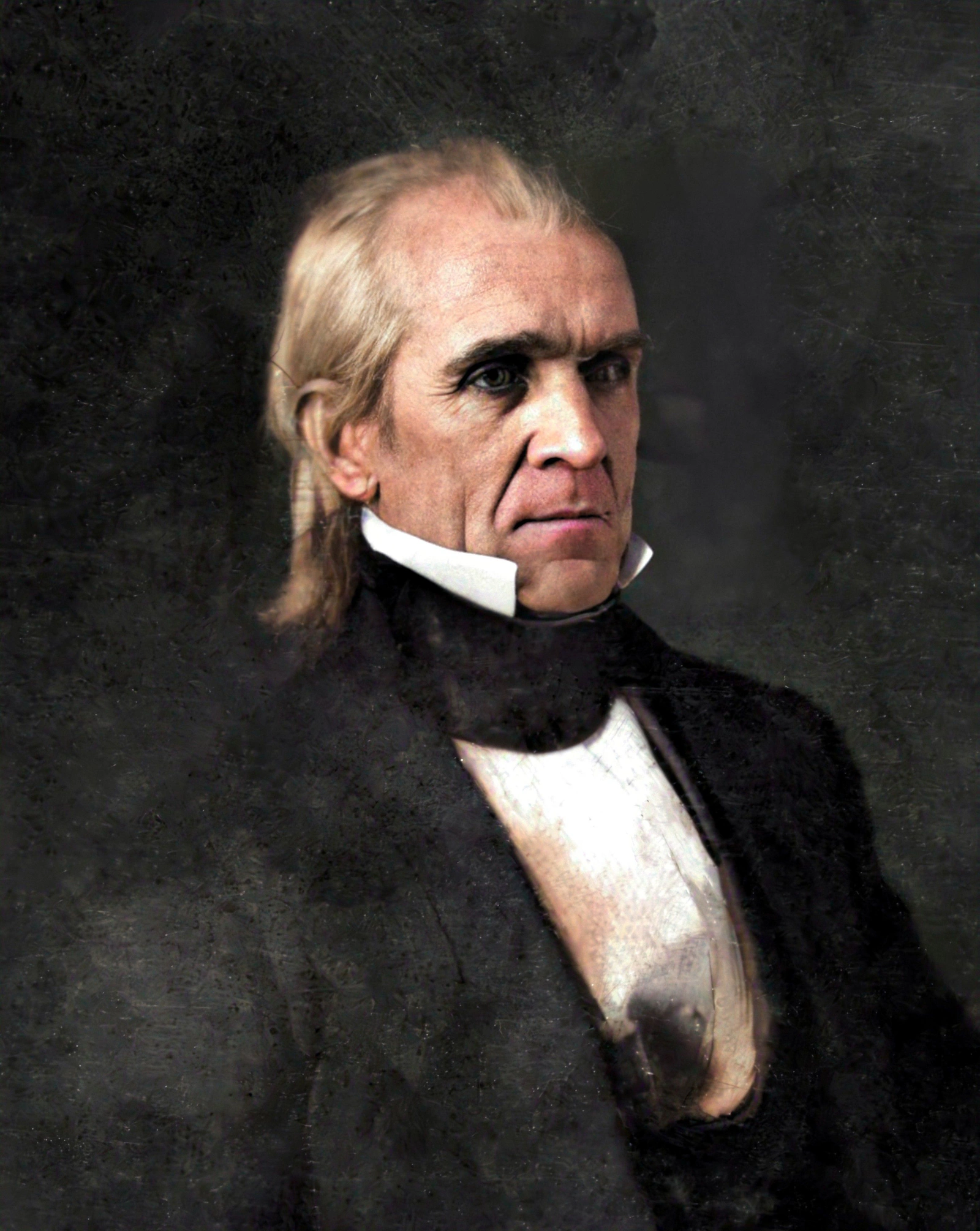
Attr: Superwikifan
| 14 Quotes | |
| Born as | James Knox Polk |
| Occup. | President |
| From | USA |
| Born | November 2, 1795 Mecklenburg County, North Carolina, USA |
| Died | June 15, 1849 Nashville, Tennessee, USA |
| Cause | Cholera |
| Aged | 53 years |
| Cite | |
Citation Formats
APA Style (7th ed.)
James k. polk biography, facts and quotes. (2026, February 11). FixQuotes. https://fixquotes.com/authors/james-k-polk/
Chicago Style
"James K. Polk biography, facts and quotes." FixQuotes. February 11, 2026. https://fixquotes.com/authors/james-k-polk/.
MLA Style (9th ed.)
"James K. Polk biography, facts and quotes." FixQuotes, 11 Feb. 2026, https://fixquotes.com/authors/james-k-polk/. Accessed 1 Apr. 2026.
Early Life and Background
James Knox Polk was born on November 2, 1795, in Mecklenburg County, North Carolina, to Samuel Polk and Jane Knox Polk, a family of Scots-Irish Presbyterian stock that carried both a frontier practicality and a stern moral vocabulary. When he was still a boy the Polks joined the westward current into Middle Tennessee, settling near Columbia in Maury County. The move placed him in a society where land, credit, and kin networks mattered as much as formal rank, and where the rhetoric of the Revolution still lived in courthouse talk and militia musters.Polk grew up ambitious, physically frail, and intensely self-controlled. A serious illness in adolescence and a painful surgical operation for bladder stones without anesthesia left him with a sense that life was earned through endurance and discipline rather than bestowed by luck. The household prized order and duty; Polk learned early to keep his counsel, master detail, and treat advancement as a moral project. That inward posture - stoic, calculating, easily wounded by disorder - later shaped a presidency run like an audit.
Education and Formative Influences
After irregular early schooling, Polk entered the University of North Carolina at Chapel Hill in 1816 and graduated with honors in 1818, known for exactness and relentless preparation rather than charm. He read law under Felix Grundy in Nashville, was admitted to the bar in 1820, and began practice in Columbia. Just as important, he absorbed the emerging Jacksonian critique of concentrated privilege and the belief that popular majorities, disciplined by party, could act as a democratizing instrument. His courtship and 1824 marriage to Sarah Childress - educated, politically astute, and socially formidable - gave him a partner who edited his speeches, guarded his routines, and helped convert private intensity into public performance.Career, Major Works, and Turning Points
Polk entered the U.S. House of Representatives in 1825 as an Andrew Jackson ally, rose to leadership, and served as Speaker of the House (1835-1839), a partisan tactician who treated procedure as power. As governor of Tennessee (1839-1841) he lost twice, then returned as a "dark horse" presidential nominee in 1844, defeating Henry Clay on an expansionist platform. As the 11th president (1845-1849) he pursued four aims with unusual clarity: lower the tariff (Walker Tariff, 1846), restore an independent treasury (1846), settle Oregon with Britain at the 49th parallel (1846), and acquire the Southwest. The last goal accelerated into the Mexican-American War (1846-1848), ending with the Treaty of Guadalupe Hidalgo and a vast cession that included present-day California and much of the interior West, while annexation of Texas (completed at the start of his term) and the sectional fight over slavery in new territories darkened his triumph. Polk kept his pledge to serve one term, left office exhausted, and died on June 15, 1849, in Nashville, weeks after returning from a post-presidential journey.Philosophy, Style, and Themes
Polk believed in democratic legitimacy, but also in executive direction - a president should define objectives, demand results, and accept blame. He managed his cabinet tightly, monitored patronage and policy through constant memoranda, and relied on a private diary as a tool of self-scrutiny and control. The diary shows a man who experienced politics less as spectacle than as strain, and who measured success by completed tasks. “With me it is exceptionally true that the Presidency is no bed of roses”. The line is not decorative; it captures a temperament that interpreted conflict as obligation and fatigue as proof of service.His public language joined providential nationalism to institutional reassurance. He framed the republic as morally exemplary while insisting its force would not become personal conquest: “The world has nothing to fear from military ambition in our Government”. Yet his private assessments were sharper and more disillusioned about the legislature he once led. “There is more selfishness and less principle among members of Congress than I had any conception of, before I became President of the U.S”. Read together, these statements expose a psychology split between civic ideal and managerial mistrust: he defended republican virtue in theory, but governed as if only discipline, secrecy, and pressure could overcome vanity and delay. Expansion, in his mind, was not romance but a strategic settling of boundaries, markets, and security - an accountant's Manifest Destiny, executed with a soldier's deadlines.
Legacy and Influence
Polk ranks among the most effective one-term presidents in translating a program into policy, and among the most consequential in territory gained, setting the continental outline of the United States from the Pacific Northwest to the Southwest. That effectiveness came with an enduring moral and political cost: the war with Mexico intensified debates over executive war powers and helped reopen the question of slavery's expansion, pushing the nation toward the Compromise of 1850 and, ultimately, civil war. His model of the "program president" - narrow goals, centralized control, and relentless follow-through - influenced later administrations, while his expansionist achievements remain inseparable from the displacement of Native peoples, the contested legitimacy of the Mexican-American War, and the sectional crisis his victories inflamed.Our collection contains 14 quotes written by James, under the main topics: Ethics & Morality - Leadership - Honesty & Integrity - Work Ethic - Peace.
Other people related to James: James Buchanan (President), Caleb Cushing (Diplomat), Henry A. Wise (Statesman)
James K. Polk Famous Works
- 1848 Fourth Annual Message to Congress (1848) (Non-fiction)
- 1847 Third Annual Message to Congress (1847) (Non-fiction)
- 1846 Second Annual Message to Congress (1846) (Non-fiction)
- 1846 Special Message on the Oregon Question (Non-fiction)
- 1846 Message to Congress Requesting a Declaration of War against Mexico (May 11, 1846) (Non-fiction)
- 1845 First Annual Message to Congress (1845) (Non-fiction)
- 1845 Inaugural Address (March 4, 1845) (Non-fiction)
Source / external links