
James L. Brooks Biography Quotes 16 Report mistakes
| 16 Quotes | |
| Born as | James Lawrence Brooks |
| Occup. | Producer |
| From | USA |
| Born | May 9, 1940 Brooklyn, New York, USA |
| Age | 85 years |
| Cite | Cite this page |
Citation Formats
APA Style (7th ed.)
Brooks, James L. (n.d.). James L. Brooks. FixQuotes. https://fixquotes.com/authors/james-l-brooks/
Chicago Style
Brooks, James L. "James L. Brooks." FixQuotes. Accessed February 3, 2026. https://fixquotes.com/authors/james-l-brooks/.
MLA Style (9th ed.)
"James L. Brooks." FixQuotes, https://fixquotes.com/authors/james-l-brooks/. Accessed 3 Feb. 2026.
James L. Brooks, born James Lawrence Brooks on May 9, 1940, in Brooklyn, New York, emerged as one of the most influential American writer-producer-directors in both television and film. Raised in the New York, New Jersey area, he began his career in news, working in New York television before moving to Los Angeles in the 1960s. That newsroom grounding proved foundational: it trained him to value character, clear stakes, and the rhythm of everyday life, qualities that would define his writing. By the end of the decade he had transitioned into scripted television, quickly distinguishing himself as a writer with an ear for dialogue and a belief that comedy could carry emotional truth.
Room 222 and a New Kind of Television
In 1969 he created Room 222, a series that foregrounded teachers and students confronting social issues with warmth and candor. It set an early template for the balancing act he would perfect: a humane, character-first approach that allowed humor to coexist with complication. The show's credibility and tone opened doors across the industry, attracting collaborators who appreciated an environment where intelligent writing was the engine.
Breakthrough with The Mary Tyler Moore Show
Brooks's breakthrough came when he co-created The Mary Tyler Moore Show with Allan Burns. Produced by MTM Enterprises, founded by Mary Tyler Moore and Grant Tinker, the series reimagined the American workplace comedy with a single woman at its center and a newsroom as the hub. Brooks and Burns built an ensemble defined by layered relationships, while colleagues such as Ed. Weinberger, David Davis, and Stan Daniels helped craft stories that felt lived-in rather than contrived. The show won a shelf of Emmy Awards and reshaped the business, proving that half-hour comedies could be sophisticated, humane, and structurally elegant. It also spawned celebrated spin-offs, including Rhoda and Lou Grant, which carried forward the MTM sensibility of nuance and craft.
Taxi and the MTM Generation
Expanding that ensemble ethos, Brooks teamed with Stan Daniels, David Davis, and Ed. Weinberger to develop Taxi, a workplace comedy set in a New York garage. Taxi's blend of melancholy, aspiration, and wit epitomized Brooks's belief in character-driven storytelling and earned further Emmys. Across these series, he cultivated a culture of collaborative rigor in the writers room, elevating colleagues and discovering voices that would shape television for decades.
Feature Filmmaking
Brooks moved into feature films with a level of assurance rare for television veterans. Terms of Endearment (1983), adapted from Larry McMurtry's novel, was written, produced, and directed by Brooks. Starring Shirley MacLaine, Debra Winger, and Jack Nicholson, it became a phenomenon and won multiple Academy Awards, including Best Picture, Best Director, and Best Adapted Screenplay for Brooks. Broadcast News (1987) followed, a sharp, affectionate portrait of a television newsroom starring Holly Hunter, William Hurt, and Albert Brooks. It earned widespread acclaim and multiple Oscar nominations, further cementing his reputation as a filmmaker committed to humane comedy and moral ambiguity.
Later films showcased the same sensibility. As Good as It Gets (1997), headlined by Jack Nicholson and Helen Hunt, won both leading acting Oscars and demonstrated Brooks's knack for locating humor in damaged, complicated people. Subsequent projects such as Spanglish (2004) and How Do You Know (2010) continued his exploration of intimacy, work, and identity, often in settings where personal ethics and professional pressure intersect.
Gracie Films and The Simpsons
In 1986 Brooks formed Gracie Films, a company structured to protect writers and prioritize storytelling. Through The Tracey Ullman Show he brought cartoonist Matt Groening into the fold, leading to the creation of The Simpsons shorts and, soon after, the primetime series developed with Sam Simon and Groening. Brooks served as an executive producer and creative steward as The Simpsons became a landmark in American culture, expanding the bounds of animated television with writers Al Jean, Mike Reiss, and a deep bench of talent. Gracie Films also backed other projects in television and film, consistently reflecting Brooks's emphasis on voice, character, and narrative clarity.
Style, Themes, and Working Method
Across media, Brooks's work is unified by empathy, a refusal to caricature, and an understanding that comedy is most potent when rooted in recognizably human behavior. He prizes collaboration: from the MTM ensemble with Mary Tyler Moore, Grant Tinker, Allan Burns, Ed. Weinberger, David Davis, and Stan Daniels, to film partnerships with actors such as Jack Nicholson, Shirley MacLaine, Debra Winger, Holly Hunter, William Hurt, and Albert Brooks, and television collaborators like Matt Groening, Sam Simon, Al Jean, and Mike Reiss. His sets and writers rooms have a reputation for meticulous rewriting in service of character, not punchlines for their own sake.
Awards and Impact
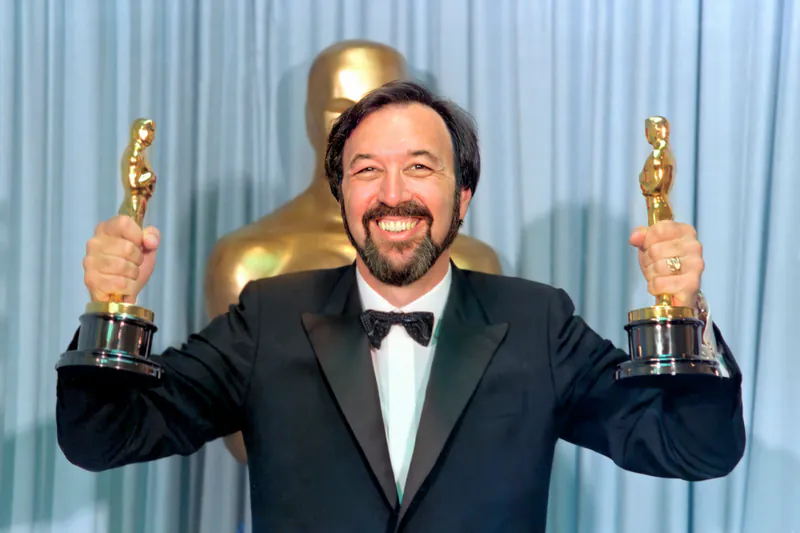
Brooks has been honored with multiple Emmy Awards for his television work and three Academy Awards for Terms of Endearment. Yet his influence is measured as much by the institutions he helped build and the careers he nurtured as by trophies. The Mary Tyler Moore Show, Taxi, and The Simpsons changed expectations for what television could accomplish, marrying intelligence to accessibility. His films, meanwhile, demonstrated that intimate, dialogue-rich stories could be commercially viable and critically lauded.
Legacy
From newsroom comedies to animated satire to bittersweet romantic dramas, James L. Brooks established a coherent vision: stories about people doing their best inside imperfect systems, seen with kindness and clarity. By championing writers and actors and by insisting on the primacy of character, he helped redefine American screen storytelling. The colleagues around him, Mary Tyler Moore and Grant Tinker in one era, Allan Burns, Ed. Weinberger, David Davis, and Stan Daniels in another, and Matt Groening, Sam Simon, Al Jean, and Mike Reiss in yet another, testify to a career built on collaboration. Decades after his start, his work remains a touchstone for creators who believe that heart and craft can coexist, and that the funniest stories are often the most deeply human.
Our collection contains 16 quotes who is written by James, under the main topics: Funny - Truth - Writing - Movie - Knowledge.
Other people realated to James: Dan Castellaneta (Actor), Nancy Cartwright (Actress), Brad Bird (Cartoonist), Skeet Ulrich (Actor), Adam Sandler (Actor), Owen Wilson (Actor), Yeardley Smith (Actress), Tea Leoni (Actress), Marcia Wallace (Actress), Tony Danza (Actor)
Source / external links