
James L. Farmer, Jr. Biography Quotes 4 Report mistakes
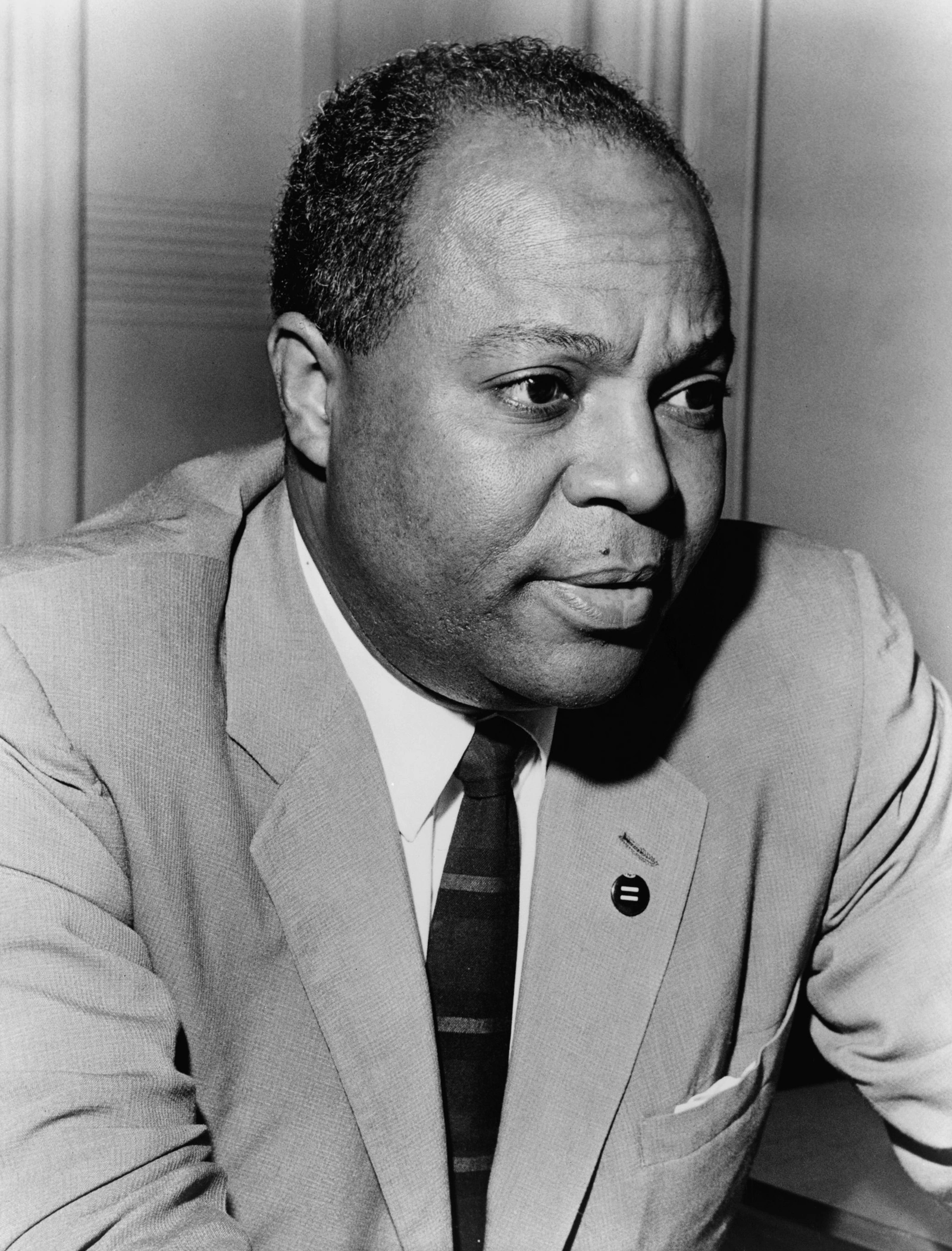
| 4 Quotes | |
| Born as | James Leonard Farmer, Jr. |
| Occup. | Activist |
| From | USA |
| Born | January 12, 1920 Marshall, Texas, U.S. |
| Died | July 9, 1999 Fredericksburg, Virginia |
| Cause | Diabetes complications |
| Aged | 79 years |
| Cite | |
Citation Formats
APA Style (7th ed.)
James l. farmer, jr. biography, facts and quotes. (2026, February 11). FixQuotes. https://fixquotes.com/authors/james-l-farmer-jr/
Chicago Style
"James L. Farmer, Jr. biography, facts and quotes." FixQuotes. February 11, 2026. https://fixquotes.com/authors/james-l-farmer-jr/.
MLA Style (9th ed.)
"James L. Farmer, Jr. biography, facts and quotes." FixQuotes, 11 Feb. 2026, https://fixquotes.com/authors/james-l-farmer-jr/. Accessed 12 Feb. 2026.
Early Life and Background
James Leonard Farmer, Jr. was born on January 12, 1920, in Marshall, Texas, into a Black middle-class household that treated ideas as both refuge and weapon. His father, James L. Farmer, Sr., was a Methodist minister and educator; his mother, Pearl Marion Houston Farmer, was a teacher. The Jim Crow order surrounded them, but the home insisted on dignity, literacy, and public purpose - an upbringing that made the humiliations of segregation feel not normal but morally incoherent.When the family moved to Houston, Farmer grew up watching the daily choreography of racial restriction - separate facilities, polite euphemisms for violence, and the constant demand that Black citizens perform deference to survive. Yet he also saw Black institutions at work: churches, schools, and civic clubs that trained leadership and mutual aid. That tension - a brutal public reality and a disciplined private culture of achievement - formed his lifelong habit of measuring America by its own professed creed.
Education and Formative Influences
A precocious student, Farmer entered Wiley College in Marshall at fourteen, where debate and oratory sharpened his sense that persuasion could be a form of power. He later studied theology at Howard University School of Religion in Washington, D.C., and pursued graduate work in philosophy of religion at Boston University. In the 1930s and 1940s he absorbed the Social Gospel, Gandhian nonviolence, and the intellectual ferment of Black Washington, while also learning how liberal institutions could praise equality in principle and stall in practice. The combination produced a distinctive temperament: morally absolute about ends, experimentally pragmatic about tactics.Career, Major Works, and Turning Points
After early civil rights work with the Fellowship of Reconciliation, Farmer co-founded the Congress of Racial Equality (CORE) in Chicago in 1942, helping shape it into a disciplined laboratory for nonviolent direct action. CORE tested sit-ins and interracial "journeys of reconciliation" in the 1940s, but Farmer became nationally emblematic in 1961 when he helped conceive the Freedom Rides to enforce federal desegregation of interstate travel. Mobs and police complicity in Alabama turned the rides into an international scandal, and Farmer - arrested in Jackson, Mississippi, and later forced into hiding during threats in the Deep South - learned how quickly principle could become mortal risk. After resigning CORE in 1966 amid strategic and ideological shifts, he served as an assistant secretary in the U.S. Department of Health, Education, and Welfare under President Nixon, ran for Congress in 1968, taught, and wrote his memoir, Lay Bare the Heart (1985), a candid self-portrait of movement politics and personal fear.Philosophy, Style, and Themes
Farmer believed nonviolence was not passive virtue but a method for creating crises that compelled institutions to choose between lawlessness and law. His style combined preacherly cadence with a debater's precision: he argued from constitutional promises, then backed the argument with bodies in motion - disciplined riders, sit-in lines, jailhouse endurance. Yet he was never romantic about courage; he treated fear as information, not shame, insisting that the movement was made by ordinary people who acted anyway. "Anyone who said he wasn't afraid during the civil rights movement was either a liar or without imagination. I was scared all the time. My hands didn't shake but inside I was shaking". That admission reveals a psychology grounded in self-scrutiny: bravery as craft, not temperament.His moral vocabulary was equally unsentimental about the systems he fought. Farmer diagnosed segregation not only as policy but as a corrosive inner bargain in which societies train citizens to outsource empathy. "Evil societies always kill their consciences". For Farmer, the point of nonviolent direct action was partly to resurrect conscience by forcing witnesses - officials, journalists, bystanders, even perpetrators - to see what routine had hidden. Late in life his emphasis broadened from access to transformation, especially through schooling and civic preparation, because legal victories could be hollow without institutional follow-through. "Inner city education must change. Our responsibility is not merely to provide access to knowledge; we must produce educated people". The throughline is consistent: freedom is not symbolic entry but the practical capacity to live, learn, vote, travel, and belong.
Legacy and Influence
Farmer died on July 9, 1999, in Fredericksburg, Virginia, after a career that linked the Black freedom struggle to a global tradition of disciplined nonviolent resistance. His enduring influence lies in the architecture of modern protest: carefully planned confrontations that expose injustice, convert private suffering into public fact, and demand governmental accountability. The Freedom Rides, and the organizing culture behind them, helped drive federal enforcement of desegregation and set templates for later movements that mix moral claim with logistical rigor. Farmer remains a central figure for understanding how the civil rights era was built not only by charismatic speeches but by organizers who treated strategy as ethics in action.Our collection contains 4 quotes written by James, under the main topics: Ethics & Morality - Human Rights - Legacy & Remembrance - Teaching.
Source / external links