
James Lind Biography Quotes 8 Report mistakes
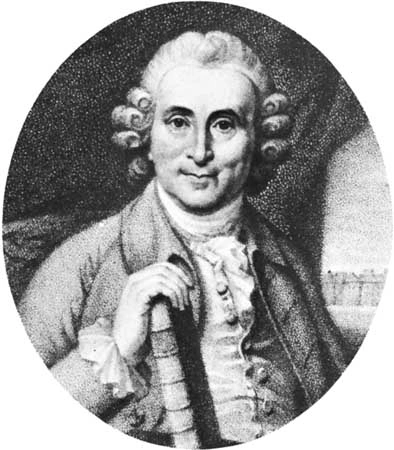
| 8 Quotes | |
| Occup. | Scientist |
| From | Scotland |
| Born | 1716 AC Edinburgh |
| Died | 1794 AC Gosport, Hampshire |
| Cite | |
Citation Formats
APA Style (7th ed.)
James lind biography, facts and quotes. (2026, February 11). FixQuotes. https://fixquotes.com/authors/james-lind/
Chicago Style
"James Lind biography, facts and quotes." FixQuotes. February 11, 2026. https://fixquotes.com/authors/james-lind/.
MLA Style (9th ed.)
"James Lind biography, facts and quotes." FixQuotes, 11 Feb. 2026, https://fixquotes.com/authors/james-lind/. Accessed 27 Mar. 2026.
Early Life and Background
James Lind was born in Edinburgh around 1716, in a Scotland being remade by the 1707 Union and by a fast-rising culture of improvement - practical science, commerce, and medicine bound tightly together. Edinburgh was a port city as much as a university town, and seafaring talk was not abstraction: ships tied Scotland to the Baltic, the Caribbean, and the North Sea. In that world, disease traveled as reliably as goods. Lind grew up in an era when naval power depended not only on guns and seamanship but on the ability to keep men alive through long blockade and ocean passages.Scurvy, the great killer of sailors, formed the grim background music of his generation. It was understood as a syndrome of decay - weakness, bleeding, ulcers, the body seeming to unmake itself - but its cause was disputed, and its prevention remained inconsistent despite scattered reports that citrus helped. Lind entered adult life at the intersection of two pressures: the humanitarian reality of mass suffering at sea and the state necessity of maintaining crews for Britain and the expanding empire. Those pressures would shape his moral imagination and his later insistence on evidence over tradition.
Education and Formative Influences
Lind apprenticed in medicine in Edinburgh and was shaped by the citys medical culture, which prized bedside observation and the emerging language of experiment. He went to sea young, joining the Royal Navy as a surgeons mate in the 1730s and later becoming a naval surgeon - a role that combined emergency craft, sanitation, and the management of men in cramped, stressful conditions. In 1748 he received an MD from the University of Edinburgh, but his most formative education came earlier, in ships sickbays, where diet, weather, discipline, and morale interacted, and where a surgeon learned quickly which remedies were theater and which changed outcomes.Career, Major Works, and Turning Points
Linds turning point came in May 1747 aboard HMS Salisbury, when he conducted what is often described as a controlled clinical trial on scurvy, assigning small groups of scorbutic sailors different treatments while keeping their basic diet similar. The striking improvement in those given oranges and lemons became the empirical core of his 1753 Treatise of the Scurvy, a book that combined case history, literature review, and practical reform proposals. Later, as physician at the Royal Naval Hospital at Haslar near Portsmouth (from 1758), he widened his focus to fleet health - ventilation, cleanliness, water supply, typhus and fevers - publishing An Essay on the Most Effectual Means of Preserving the Health of Seamen (1762) and further writings on naval medicine. His influence was slow at first; the Admiralty did not fully institutionalize citrus juice until the 1790s, near the end of his life, but his work helped shift naval medicine toward testable claims and preventive policy.Philosophy, Style, and Themes
Lind wrote like a clinician who had watched theory fail in real time. His style is methodical and concrete, built from the material facts of bodies under stress - gums, spots, lassitude, the wobble of knees - rather than from grand systems. When he describes scorbutic men, he is also describing his own diagnostic temperament, trained to distrust vague language and to let specific signs discipline the imagination: “They all in general had putrid gums, the spots and lassitude, with weakness of their knees”. The sentence is spare, almost unemotional, but the choice to inventory suffering so exactly reveals a mind seeking patterns that can be acted upon.His deeper theme is that effective medicine depends on comparison, not conviction. In the Salisbury trial narrative, recovery is not a miracle but a difference measured against others who did not improve; he repeatedly notes time, dosage, and the limits imposed by ships stores, as when citrus ran out: “They continued but six days under this course, having consumed the quantities that could be spared”. That practicality cuts two ways - it shows why cures were missed (the remedy was not always available long enough), and it hints at Linds psychological realism about institutions: knowledge without logistics does not save lives. He also observed not just clinical change but morale and appetite, the hungry insistence of deprived men: “These they ate with greediness, at different times, upon an empty stomach”. In his hands, the sailors craving becomes evidence - a bodily intelligence that medicine should heed - and a quiet rebuke to therapies imposed for fashion rather than need.
Legacy and Influence
Lind died around 1794, having lived long enough to see his empiricism seep into naval practice even as the full policy revolution came at the end of the century, when routine citrus rations helped make long deployments feasible and altered the strategic balance at sea. His legacy is not only the scurvy breakthrough but a model of medical reasoning: small-group comparison, attention to confounders like diet and supply, and a preventive orientation aimed at systems rather than heroic rescues. In biography, he stands as a bridge figure of the Scottish Enlightenment - humane, improvement-minded, and stubbornly observational - whose work helped redefine what it meant to call medicine a science in an age when the ocean was both laboratory and grave.Our collection contains 8 quotes written by James, under the main topics: Health - Cooking.
James Lind Famous Works
- 1768 On the Diseases Incidental to Europeans in Hot Climates (Book)
- 1757 An Essay on the Most Effectual Means of Preserving the Health of Seamen (Book)
- 1753 A Treatise of the Scurvy (Book)
Source / external links