
James Russell Lowell Biography Quotes 55 Report mistakes
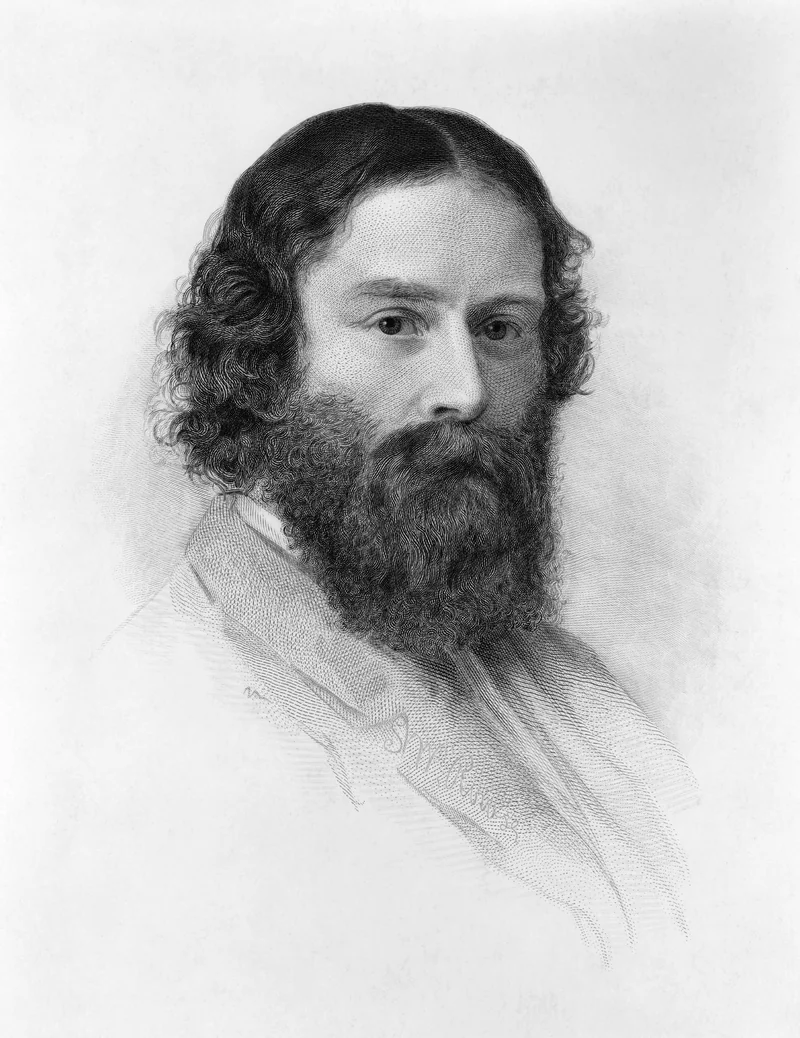
| 55 Quotes | |
| Occup. | Poet |
| From | USA |
| Born | February 22, 1819 Cambridge, Massachusetts, U.S. |
| Died | August 12, 1891 Cambridge, Massachusetts, U.S. |
| Aged | 72 years |
| Cite | |
Citation Formats
APA Style (7th ed.)
James russell lowell biography, facts and quotes. (2026, February 11). FixQuotes. https://fixquotes.com/authors/james-russell-lowell/
Chicago Style
"James Russell Lowell biography, facts and quotes." FixQuotes. February 11, 2026. https://fixquotes.com/authors/james-russell-lowell/.
MLA Style (9th ed.)
"James Russell Lowell biography, facts and quotes." FixQuotes, 11 Feb. 2026, https://fixquotes.com/authors/james-russell-lowell/. Accessed 12 Feb. 2026.
Early Life and Background
James Russell Lowell was born February 22, 1819, in Cambridge, Massachusetts, into the old New England world of parsonage culture, civic duty, and inherited books. His father, the Rev. Charles Lowell, served the West Church in Boston; his mother, Harriet Spence Lowell, came from a family proud of its intellectual and moral seriousness. The household at Elmwood, later famous in its own right, sat near Harvard and the town-gown ferment that made Cambridge a cockpit of American letters. The era of Lowell's childhood was one of expanding print culture and sharpening national contradictions - evangelical reform on one side, slavery and party patronage on the other - and he grew up hearing that words mattered because public conscience could be moved.From early on he showed a quick, unruly intelligence and a temperament split between satiric edge and romantic yearning. A physical restlessness and periodic ill health fed his inwardness, but so did the sense that he was being measured against ancestral expectations. By the 1840s he was already testing how far a poet could go in America: whether lyric grace could coexist with moral indignation, and whether a writer could remain a gentleman while taking up causes that divided friends and families.
Education and Formative Influences
Lowell entered Harvard College and graduated in 1838, absorbing the classics, English poetry, and the habits of debate that shaped Cambridge radicalism, even as he chafed at discipline and earned a reputation for brilliance without compliance. He studied law and was admitted to the bar, but the profession never held him; his real apprenticeship was in the magazines, the lecture hall, and the reform circles where abolitionism, Transcendentalism, and the new assertive journalism competed for the nation's imagination. His marriage in 1844 to Maria White, a poet and ardent abolitionist, intensified his commitment to antislavery and gave his verse a bracing moral spine, while personal loss - including the deaths of children and later of Maria herself - deepened his capacity for elegy and restraint.Career, Major Works, and Turning Points
Lowell's breakthrough year was 1848, when he published Poems, the abolitionist verse collection; A Fable for Critics, a long, witty verse survey of American writers; and the first series of The Biglow Papers, which used Yankee dialect and the persona of Hosea Biglow to skewer the Mexican-American War and political cant with comic precision. He became the first editor of the Atlantic Monthly in 1857 and later edited the North American Review, roles that made him a gatekeeper of literary standards as the Civil War approached. In 1855 he succeeded Henry Wadsworth Longfellow as Smith Professor of Modern Languages at Harvard, anchoring him institutionally even as he remained a working poet and essayist. After the war he turned increasingly to criticism and public speech, and in diplomacy he represented the United States as minister to Spain (1877-1880) and then to Great Britain (1880-1885), his addresses and essays projecting a cultivated American voice abroad. Major later works include the second series of The Biglow Papers (1867) and the Commemoration Ode (1876), written for Harvard's memorial to its Civil War dead, where his moral rhetoric met the cost of history.Philosophy, Style, and Themes
Lowell's inner life was governed by a demanding conscience and a writer's suspicion of easy piety. He distrusted mere opinion unless it had been tested in the self, insisting that "No man can produce great things who is not thoroughly sincere in dealing with himself". That severity helps explain the oscillation in his career between satire and hymnlike elevation: satire was his instrument against hypocrisy, while the ode and elegy were his attempt to speak with earned authority after grief and national violence. The young reformer who could mock politicians in dialect never entirely left the later diplomat who prized tact; instead Lowell made a craft of holding both - a public moralist who knew how quickly righteousness curdles into performance.His style fused bookish allusion with colloquial bite, and his themes turn on perception: seeing through pretense, seeing the human within the adversary, seeing the nation as an ethical project. In the Biglow voice he made democracy answerable to itself, capturing the paradox that a free people can rationalize its own harm: "Democracy is the form of government that gives every man the right to be his own oppressor". Yet he was not a nihilist; he measured life by aspiration, not mere avoidance, declaring "Not failure, but low aim, is crime". That line illuminates Lowell's psychology: he feared not defeat but diminishment, the settling of the soul into safety. Even his gentler essays on reading and culture assume that minds cross-pollinate, and that literature is a civic force as much as a private pleasure.
Legacy and Influence
Lowell endured as one of the central figures of the New England Renaissance: a poet of the antislavery conscience, a master of American literary satire, and a critic who helped define what a national literature might demand of itself. His dialect poems influenced later American vernacular writing, while his essays and speeches modeled an ideal of the public intellectual - literate, morally engaged, and capable of irony without cynicism. If some of his occasional verse has faded, his best work retains the tension that made him compelling in his own era: a belief that art must answer to history, and that a writer's first battlefield is the self.Our collection contains 55 quotes written by James, under the main topics: Witty One-Liners - Motivational - Ethics & Morality - Wisdom - Truth.
Other people related to James: Henry W. Longfellow (Poet), Robert Lowell (Poet), James Thomas Fields (Publisher), Thomas Bailey Aldrich (Poet), Abbott L. Lowell (American), Edmund C. Stedman (Poet), Edwin Percy Whipple (Writer)
James Russell Lowell Famous Works
- 1871 My Study Windows (Collection)
- 1870 Among My Books (Collection)
- 1867 The Biglow Papers (Second Series) (Poetry)
- 1865 Commemoration Ode (Harvard) (Poetry)
- 1848 The Biglow Papers (First Series) (Poetry)
- 1848 A Fable for Critics (Poetry)
- 1845 The Present Crisis (Poetry)