
James Stockdale Biography Quotes 23 Report mistakes
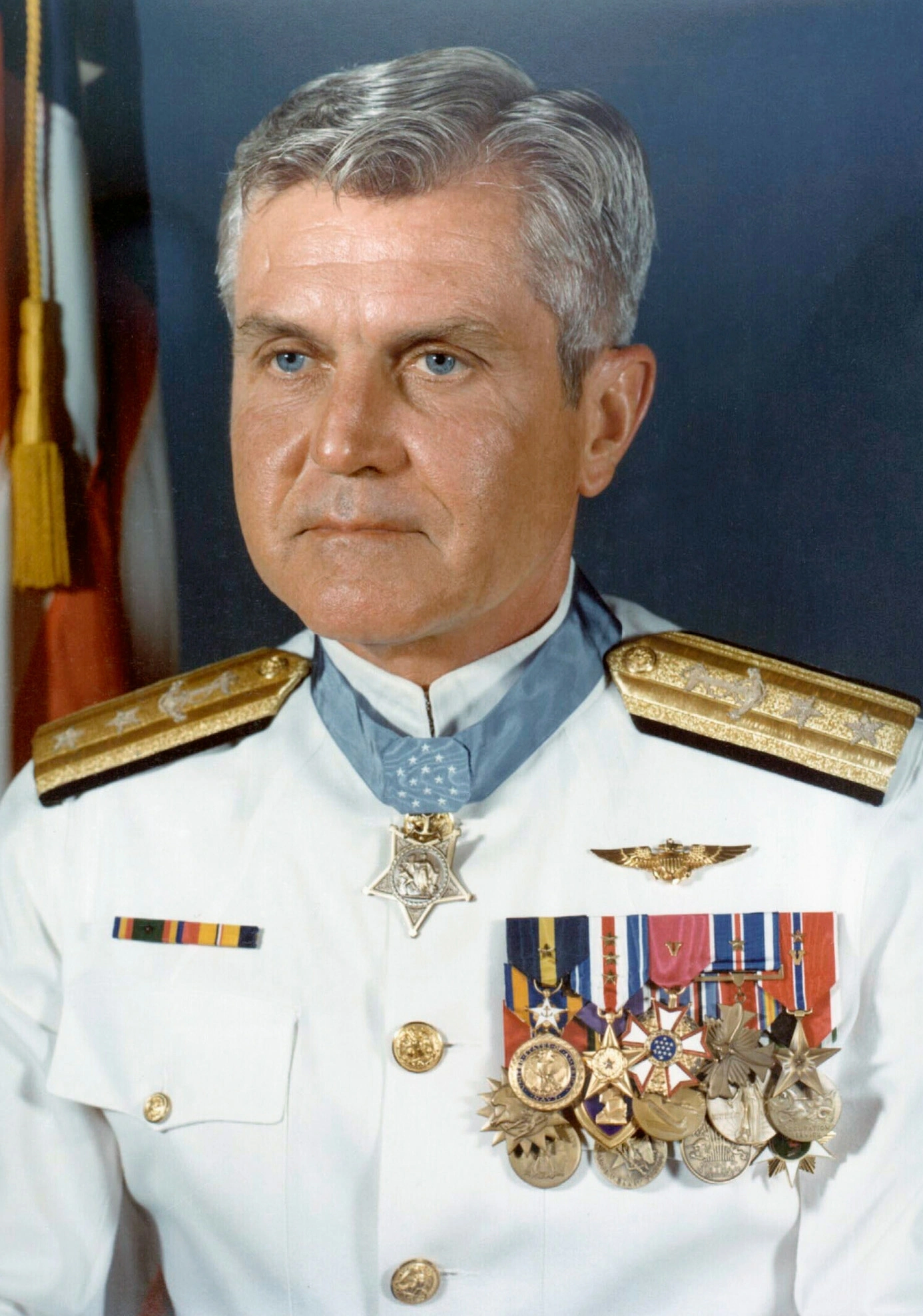
| 23 Quotes | |
| Occup. | Soldier |
| From | USA |
| Born | December 23, 1923 Abingdon, Illinois |
| Died | July 5, 2005 Coronado, California |
| Aged | 81 years |
| Cite | |
Citation Formats
APA Style (7th ed.)
James stockdale biography, facts and quotes. (2026, February 11). FixQuotes. https://fixquotes.com/authors/james-stockdale/
Chicago Style
"James Stockdale biography, facts and quotes." FixQuotes. February 11, 2026. https://fixquotes.com/authors/james-stockdale/.
MLA Style (9th ed.)
"James Stockdale biography, facts and quotes." FixQuotes, 11 Feb. 2026, https://fixquotes.com/authors/james-stockdale/. Accessed 11 Feb. 2026.
Early Life and Background
James Bond Stockdale was born on December 23, 1923, in Abingdon, Illinois, a small Midwestern railroad town where thrift, plain speech, and civic duty were not slogans but expectations. His father worked as a businessman and local official, and Stockdale grew up in a culture that treated reputation as a kind of public property - earned slowly and lost quickly. That early moral economy mattered later, because his most famous test would hinge less on tactics than on whether a man could live with himself when no rescue was visible.His young adulthood unfolded in the shadow of World War II, when the United States mobilized an entire generation and offered ambitious, disciplined students a ladder into national service. Stockdale was not a romantic about violence; he was drawn to competence, responsibility, and the clear hierarchy of a profession that asked for sacrifice without apology. By the time he entered naval service, he had already internalized a central tension that would define him: a private, self-auditing conscience inside an institution built on obedience.
Education and Formative Influences
Stockdale entered the US Naval Academy at Annapolis during wartime and graduated in 1946, then pursued the demanding, identity-forming pipeline of naval aviation. He flew combat missions in the Korean War and later served in an era when carrier aviation was becoming a high-technology priesthood, requiring split-second judgment under heavy procedural discipline. A crucial turn came in 1962-1963 when, as a senior officer, he studied at Stanford University and encountered Stoic philosophy - especially Epictetus - in a way that felt less academic than operational: a manual for separating what can be controlled from what cannot.Career, Major Works, and Turning Points
By the mid-1960s Stockdale was a celebrated naval aviator and leader, commanding a fighter squadron and flying the F-8 Crusader: "I was commanding officer of a supersonic fighter squadron, FA Crusaders". On September 9, 1965, during a mission over North Vietnam, he was shot down and captured, beginning nearly eight years as a prisoner of war in the Hoa Lo Prison system - the "Hanoi Hilton". He emerged as the senior naval officer among American prisoners, helping organize covert resistance, communication codes, and an ethical framework for survival. After repatriation in 1973 he rose to vice admiral, served as president of the Naval War College, and later wrote and lectured on leadership and moral injury. In 1992 he entered national politics as Ross Perot's vice-presidential running mate, a brief but revealing collision between a man trained for tragedy and a media culture trained for spectacle.Philosophy, Style, and Themes
Stockdale's inner life was a contest between duty and unblinking self-judgment. As a POW he was not interested in heroic legend; he spoke clinically about pain because fantasy was dangerous. "I was tortured fifteen times, that's total submission. They did that with shutting off your blood circulation with ropes, giving you claustrophobia and pain at the same time, bending you double". The point, for him, was not to display suffering but to locate agency inside it: the capacity to choose resistance, silence, or compliance in fractions, then live with the moral residue. That residue explains his later bluntness about regret and responsibility - not as self-pity but as an officer's after-action report on the soul.His leadership philosophy fused institutional order with Stoic inward freedom. In captivity he helped transform a prison population into a community with standards, obligations, and a shared story: "And we had our own laws. I mean, I wrote them. And we had our own customs, and traditions, and proprieties". Those improvised laws were less about control than about dignity - a structure that kept men from dissolving into isolated bargains with their captors. From that experience he drew a lifelong conviction that character outlasts headlines: "I think character is permanent, and issues are transient". Even his uneasy foray into electoral politics reflected this bias; he treated campaigns as theaters where the public weighed surfaces while the real question was whether a candidate had the moral equipment to endure fear, humiliation, and loneliness without breaking others to save himself.
Legacy and Influence
Stockdale died on July 5, 2005, in Coronado, California, after years marked by the hidden wounds of captivity. His legacy endures in military ethics, leadership training, and the broader vocabulary of resilience - not the cheerful kind, but the severe kind that admits chaos and still insists on responsibility. Through speeches, writings, and the example of his conduct in Hanoi, he left the United States an argument embodied in a life: freedom begins as an inner discipline, and the highest form of command is the ability to govern oneself when no one is watching and nothing is guaranteed.Our collection contains 23 quotes written by James, under the main topics: Witty One-Liners - Motivational - Justice - Freedom - Movie.
Source / external links