
James Talent Biography Quotes 7 Report mistakes
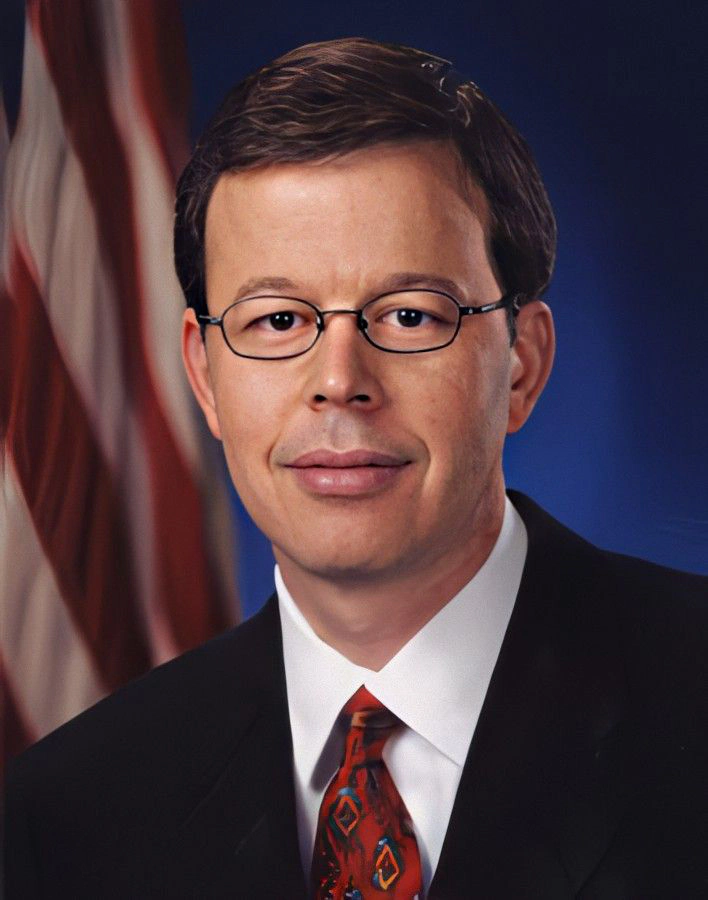
Attr: See page for author
| 7 Quotes | |
| Born as | James Matthes Talent |
| Known as | Jim Talent |
| Occup. | Politician |
| From | USA |
| Spouse | Karen Talent |
| Born | October 18, 1956 Des Peres, Missouri, USA |
| Age | 69 years |
| Cite | |
Citation Formats
APA Style (7th ed.)
James talent biography, facts and quotes. (2026, February 11). FixQuotes. https://fixquotes.com/authors/james-talent/
Chicago Style
"James Talent biography, facts and quotes." FixQuotes. February 11, 2026. https://fixquotes.com/authors/james-talent/.
MLA Style (9th ed.)
"James Talent biography, facts and quotes." FixQuotes, 11 Feb. 2026, https://fixquotes.com/authors/james-talent/. Accessed 5 Mar. 2026.
Early Life and Education
James Matthes Talent was born on October 18, 1956, in the St. Louis area of Missouri and grew up in a community that prized civic involvement and public service. He attended Washington University in St. Louis, where he developed a lasting interest in constitutional law, public policy, and the practical mechanics of governing. He continued his studies at the University of Chicago Law School, a training ground that honed his analytical skills and introduced him to the craftsmanship of legislative design and oversight. After law school he clerked for a federal judge and returned to Missouri to practice law, gaining experience that would inform his later work on economic and regulatory issues.Early Career and State Politics
Talent entered elective office in the mid-1980s, winning a seat in the Missouri House of Representatives and taking office in 1985. He quickly became known for command of policy detail and an emphasis on growth-oriented economics. Working across committee lines, he advocated reforms aimed at encouraging employment and entrepreneurship while also taking a pragmatic approach to budgeting. Within the Republican caucus he rose into leadership roles, collaborating with senior figures in statewide politics at a time when Democrats controlled much of Jefferson City. His ability to negotiate while keeping a focus on outcomes marked his legislative style and set the stage for a move to Congress.U.S. House of Representatives
In 1992, Talent won election to the U.S. House from a suburban St. Louis district and took office in January 1993. Over four terms, he built a profile as a policy-focused conservative who cultivated relationships with small business owners and manufacturers. A defining period came when he served as chairman of the House Small Business Committee, where he worked with colleagues in both parties to amplify the concerns of employers about access to capital, regulatory burdens, and workforce readiness. He often framed his arguments in terms of the real-world consequences for communities back home, emphasizing local suppliers, tool-and-die shops, and family-owned enterprises that formed the backbone of the regional economy. As Missouri Republicans gathered momentum nationally, he worked alongside figures such as Roy Blunt in the House and Kit Bond in the Senate to strengthen the party's statewide infrastructure.
2000 Gubernatorial Campaign
After four terms in Congress, Talent sought the governorship of Missouri in 2000. The contest was close and hard-fought, ultimately resulting in a narrow defeat to Democrat Bob Holden. The campaign highlighted Talent's themes of fiscal discipline, education accountability, and job creation. Though unsuccessful, the race elevated his statewide name recognition and ensured his continued relevance within Missouri politics, setting the stage for a rapid return to national office.U.S. Senate
In 2002, Missouri held a special election for the U.S. Senate. Talent ran a disciplined campaign focused on economic growth and national security and narrowly defeated the appointed incumbent, Jean Carnahan. He entered the Senate at a moment when defense and security dominated the congressional agenda, and he secured assignments that aligned with those priorities. On the Armed Services Committee, he worked on issues affecting the National Guard and Reserves, the defense industrial base, and the modernization of U.S. capabilities. He also engaged with energy and agricultural policy as they affected Midwestern states, arguing that predictable rules and infrastructure investment were critical for farmers and manufacturers alike.
Talent's Senate tenure overlapped with significant debates over the use of force, homeland security, and veterans' benefits. He approached these matters from a perspective shaped by committee oversight and frequent contact with Missouri military families and defense suppliers. He maintained strong ties to his House successor, Todd Akin, and coordinated with fellow Missouri Senator Kit Bond on appropriations and defense readiness.
In 2006, Talent ran for reelection in an environment marked by national turbulence over the Iraq War and shifting voter sentiment. He lost a closely watched race to Democrat Claire McCaskill. The result ended his Senate service in January 2007 but did not diminish his influence on national security policy.
Policy Work and Later Career
After leaving the Senate, Talent moved into a portfolio of public-policy roles that leveraged his legislative experience. He became a distinguished fellow at a leading policy institute, contributed op-eds and reports on defense modernization, and advised candidates on national security strategy. He served as vice chairman of the congressionally chartered Commission on the Prevention of Weapons of Mass Destruction Proliferation and Terrorism, a bipartisan panel chaired by former Senator Bob Graham. In that capacity, he helped spotlight gaps in biodefense, intelligence integration, and global nonproliferation efforts, arguing for a comprehensive approach that combined diplomacy, homeland security, and resilient public health systems.Talent also served as a member of the U.S.-China Economic and Security Review Commission, participating in research and hearings that examined the strategic, economic, and technological dimensions of the bilateral relationship. His work there reflected a continuing interest in supply-chain security, investment screening, and the intersection of trade policy with national defense. During presidential election cycles, he advised Republican candidates, most prominently Mitt Romney, on defense posture, procurement priorities, and alliance management, while maintaining engagement with lawmakers on both sides of the aisle who were interested in practical reforms.
Relationships and Political Context
Throughout his career, Talent's trajectory was shaped by collaboration and competition with prominent Missouri and national figures. In statewide contests he faced Bob Holden, Jean Carnahan, and Claire McCaskill, each of whom tested different aspects of his political coalition. In Congress he cooperated with colleagues including Roy Blunt and Kit Bond to shepherd Missouri priorities, and he worked within broader committee frameworks alongside senior defense legislators. In the think-tank and commission world, he partnered with Bob Graham and other bipartisan voices who sought to keep attention fixed on long-term risks rather than short-term headlines. These relationships broadened his influence beyond the electoral calendar and helped him translate legislative experience into practical recommendations for the executive branch and Congress.Personal Life and Civic Involvement
Talent has long been connected to St. Louis civic and educational institutions and has remained rooted in Missouri even as his policy work drew him frequently to Washington. He is married to Brenda Talent, an attorney whose own work in law and public policy has intersected with economic reform and civic leadership in Missouri. Together, they have been present in community, faith, and educational efforts aimed at strengthening local opportunity. His public commentary has often emphasized the local impact of national decisions and the importance of institutions, families, schools, and small businesses, in maintaining social resilience.Legacy
James M. Talent's career reflects a blend of electoral service and policy entrepreneurship. In the Missouri legislature, the U.S. House, and the U.S. Senate, he pursued a pragmatic conservative approach centered on economic dynamism and national defense. After leaving elective office, he carried those priorities into bipartisan commissions and advisory roles, focusing on emerging threats, industrial capacity, and the practical levers of government performance. His interactions with figures such as Jean Carnahan, Claire McCaskill, Bob Graham, Mitt Romney, Roy Blunt, and Kit Bond trace a network of relationships that contextualize his contributions: a legislator attuned to detail, a policy advocate for preparedness and growth, and a Missourian who linked national debates to the lived realities of the Midwest.Our collection contains 7 quotes written by James, under the main topics: Justice - Freedom - Health - Military & Soldier - Marriage.
Source / external links