
James Truslow Adams Biography Quotes 7 Report mistakes
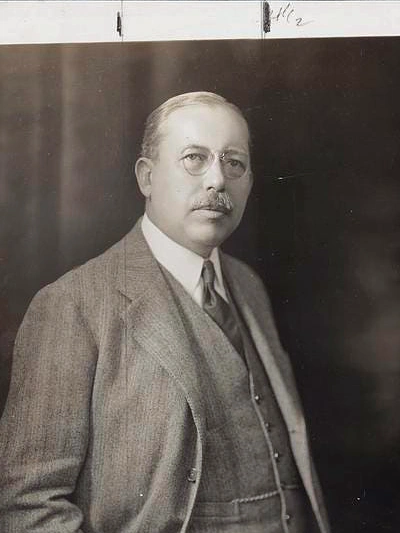
Attr: curiosaday.substack.com
| 7 Quotes | |
| Occup. | Historian |
| From | USA |
| Born | October 18, 1878 Brooklyn, New York |
| Died | May 18, 1949 New York City |
| Aged | 70 years |
| Cite | |
Citation Formats
APA Style (7th ed.)
James truslow adams biography, facts and quotes. (2026, February 11). FixQuotes. https://fixquotes.com/authors/james-truslow-adams/
Chicago Style
"James Truslow Adams biography, facts and quotes." FixQuotes. February 11, 2026. https://fixquotes.com/authors/james-truslow-adams/.
MLA Style (9th ed.)
"James Truslow Adams biography, facts and quotes." FixQuotes, 11 Feb. 2026, https://fixquotes.com/authors/james-truslow-adams/. Accessed 26 Mar. 2026.
Early Life and Background
James Truslow Adams was born on October 18, 1878, in Brooklyn, New York, into a late-Gilded Age America pulsing with immigration, industrial consolidation, and widening arguments over what the nation owed its workers and what citizens owed the republic. His family background was comfortable enough to offer educational access, yet his formative years unfolded in a city where old-stock Protestant assurance, new wealth, and crowded tenements existed side by side. The moral contrasts of that urban world - ambition and anxiety, refinement and roughness - later reappeared in his histories as a persistent interest in the lived texture of American aspiration.Adams came of age as the United States turned outward in commerce and war, then inward through Progressive reform and, later, the disillusionments of World War I. He was not a historian of archives alone; he was a historian of temperament. Even before he coined a defining phrase for national self-understanding, he was attentive to how ordinary hopes collided with institutions, markets, and inherited class expectations. The question that would animate him was less "What happened?" than "What did Americans think they were allowed to hope for?"
Education and Formative Influences
Adams studied at Yale University and then at Trinity College, Cambridge, absorbing both an American undergraduate tradition that prized civic leadership and an English historical culture that treated long continuity, manners, and class as explanatory forces. That dual exposure helped him write histories that were neither purely celebratory nor purely cynical: he learned to respect documentary rigor while also reading society as a system of incentives, myths, and moral compromises, an approach sharpened by the Progressive Era habit of asking what structures lay behind individual success or failure.Career, Major Works, and Turning Points
After early work in business, Adams turned decisively toward letters and public history, writing with a clarity aimed at general readers rather than specialists. His reputation rose with The Founding of New England (1921), which won the Pulitzer Prize for History, and he became widely known for The Epic of America (1931), where he articulated the "American Dream" as a national ideal rooted in opportunity and dignity rather than mere accumulation. During the interwar years and the Great Depression, his work gained urgency: economic collapse made the gap between promise and reality impossible to ignore, and Adams positioned himself as an interpreter of how national mythology could inspire resilience yet also mask inequality. He remained active as an essayist and historian through World War II, writing from the vantage point of a citizen-scholar trying to preserve democratic confidence without succumbing to propaganda.Philosophy, Style, and Themes
Adams wrote history as moral psychology. He distrusted both saint-and-sinner storytelling and the comforting notion that progress was automatic, pressing instead for a disciplined view of character and consequence. His famous insistence that “There is so much good in the worst of us, and so much bad in the best of us, that it ill behaves any of us to find fault with the rest of us”. captures the humane skepticism that runs through his portraits of Puritans, founders, and modern Americans alike. In his hands, national development was not a parade of heroes but a contested inheritance shaped by mixed motives and imperfect choices.At the same time, Adams was acutely sensitive to how modern life redefined liberty into a desire for insulation. “The freedom now desired by many is not freedom to do and dare but freedom from care and worry”. That sentence reads like a diagnosis of the 1930s as much as a timeless warning: economic insecurity, mass consumer culture, and bureaucratic scale could shrink the citizen from participant to client. His style - direct, aphoristic, and tuned to the cadences of public speech - allowed him to translate structural history into inner conflict, probing how Americans balanced self-reliance with comfort, risk with safety, and idealism with fatigue.
Legacy and Influence
Adams enduring influence lies less in a school of academic method than in a phrase and a framework that entered civic vocabulary. The "American Dream", as he framed it, became a measuring stick used by politicians, novelists, sociologists, and ordinary families to judge whether the nation was keeping faith with its promise. His best work remains a bridge between scholarship and the public square: a reminder that the history of the United States is not only institutional chronology but a record of expectations, disappointments, and renewals - and that the struggle to define a worthy life has always been as central to the American story as the struggle to build a wealthy one.Our collection contains 7 quotes written by James, under the main topics: Freedom - Learning - Life - Aging - Humility.