
Jan Egeland Biography Quotes 17 Report mistakes
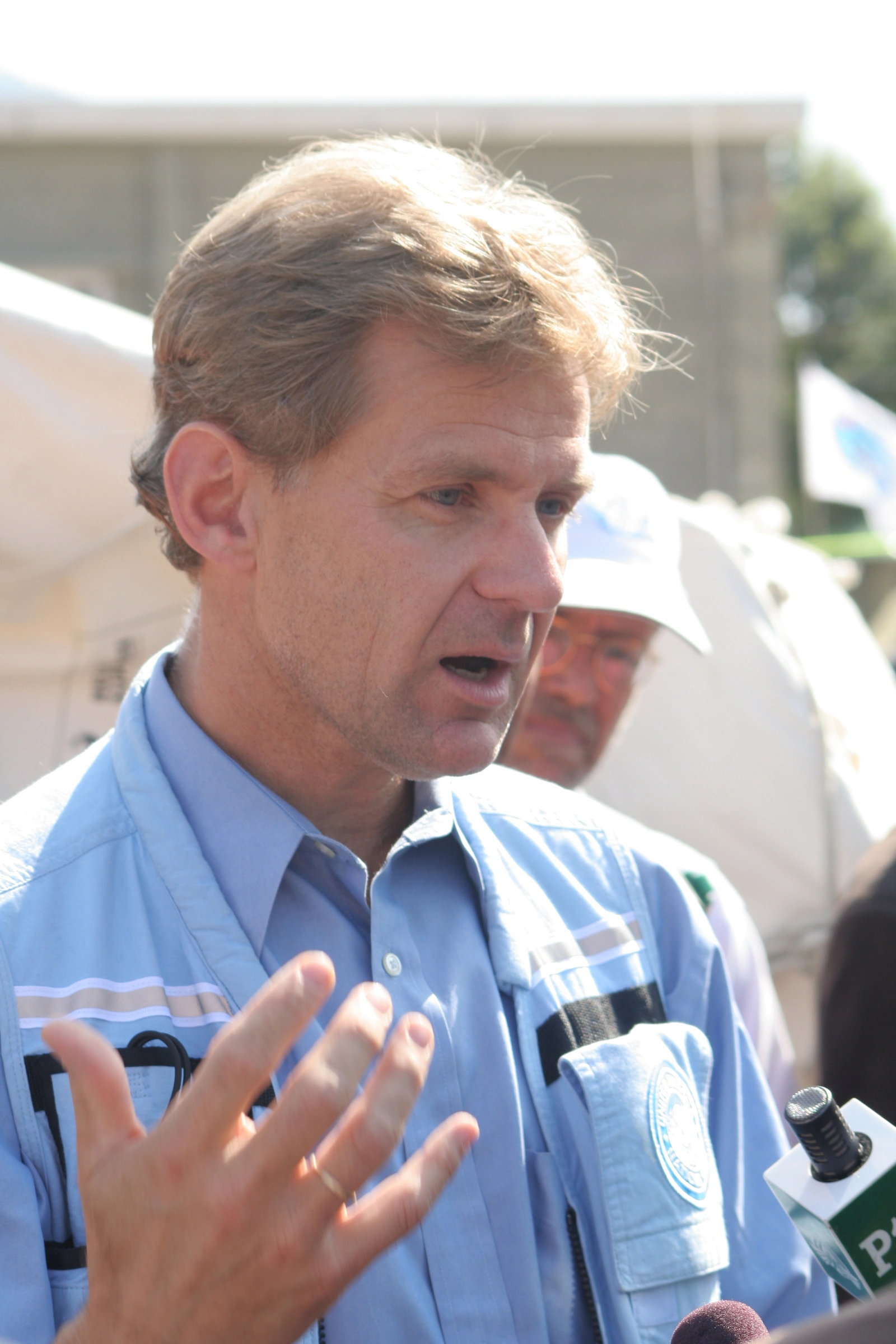
| 17 Quotes | |
| Occup. | Public Servant |
| From | Norway |
| Born | September 12, 1957 |
| Age | 68 years |
| Cite | |
Citation Formats
APA Style (7th ed.)
Jan egeland biography, facts and quotes. (2026, February 11). FixQuotes. https://fixquotes.com/authors/jan-egeland/
Chicago Style
"Jan Egeland biography, facts and quotes." FixQuotes. February 11, 2026. https://fixquotes.com/authors/jan-egeland/.
MLA Style (9th ed.)
"Jan Egeland biography, facts and quotes." FixQuotes, 11 Feb. 2026, https://fixquotes.com/authors/jan-egeland/. Accessed 23 Mar. 2026.
Early Life and Background
Jan Egeland was born on 12 September 1957 in Norway, a country whose postwar identity fused social democracy at home with an outward-looking humanitarian conscience. He came of age as Norway refined a distinctive brand of internationalism - small-state diplomacy, generous aid budgets, and a belief that legitimacy abroad could be built through peace work and protection of civilians. That milieu helped make public service not merely a career track but a moral vocabulary.The era also sharpened his sense of urgency. The Cold War framed crises as proxy struggles, yet the human costs were visible on television and in refugee flows that reached European politics. For a Norwegian of his generation, the great lesson was that distance did not absolve responsibility. Egeland would carry that lesson into institutions that depend on persuasion more than force, and where a single clear statement can move funding, attention, or restraint.
Education and Formative Influences
Egeland studied political science at the University of Oslo and later deepened his perspective through international study, including work in the United States, at a time when development debates were shifting from state-led modernization toward conflict prevention, human rights, and humanitarian access. His formative influences were practical as much as theoretical: the Nordic tradition of consensus-building, the UN system's promise and limits, and the growing recognition that modern civil wars turned civilians into primary targets, demanding both diplomacy and logistics.Career, Major Works, and Turning Points
Egeland built a career straddling government, mediation, and humanitarian leadership: senior roles in Norwegian public life culminated in service as Norway's state secretary in the Ministry of Foreign Affairs, then as a key figure in peace efforts, notably in the Middle East as UN Special Coordinator and later in Sri Lanka as Norway's chief facilitator during attempts to end the long war between the government and the LTTE. His most globally visible turning point came at the United Nations, where he served as Under-Secretary-General for Humanitarian Affairs and Emergency Relief Coordinator (2003-2006), bringing the Darfur catastrophe, the Niger food crisis, and other neglected emergencies into sharper view while pressing donors and governments to match rhetoric with access, protection, and money. After leaving the UN, he continued to shape policy and practice as a leader in the NGO world, including as secretary general of the Norwegian Refugee Council, combining field-driven advocacy with institution-building.Philosophy, Style, and Themes
Egeland's public language is notable for its engineer's clarity: name the problem, identify the responsible actor, specify the remedy. In Darfur, he insisted on the primacy of civilian protection and the accountability of armed actors, stating, “We receive reports now on a daily basis from our own people on the ground in Darfur on widespread atrocities and grave violations of human rights against the civilian population”. Psychologically, this is the voice of a man who treats testimony as a moral instrument - the report as indictment, the briefing as a shield for the unseen. It also reveals a disciplined fear: that suffering becomes background noise unless translated into verifiable patterns and unavoidable phrases.A second theme is his rejection of fatalism - the idea that certain conflicts are too tangled for outsiders to help. His Somalia framing captured that struggle against despair: “I think the biggest challenge for Somalia has been the sense that it is a hopeless case of incomprehensible internal conflicts and there is nothing we can do”. Here his inner life shows through as a steady resistance to learned helplessness, both in donor capitals and among weary publics. Yet he paired solidarity with a hard insistence on local agency and responsibility, arguing, “It is only the Somalis themselves - and I don't hide that fact when I meet the political leaders here - they themselves have to stop their old practices of fighting each other every time they have a problem. They have to learn how to do peaceful conflict resolution”. The combination is characteristic: compassion without romanticizing, pressure without contempt, and a belief that diplomacy is partly pedagogy - teaching elites that alternatives to violence are real.
Legacy and Influence
Egeland's enduring influence lies less in a single treaty than in a style of humanitarian statecraft that blends field credibility, blunt witness, and coalition-building across governments, UN agencies, and NGOs. He helped normalize the expectation that top officials should go to frontlines, speak plainly about perpetrators, and fight the bureaucratic drift that turns emergencies into statistics. In an age of "competing emergencies", his career has modeled how attention is itself a resource - and how public servants can convert moral clarity into budgets, access negotiations, and, at times, lives saved.Our collection contains 17 quotes written by Jan, under the main topics: War - Peace - Gratitude - Human Rights - Team Building.
Source / external links