
Jane Addams Biography Quotes 8 Report mistakes
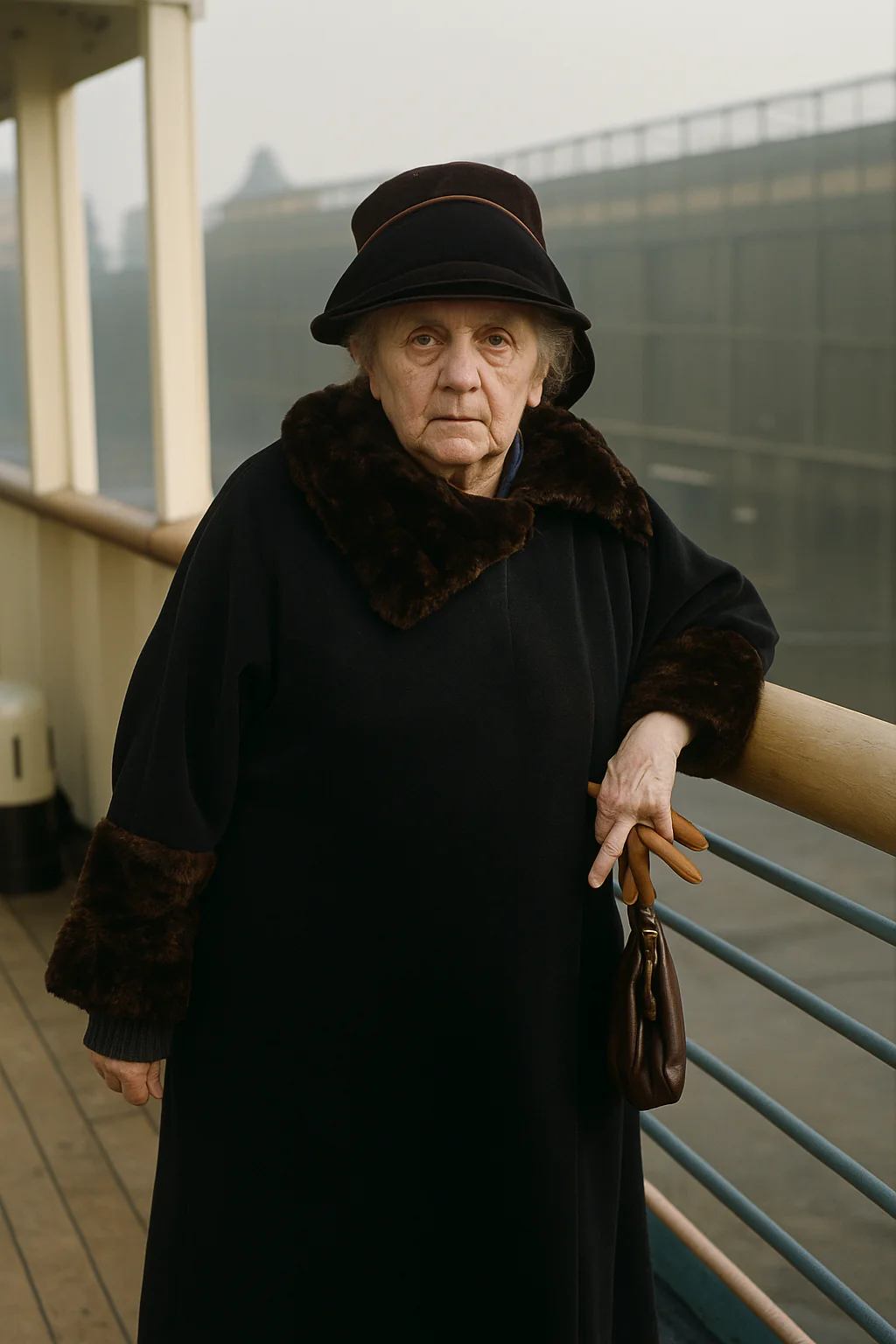
Attr: Adam Cuerden
| 8 Quotes | |
| Born as | Laura Jane Addams |
| Occup. | Activist |
| From | USA |
| Born | September 6, 1860 Cedarville, Illinois, USA |
| Died | May 21, 1935 Chicago, Illinois, USA |
| Aged | 74 years |
| Cite | |
Citation Formats
APA Style (7th ed.)
Jane addams biography, facts and quotes. (2026, February 11). FixQuotes. https://fixquotes.com/authors/jane-addams/
Chicago Style
"Jane Addams biography, facts and quotes." FixQuotes. February 11, 2026. https://fixquotes.com/authors/jane-addams/.
MLA Style (9th ed.)
"Jane Addams biography, facts and quotes." FixQuotes, 11 Feb. 2026, https://fixquotes.com/authors/jane-addams/. Accessed 26 Mar. 2026.
Early Life and Background
Laura Jane Addams was born on September 6, 1860, in Cedarville, Illinois, into the borderland culture of a Midwest still raw from sectional conflict. Her father, John Huy Addams, was a prosperous miller and state senator, a Quaker-descended Republican who had supported Abraham Lincoln and embodied the civic seriousness of the era. Jane grew up with a physical curvature of the spine and lifelong bouts of illness and fatigue, conditions that sharpened her sensitivity to suffering while also making her wary of sentimentality. The Civil War generation around her measured character by duty, thrift, and public service, and she absorbed that grammar early.Her mother, Sarah Weber Addams, died when Jane was two; the household later reorganized under a stepmother, and Jane learned to translate private longing into outward usefulness. The emotional center of her childhood was her father, whose death in 1881 shattered her assumptions about protection and moral certainty. Grief coincided with the larger shocks of the Gilded Age: railroad wealth, political corruption, and the migration of workers into industrial cities. In that widening gap between respectable comfort and urban misery, Addams began to suspect that a good life could not be built on private virtue alone.
Education and Formative Influences
Addams studied at Rockford Female Seminary (later Rockford College), graduating in 1881 as valedictorian, steeped in literature, moral philosophy, and the era's disciplined Protestant ideal of service. She flirted with medicine and traveled in Europe in the mid-1880s, where art museums, labor unrest, and the presence of the poor in capital cities pressed on her conscience. A visit to Toynbee Hall in London's East End in 1888 gave her a practical model: educated residents living among working-class neighbors, offering classes and clubs while learning from the community. Returning to the United States with Ellen Gates Starr, she carried both an aesthetic sensibility and an organizing temperament into a nation whose social problems were no longer local and could no longer be dismissed as personal failure.Career, Major Works, and Turning Points
In 1889 Addams and Starr founded Hull House in a former mansion on Halsted Street in Chicago, turning settlement work into a new kind of public institution - part school, part cultural center, part laboratory for social reform. Hull House offered kindergarten, night classes, a gymnasium, theater, art, and citizenship support, and it became a hub for women reformers and empirical social research such as Hull-House Maps and Papers (1895). Addams published Democracy and Social Ethics (1902), The Spirit of Youth and the City Streets (1909), and Twenty Years at Hull-House (1910), articulating a political ethic grounded in neighborhood life. She helped drive campaigns for child labor laws, juvenile courts, factory inspection, and public health, and served as a vice president of the National American Woman Suffrage Association while insisting that votes were only meaningful if paired with social responsibility. Her most controversial turning point came with World War I: as a founder of the Woman's Peace Party (1915) and president of the Women's International League for Peace and Freedom, she opposed U.S. entry and was denounced as unpatriotic, losing standing in some circles even as her international work deepened. In 1931 she received the Nobel Peace Prize, by then a frail figure whose reputation had begun to recover, and she died on May 21, 1935, in Chicago.Philosophy, Style, and Themes
Addams' inner life was a disciplined attempt to convert empathy into method. She distrusted moral posturing and preferred institutions that forced the comfortable into contact with the excluded; Hull House was, in effect, her answer to loneliness and to the fragmentation of modern urban life. Her writing style - plain, observant, studded with case studies from streets, courts, and kitchens - reflected a mind that thought in encounters rather than abstractions. She believed that ethics must be tested where power is uneven, and she treated democracy less as a constitution than as a daily practice of attention.Several of her most revealing formulations show how she understood the self as the principal obstacle to justice. “Action indeed is the sole medium of expression for ethics”. The sentence is not a slogan but a self-command: feeling without consequence was, for her, a subtle form of self-indulgence. “The essence of immorality is the tendency to make an exception of myself”. That psychological insight drove her suspicion of charity that preserved the donor's innocence. And her insistence that “Civilization is a method of living, an attitude of equal respect for all men”. reveals the radical core of her moderation - equality as habit, enacted in schools, workplaces, courts, and international relations. Even her pacifism followed this logic: the means mattered because they shaped the people who used them, and she measured national virtue by the human cost of its policies.
Legacy and Influence
Addams helped invent the modern language of social work, community organizing, and policy reform rooted in on-the-ground knowledge, and she modeled a form of female public authority that did not imitate masculine power so much as redefine power as caretaking with teeth. Hull House trained generations of reformers and influenced urban sociology, public administration, juvenile justice, and labor protections; her books remain a primer in democratic ethics under industrial capitalism. Her wartime vilification and later vindication also made her a touchstone for dissent in a democracy, showing how patriotism can be reimagined as responsibility to human life rather than loyalty to state violence. Today her influence persists wherever institutions try to bridge class and cultural divides with both compassion and accountability, insisting that personal goodness is insecure until it becomes common life.Our collection contains 8 quotes written by Jane, under the main topics: Ethics & Morality - Justice - Equality - Respect - Teaching.
Other people related to Jane: Nicholas M. Butler (Philosopher), Emily Greene Balch (Educator), Alice Hamilton (Scientist), Crystal Eastman (Lawyer), Anna Garlin Spencer (Writer), Albion W. Small (Sociologist)
Frequently Asked Questions
- Jane Addams education: Rockford Female Seminary (later Rockford College); brief study at Woman’s Medical College of Philadelphia; formative European travels.
- Jane Addams Nobel Peace Prize: Co-recipient in 1931 (with Nicholas Murray Butler); first American woman laureate, honored for peace leadership and WILPF.
- Jane Addams contribution to sociology: Pioneered applied sociology with Hull-House Maps and Papers; advanced social surveys, social ethics, and the link between sociology and social work.
- Jane Addams family: Daughter of John H. Addams and Sarah Weber; one of eight children; never married; close partner Mary Rozet Smith.
- What did Jane Addams do: Co-founded Hull House in Chicago; led settlement-house reform, social welfare, and peace activism.
- How old was Jane Addams? She became 74 years old
Source / external links