
Jane Addams Biography Quotes 8 Report mistakes
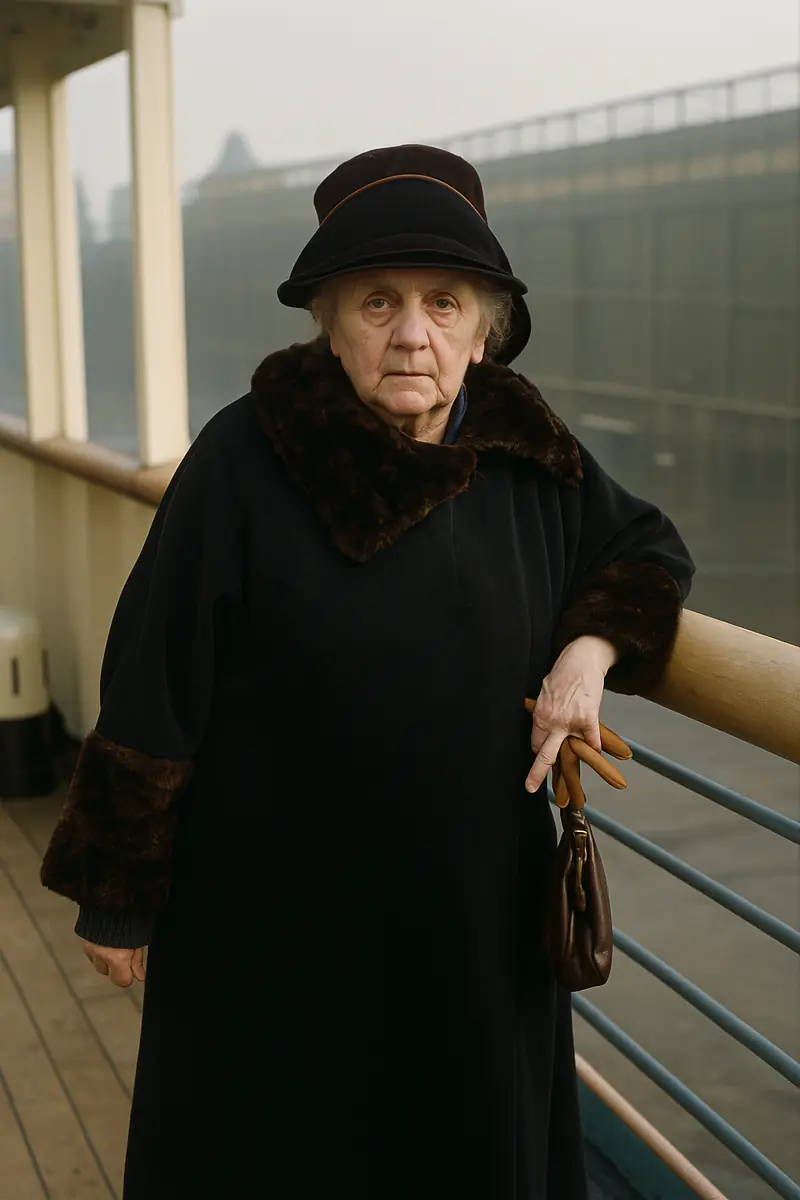
Attr: Adam Cuerden
| 8 Quotes | |
| Born as | Laura Jane Addams |
| Occup. | Activist |
| From | USA |
| Born | September 6, 1860 Cedarville, Illinois, USA |
| Died | May 21, 1935 Chicago, Illinois, USA |
| Aged | 74 years |
Jane Addams (1860-1935) was an American social reformer, settlement house pioneer, public intellectual, and peace advocate whose work helped define Progressive Era civic life. Best known as cofounder of Hull-House in Chicago, she linked hands-on neighborhood work with national and international campaigns for social justice, labor protections, public health, womens rights, and peace. In 1931 she shared the Nobel Peace Prize, recognition of decades spent building institutions and ideas that tied democracy to everyday cooperation.
Early Life and Education
Born in Cedarville, Illinois, to John H. Addams, an Illinois state senator who knew Abraham Lincoln, and Sarah Weber Addams, she grew up in a politically engaged household that stressed duty to community. Childhood illness and a spinal condition shaped her early life, as did the death of her mother when she was young. Addams attended Rockford Female Seminary (later Rockford College), graduating as valedictorian in 1881. She considered medical training but ill health and family responsibilities redirected her path. A formative European tour exposed her to social reform experiments, especially Toynbee Hall in Londons East End, which offered educated residents a way to live among and serve their neighbors. That model crystallized her vision of a settlement house.
Founding Hull-House
In 1889, with her friend Ellen Gates Starr, Addams opened Hull-House in a former mansion on Chicagos Near West Side, a dense immigrant neighborhood. Hull-House quickly grew into a complex of buildings that housed a kindergarten and day nursery, a gymnasium, art and music studios, a theater, a library, clubs for youth, and classes in English, citizenship, and industrial arts. Residents and collaborators included Florence Kelley, Julia Lathrop, Alice Hamilton, Grace Abbott, and Edith Abbott, who used empirical research to press for factory regulation, child labor laws, juvenile courts, and public health protections. Mary Rozet Smith, a close companion and philanthropist, provided vital friendship, counsel, and financial support. Addams welcomed scholars and reformers such as John Dewey, who lectured at Hull-House and shared with Addams a pragmatic belief that democracy was a way of life practiced in neighborhoods, schools, and associations.
Civic Reform and Local Leadership
Addams believed that municipal government should safeguard basic conditions of urban life. In the 1890s she accepted appointment as garbage inspector of Chicagos 19th Ward, improving refuse collection in a district long neglected by city services. She and her colleagues documented sweatshop conditions and tenement overcrowding; Florence Kelley became Illinois factory inspector and drew on Hull-House surveys to enforce the states pioneering labor law. With Julia Lathrop, Addams helped launch the nations first juvenile court in 1899, arguing that children required protection and rehabilitation rather than adult criminal penalties. She served on the Chicago Board of Education, advocated for school nurses and playgrounds, and promoted vocational guidance and lunch programs.
Labor, Industry, and Public Debate
During the Pullman Strike of 1894, Addams attempted to mediate between workers and industrialist George Pullman, urging conciliation and mutual responsibility. She wrote essays exploring the moral obligations of employers and the costs of industrial conflict, even as figures like Eugene V. Debs and other labor leaders charted their own strategies. Hull-House provided meeting space and impartial forums where competing sides could speak. Addams believed that democratic habits were learned in such settings and that settlement houses modeled the cooperation modern cities needed.
Womens Rights and Interracial Reform
Addams emerged as a national leader in the womens movement, serving in the National American Woman Suffrage Association and arguing that womens experiences in caregiving and community stewardship were assets to public life. She worked alongside activists including Ida B. Wells, Lillian Wald, and Mary White Ovington to advance civil rights and social reform. She supported the founding of the NAACP in 1909 and served on its national committee, collaborating with W. E. B. Du Bois and others in campaigns against segregation and lynching. In 1912 Addams publicly supported Theodore Roosevelts Progressive Party, seconding his nomination at the national convention and pressing for a platform that included child welfare, labor standards, and suffrage.
Ideas, Writing, and Public Philosophy
A prolific writer, Addams translated experience at Hull-House into a public philosophy. Democracy and Social Ethics (1902) argued that ethical life grows from associational ties; Newer Ideals of Peace (1907) reimagined peace as active, cooperative citizenship; The Spirit of Youth and the City Streets (1909) analyzed urban recreation and delinquency; Twenty Years at Hull-House (1910) offered a memoir of settlement work; Peace and Bread in Time of War (1922) defended her pacifism. Her prose, informed by observation and dialogue, connected academic thought to civic practice. Friends and colleagues such as John Dewey and William James regarded her as a fellow thinker in the pragmatic tradition, even as she remained grounded in neighborhood realities.
Peace Advocacy and International Work
At the outbreak of World War I, Addams helped organize the Womens Peace Party in 1915 and chaired the International Congress of Women at The Hague the same year. She then joined a small delegation that visited leaders and diplomats across Europe, urging negotiation. Though criticized at home for pacifist activism during wartime and scrutinized during the Red Scare, she persisted. After the war she helped found the Womens International League for Peace and Freedom, serving with Emily Greene Balch and international colleagues to press for disarmament, self-determination, and social justice as foundations of lasting peace. In 1931 she shared the Nobel Peace Prize with Nicholas Murray Butler, an acknowledgment that peace required both diplomacy and the slow, local work of social reform.
Networks, Institutions, and National Influence
Addams believed that change required both grassroots action and national coalitions. Hull-House residents moved into public service: Julia Lathrop led the U.S. Childrens Bureau; Alice Hamilton pioneered industrial medicine; Grace Abbott directed the Childrens Bureau after her sister and advocated for immigration and social insurance. Addams took part in the National Conference of Charities and Correction as its first woman president and joined the founding of the American Civil Liberties Union in 1920, aligning civil liberties with social welfare. She advised reformers across the country, and settlements like Lillian Walds Henry Street Settlement drew inspiration from Hull-House programs.
Later Years and Legacy
Despite recurring health problems, Addams continued to lecture and write in the 1920s and early 1930s, traveling widely for WILPF and visiting Hull-House whenever she could. She remained a sought-after mediator in civic disputes and a mentor to younger reformers. She died in 1935 after a lengthy illness. Hull-House, by then a constellation of programs and buildings, had become a model for social work, public health nursing, and neighborhood-based democracy.
Addams legacy endures in laws restricting child labor, institutions protecting children and workers, and the professional fields of social work and public health. Equally enduring is her conception of democracy as a daily practice: people meeting across class, nationality, and race to solve shared problems. Through partnerships with figures such as Ellen Gates Starr, Florence Kelley, Julia Lathrop, Alice Hamilton, Ida B. Wells, Emily Greene Balch, and many others, Jane Addams built not only a reform agenda but a community ethic that continues to inform civic life in the United States and beyond.
Our collection contains 8 quotes who is written by Jane, under the main topics: Ethics & Morality - Justice - Equality - Teaching - Respect.
Other people realated to Jane: George H. Mead (Philosopher), Felix Adler (Educator), Charles Edward Merriam (Educator), Crystal Eastman (Lawyer), Anna Garlin Spencer (Writer), Albion W. Small (Sociologist), Ben Lindsey (Judge)
Frequently Asked Questions
- Jane Addams education: Rockford Female Seminary (later Rockford College); brief study at Woman’s Medical College of Philadelphia; formative European travels.
- Jane Addams Nobel Peace Prize: Co-recipient in 1931 (with Nicholas Murray Butler); first American woman laureate, honored for peace leadership and WILPF.
- Jane Addams contribution to sociology: Pioneered applied sociology with Hull-House Maps and Papers; advanced social surveys, social ethics, and the link between sociology and social work.
- Jane Addams family: Daughter of John H. Addams and Sarah Weber; one of eight children; never married; close partner Mary Rozet Smith.
- What did Jane Addams do: Co-founded Hull House in Chicago; led settlement-house reform, social welfare, and peace activism.
- How old was Jane Addams? She became 74 years old
Source / external links