
Jane Austen Biography Quotes 61 Report mistakes
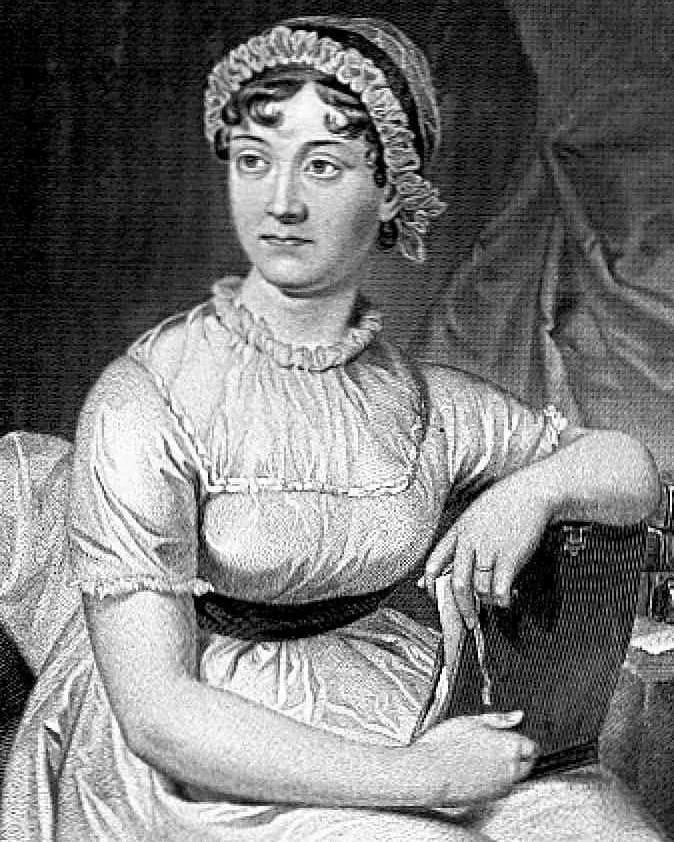
| 61 Quotes | |
| Occup. | Writer |
| From | United Kingdom |
| Born | December 16, 1775 |
| Died | July 28, 1817 |
| Aged | 41 years |
| Cite | |
Citation Formats
APA Style (7th ed.)
Jane austen biography, facts and quotes. (2026, February 2). FixQuotes. https://fixquotes.com/authors/jane-austen/
Chicago Style
"Jane Austen biography, facts and quotes." FixQuotes. February 2, 2026. https://fixquotes.com/authors/jane-austen/.
MLA Style (9th ed.)
"Jane Austen biography, facts and quotes." FixQuotes, 2 Feb. 2026, https://fixquotes.com/authors/jane-austen/. Accessed 6 Mar. 2026.
Early Life and Background
Jane Austen was born on 16 December 1775 at the rectory in Steventon, Hampshire, the seventh of eight children in a lively clerical household. Her father, the Reverend George Austen, was an Anglican rector who supplemented his income by farming and taking in pupils; her mother, Cassandra Leigh, came from a more socially connected family. The Austens were comfortably genteel but never secure, and that mixture of refinement and financial contingency would become one of Austen's central moral laboratories.Steventon offered a small world with big contrasts: parish duty and local gossip, visiting gentry and tenant farmers, card parties and amateur theatricals staged by the Austen brothers. Jane and her sister Cassandra formed the close alliance that anchored her private life. From early on she watched how rank and money shaped marriage, how charm and vanity traveled together, and how intelligence could be both a private refuge and a social risk for a woman with no public profession.
Education and Formative Influences
Austen's formal schooling was brief - a stint in Oxford and Southampton with Cassandra and then the Abbey House School in Reading (1785-1786) - but the rectory library and family conversation were her real education. She devoured novels, histories, essays, and poetry, absorbed the cadences of Samuel Johnson and the theatrics of popular fiction, and learned to imitate, parody, and refine. Her early "juvenilia" (including Love and Freindship and other exuberant miniatures) reveal a teenager already training her eye on the comedy of manners, the machinery of sentiment, and the self-serving stories people tell about themselves.Career, Major Works, and Turning Points
In the 1790s Austen drafted the first versions of what became Sense and Sensibility, Pride and Prejudice (originally First Impressions), and Northanger Abbey (first called Susan). A decisive turning point came in 1801 when the family moved to Bath, a social whirl that provided raw material but disrupted her writing; her father's death in 1805 left the women precarious, and after several unsettled years they found stability in 1809 at Chawton Cottage on an estate owned by her brother Edward Knight. There, in a concentrated late flowering, Austen revised and published Sense and Sensibility (1811) and Pride and Prejudice (1813), followed by Mansfield Park (1814) and Emma (1815), all issued anonymously "By a Lady" through the publisher John Murray. Persuasion and Northanger Abbey were completed in 1816 and published posthumously in 1818. Illness, likely Addison's disease or Hodgkin's lymphoma, advanced quickly; she died in Winchester on 28 July 1817 and was buried in Winchester Cathedral, her genius still largely a private marvel to many outside her circle.Philosophy, Style, and Themes
Austen's moral vision is often mistaken for smallness because it is precise. She wrote at the hinge of the Georgian and Regency eras, when war with Revolutionary and Napoleonic France, enclosure, and expanding commerce reshaped Britain, yet she kept the camera trained on drawing rooms, carriage rides, and country walks. That focus was not escapism but method: in her world, a remark at tea can expose a conscience. She anatomized self-deception with surgical comedy - “How quick come the reasons for approving what we like!” - and turned courtship plots into laboratories where desire, vanity, and money compete for the right to narrate the truth.Her style perfected free indirect discourse, sliding between narrator and character so that a mind's evasions become audible. Austen understood the gendered politics of intellect and performance; her heroines learn when wit enlightens and when it provokes punishment. “A woman, especially, if she have the misfortune of knowing anything, should conceal it as well as she can”. crystallizes her ironic awareness that female intelligence could be treated as a social offense, forcing women to practice discretion as self-defense. Beneath the brightness lies hard economics: “Single women have a dreadful propensity for being poor. Which is one very strong argument in favor of matrimony”. Her novels return to entailments, allowances, and livings not as background detail but as the pressure system that warps character and narrows moral choice, making integrity costly and self-knowledge revolutionary.
Legacy and Influence
Austen left six major novels that became templates for psychological realism, romantic comedy with moral stakes, and the modern marriage plot. After her death, her brother Henry and nephew James Edward Austen-Leigh helped shape her reputation, and by the Victorian period she was cherished as a stylist and moralist; the 20th century, with critics like F.R. Leavis and later feminist and historicist scholars, revealed how her apparent domestic calm contains sharp critique of power and property. Her influence runs from George Eliot and Henry James to contemporary writers of social satire and romance, while adaptations, fan cultures, and "Janeite" devotion keep renewing her presence. Enduring because she is unsentimental about human motives yet tender about human limits, Austen remains a writer who makes readers laugh, then notice what the laughter cost.Our collection contains 61 quotes written by Jane, under the main topics: Witty One-Liners - Ethics & Morality - Wisdom - Truth - Art.
Other people related to Jane: Kate Beckinsale (Actress), Hugh Grant (Actor), Fanny Burney (Novelist), Jane Smiley (Writer), P. D. James (Novelist), Alexa Vega (Actress), Lionel Trilling (Critic), George Saintsbury (Writer), Joanna Trollope (Novelist), Helen Fielding (Author)
Jane Austen Famous Works
- 1817 Persuasion (Novel)
- 1817 Northanger Abbey (Novel)
- 1815 Emma (Novel)
- 1814 Mansfield Park (Novel)
- 1813 Pride and Prejudice (Novel)
- 1811 Sense and Sensibility (Novel)
Source / external links