
Janez Drnovsek Biography Quotes 2 Report mistakes
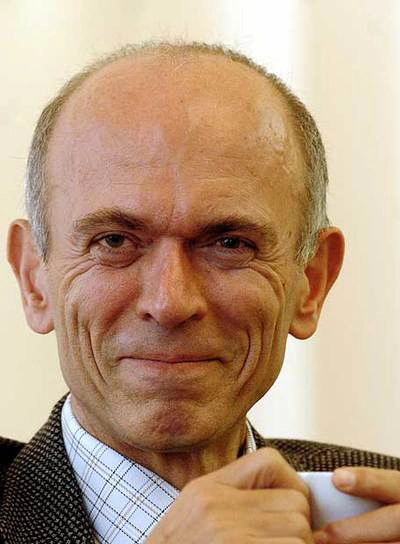
| 2 Quotes | |
| Occup. | Statesman |
| From | Slovenia |
| Born | May 17, 1950 Ljubljana, Slovenia |
| Died | February 23, 2008 Ljubljana, Slovenia |
| Cause | Cancer |
| Aged | 57 years |
| Cite | |
Citation Formats
APA Style (7th ed.)
Janez drnovsek biography, facts and quotes. (2026, February 11). FixQuotes. https://fixquotes.com/authors/janez-drnovsek/
Chicago Style
"Janez Drnovsek biography, facts and quotes." FixQuotes. February 11, 2026. https://fixquotes.com/authors/janez-drnovsek/.
MLA Style (9th ed.)
"Janez Drnovsek biography, facts and quotes." FixQuotes, 11 Feb. 2026, https://fixquotes.com/authors/janez-drnovsek/. Accessed 12 Feb. 2026.
Early Life and Education
Janez Drnovsek was born in 1950 in what was then the Socialist Republic of Slovenia, a constituent part of Yugoslavia. He studied economics at the University of Ljubljana, where he developed a reputation for diligence and analytical clarity. After graduating, he worked in finance and foreign trade during the 1970s and 1980s, gaining practical exposure to enterprise management and international markets at a time when Yugoslavia struggled with debt, inflation, and uneven reform. This background shaped his pragmatic approach to public policy and his preference for incremental, technocratic solutions over grand ideological gestures.Rise in Yugoslav Federal Politics
In 1989, as the Yugoslav federation entered a period of mounting political and economic crisis, Drnovsek was elected the Slovenian member of the collective Presidency of Yugoslavia. He served as its chairman during 1989 and 1990, working with the federal prime minister Ante Markovic on market-oriented reforms intended to curb hyperinflation and stabilize the economy. As chairman, he navigated tense relations with rising nationalist leaders, most notably Slobodan Milosevic, while advocating a peaceful, negotiated redefinition of relations among the republics. The experience broadened his international contacts and confirmed his belief that balanced economic policy and dialogue were essential to avert conflict.From Independence to Prime Minister
Following Slovenia's assertion of independence in 1991 and the short armed confrontation that accompanied it, Drnovsek turned to domestic politics. In 1992 he became prime minister, succeeding Lojze Peterle. He quickly assembled a centrist, reform-minded coalition that worked in close coordination with President Milan Kucan, whose authority and moral standing were important to Slovenia's early stability. Drnovsek's cabinets featured figures who would become central to Slovenia's international orientation, including Dimitrij Rupel and Zoran Thaler in foreign affairs and Mitja Gaspari in economic policy. He relied on their expertise to push steady reforms, avoiding abrupt shocks while building consensus among parties and social partners.Economic Consolidation and International Integration
During most of the 1990s, Drnovsek was the dominant figure in Slovenian politics. He emphasized macroeconomic stability, export competitiveness, and gradual privatization, seeking to protect social cohesion while aligning the country with European norms. Under his leadership, Slovenia signed an association agreement with the European Union and applied for membership, positioning itself early among the most advanced transition economies. Cooperation with NATO was pursued step by step, and the administration cultivated a reputation for predictability and competence that reassured investors and partners. Throughout, he worked with colleagues such as Rupel and Thaler to manage sensitive issues with neighbors, while at home he maintained a functional working relationship with political rivals, including Janez Jansa, whose prominence in security matters and later leadership of the opposition made him an unavoidable interlocutor.Interruption and Return
In 2000, political realignment produced a brief interruption: Drnovsek's government fell and Andrej Bajuk formed a short-lived cabinet. Elections later that year returned Drnovsek to office, reflecting voter preference for his steady course. The episode underscored his capacity for coalition building and his reputation as a negotiator who could reconcile competing interests. During this period, Anton Rop emerged as a key economic ally, later succeeding Drnovsek as prime minister and continuing the integration agenda that Drnovsek had set.Transition to the Presidency
In 2002, after a decade in which he shaped most major domestic and foreign policy decisions, Drnovsek ran for and won the presidency, succeeding Milan Kucan. As president, he supported the referendums that endorsed Slovenia's accession to the European Union and NATO, milestones achieved in 2004. He worked with Prime Minister Anton Rop to complete negotiations and prepare the state for membership, and then, after a change of government, engaged with Prime Minister Janez Jansa, sometimes contentiously, as the latter pursued a different economic and security emphasis. Internationally, Drnovsek cultivated relations with European leaders such as Romano Prodi and engaged with regional counterparts, including Stjepan Mesic in Croatia, to lower tensions and promote cooperation in the Western Balkans.Public Stances, Civic Initiatives, and Regional Diplomacy
As president, Drnovsek increasingly voiced positions shaped by ethical and humanitarian concerns. He supported dialogue in the Western Balkans and urged a pragmatic approach to unresolved disputes, including borders and succession issues. He also spoke out on global humanitarian crises, advocating action and writing open letters to world leaders. In 2006 he founded the Movement for Justice and Development, a civic initiative intended to mobilize public conscience rather than serve as a traditional party. The move reflected his growing distance from day-to-day partisan politics, even as he remained an influential figure, often challenging the government of the day on questions of transparency, social justice, and foreign policy priorities.Health, Writings, and Personal Evolution
In the late 1990s Drnovsek was diagnosed with a serious illness, which he discussed publicly only sparingly. The experience changed his outlook. He simplified his lifestyle, spent more time in nature, and focused on introspection. He wrote books and essays exploring personal ethics, compassion, and the search for meaning, texts that resonated with many citizens who admired his quiet resilience. His shift from technocratic premier to reflective head of state was striking: colleagues such as Borut Pahor and Danilo Turk observed a leader whose authority no longer derived solely from policy mastery but also from moral persuasion. He also supported humanitarian activism at home, including the work of Slovenian volunteers and advocates such as Tomo Kriznar, and he tried to connect public policy with personal responsibility.Final Years and Legacy
Drnovsek left office at the end of 2007 and died in early 2008. By then, Slovenia was a member of both the European Union and NATO and had entered a period of institutional consolidation. Across the political spectrum, including rivals like Janez Jansa and allies such as Anton Rop, there was recognition that his careful stewardship had helped Slovenia avoid the turbulence that affected much of the region in the 1990s. He is remembered as a consensus builder and strategist who preferred results to rhetoric, and as a statesman capable of evolving with the times: an economist who stabilized a new state, a negotiator who guided it toward Europe, and finally a president who spoke in humane terms about responsibility and solidarity. His influence endures in the pragmatic, pro-European orientation of Slovenian politics and in the civic culture he helped nurture, which prizes moderation, dialogue, and a steady hand in public affairs.Our collection contains 2 quotes written by Janez, under the main topics: Equality - Human Rights.
Source / external links