
Jared Diamond Biography Quotes 34 Report mistakes
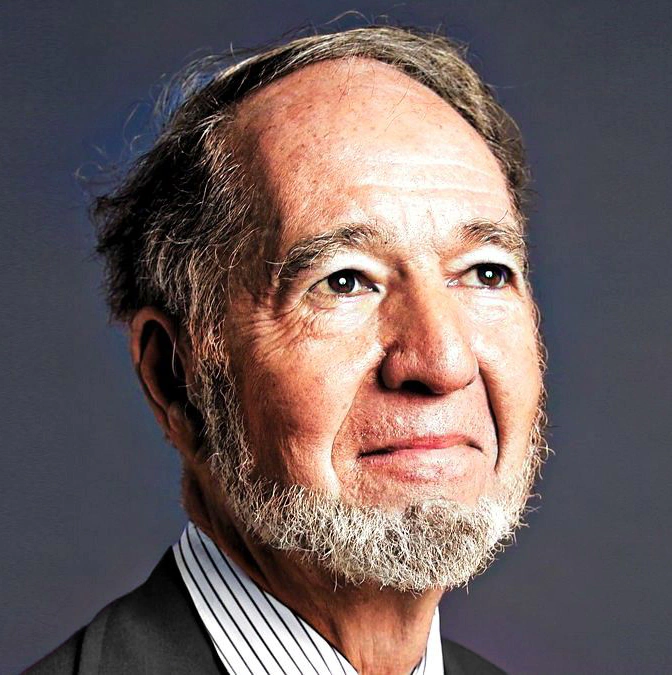
| 34 Quotes | |
| Born as | Jared Mason Diamond |
| Occup. | Author |
| From | USA |
| Spouse | Marie Diamond |
| Born | September 10, 1937 Boston, Massachusetts, USA |
| Age | 88 years |
| Cite | |
Citation Formats
APA Style (7th ed.)
Jared diamond biography, facts and quotes. (2026, February 12). FixQuotes. https://fixquotes.com/authors/jared-diamond/
Chicago Style
"Jared Diamond biography, facts and quotes." FixQuotes. February 12, 2026. https://fixquotes.com/authors/jared-diamond/.
MLA Style (9th ed.)
"Jared Diamond biography, facts and quotes." FixQuotes, 12 Feb. 2026, https://fixquotes.com/authors/jared-diamond/. Accessed 6 Mar. 2026.
Early Life and Background
Jared Mason Diamond was born on September 10, 1937, in Boston, Massachusetts, into a cultivated, book-centered Jewish family that prized learning as a form of moral seriousness. His father, Louis Diamond, was a physician; his mother, Flora Kaplan Diamond, a concert pianist and teacher. The household joined the postwar American faith in expertise, but it also trained him early in the arts of close listening and disciplined practice - habits that later reappeared in his patience for field notes, language sounds, and the slow accumulation of comparative evidence.
Diamond grew up amid the long American mid-century - a period confident in science, anxious about global conflict, and increasingly aware of ecological limits. Those tensions mattered: his work would repeatedly ask why some societies expand while others collapse, why technological power can coexist with fragility, and why nature and culture cannot be cleanly separated. Even as a young man, he gravitated toward big questions while maintaining the laboratory virtues of accuracy and skepticism.
Education and Formative Influences
He attended Roxbury Latin School, then Harvard University (A.B. in biochemistry, 1958), before earning a Ph.D. in physiology at the University of Cambridge (1961) as a Marshall Scholar. Trained as a scientist, he built a research career in physiology and later broadened into ornithology and evolutionary biology, especially through fieldwork in New Guinea - encounters that pushed him beyond disciplinary borders and toward human history as an ecological and geographic problem.
Career, Major Works, and Turning Points
Diamond taught at the University of California, Los Angeles, ultimately as professor of geography. A major pivot came when his scientific expertise began serving a wider narrative ambition: to explain deep historical divergences without resorting to racial myths. His first popular book, The Third Chimpanzee (1991), blended biology and anthropology to probe human uniqueness and violence; it was followed by the Pulitzer Prize-winning Guns, Germs, and Steel (1997), which argued that geography, domesticable species, and the diffusion of technology shaped global inequality. Subsequent works extended the method: Why Is Sex Fun? (1997) explored reproductive evolution; Collapse (2005) examined societal failure through environmental mismanagement and political choice; and The World Until Yesterday (2012) drew lessons from traditional societies, especially in New Guinea. Along the way, fellowships and honors - including a MacArthur Fellowship - reinforced his public role as a synthesizer straddling science, history, and policy.
Philosophy, Style, and Themes
Diamond writes as a comparative naturalist of human affairs. His signature move is to take a question people treat as moral fate - wealth, conquest, starvation, stability - and restate it as a testable problem with variables: crops, axes, latitude, microbes, state formation, decision-making under constraint. He is drawn to isolation as a laboratory condition in history, observing that “Tasmanian history is a study of human isolation unprecedented except in science fiction - namely, complete isolation from other humans for 10, 000 years”. That fascination is not escapist; it is diagnostic, a way to see what contact, trade, and cultural exchange normally supply - and what they can also destroy.
His prose favors lucid chains of causation, anchored by concrete cases and wary of romanticism. In Guns, Germs, and Steel he insists that disease history is not a footnote to conquest but a central mechanism: “It's striking that Native Americans evolved no devastating epidemic diseases to give to Europeans, in return for the many devastating epidemic diseases that Indians received from the Old World”. The psychological core of this emphasis is a moral impatience with easy blame paired with a scientist's insistence on asymmetric evidence. Yet he also resists deterministic closure, stressing contingency, social learning, and the uneven willingness of societies to change: “Human societies vary in lots of independent factors affecting their openness to innovation”. Across his books, the recurring tension is between structural constraints and human choice - between what environments permit and what leaders and communities decide to do with what they have.
Legacy and Influence
Diamond became one of the most widely read interpreters of "big history" at the turn of the 21st century, shaping how general audiences talk about geography, domestication, and pathogens in world development while influencing debates in environmental history and public policy. His syntheses have been praised for explanatory ambition and criticized for overreach or compression, but even critics often adopt his framing: that inequality and collapse are historical outcomes requiring ecological, biological, and institutional explanation. His lasting impact lies less in any single claim than in the model of inquiry he popularized - a cross-disciplinary, evidence-driven story of humanity that treats culture as adaptive, fragile, and inseparable from the landscapes and organisms that surround it.
Our collection contains 34 quotes written by Jared, under the main topics: Justice - Nature - Leadership - Deep - Learning.
Jared Diamond Famous Works
- 2019 Upheaval: Turning Points for Nations in Crisis (Book)
- 2012 The World Until Yesterday: What Can We Learn from Traditional Societies? (Book)
- 2005 Collapse: How Societies Choose to Fail or Succeed (Book)
- 1997 Guns, Germs, and Steel: The Fates of Human Societies (Book)
- 1991 The Third Chimpanzee: The Evolution and Future of the Human Animal (Book)
Source / external links