
Jason Kidd Biography Quotes 17 Report mistakes
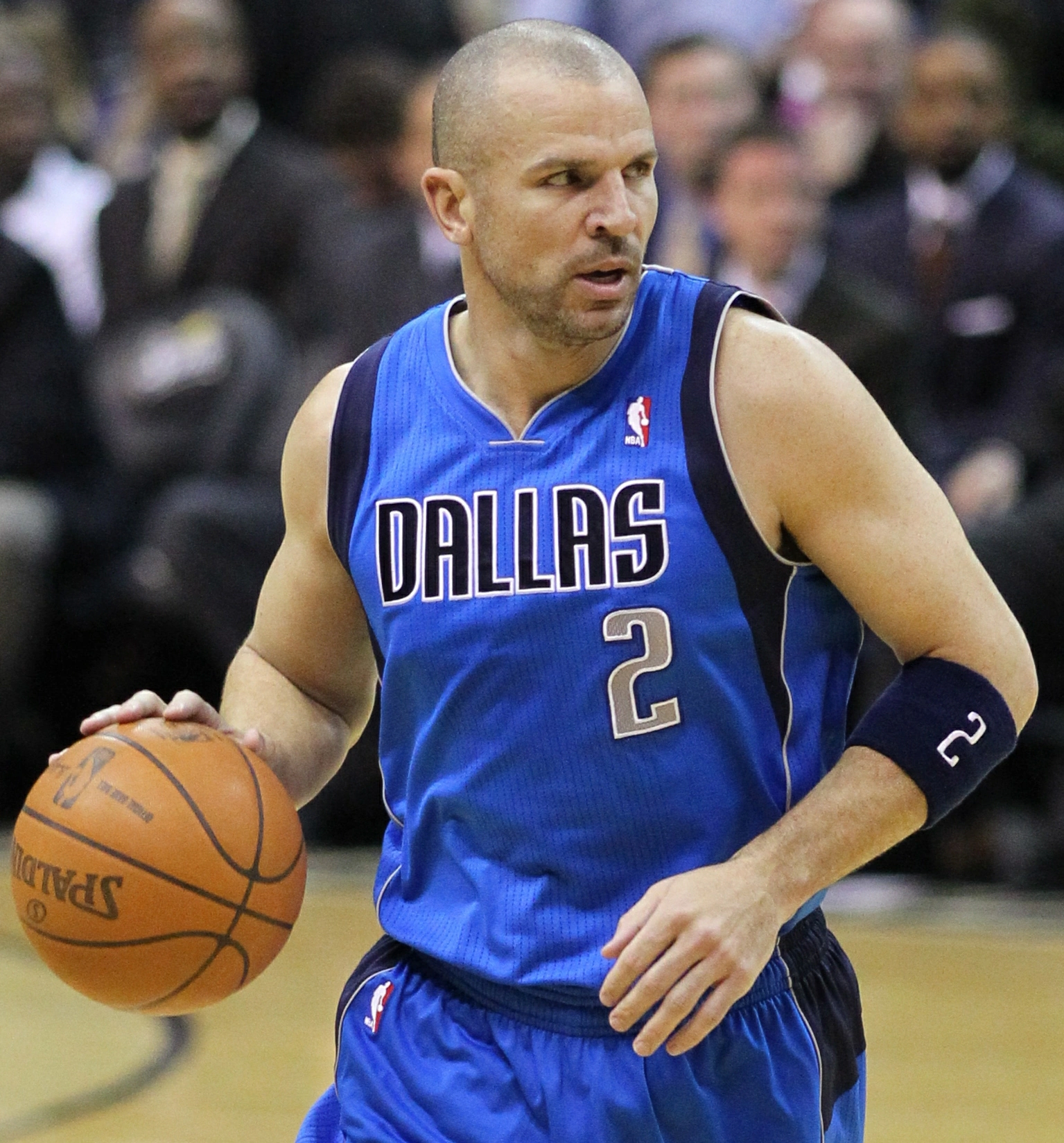
| 17 Quotes | |
| Born as | Jason Frederick Kidd |
| Occup. | Athlete |
| From | USA |
| Born | March 23, 1973 San Francisco, California |
| Age | 53 years |
| Cite | |
Citation Formats
APA Style (7th ed.)
Jason kidd biography, facts and quotes. (2026, March 16). FixQuotes. https://fixquotes.com/authors/jason-kidd/
Chicago Style
"Jason Kidd biography, facts and quotes." FixQuotes. March 16, 2026. https://fixquotes.com/authors/jason-kidd/.
MLA Style (9th ed.)
"Jason Kidd biography, facts and quotes." FixQuotes, 16 Mar. 2026, https://fixquotes.com/authors/jason-kidd/. Accessed 27 Mar. 2026.
Early Life and Background
Jason Frederick Kidd was born on March 23, 1973, in San Francisco and grew up in Oakland at a time when Bay Area basketball was both playground craft and civic language. The son of Steve Kidd, who was African American, and Anne Kidd, who was Irish American, he came of age in a mixed, working-class environment that sharpened both his competitiveness and his adaptability. Oakland in the 1980s rewarded toughness, improvisation, and quick social reading - traits that would become visible in Kidd's game long before they were praised as court vision. He was not built around spectacle. Even as a child he gravitated toward control: tempo, angles, timing, and the subtle authority of the player who understood where everyone else should be.
That sensibility was shaped in neighborhood runs against older, stronger players, where survival depended less on scoring than on usefulness. Kidd learned early that a smaller player could stay on the floor by delivering the ball at the exact right moment, and that lesson became almost a personal ethic. His seriousness was matched by unusual poise. He competed with an adult calm, reading personalities as well as defenses, and he developed the durable public face - guarded, cool, unhurried - that marked him as both prodigy and old soul. Even later, through triumphs, controversy, and reinvention, Kidd retained something of the Oakland playground organizer: a player who measured himself by whether the game bent to his intelligence.
Education and Formative Influences
At St. Joseph Notre Dame High School in Alameda, Kidd became one of the most celebrated prep guards in the country, leading the school to state titles and turning local dominance into national attention. He was less a teenage scorer than a complete game manager who rebounded in traffic, defended with anticipation, and made passing itself look like leadership. In 1992 he stayed close to home at the University of California, Berkeley, where in two seasons he transformed the program, setting assist and steal marks and earning All-America honors before entering the NBA draft in 1994. California also clarified the paradox that would define him: he was instantly recognizable, yet difficult to summarize. He could not be reduced to shooting touch, speed, or vertical force. His gift was orchestration, and his formative influence was not one mentor so much as an ecosystem - Bay Area pickup basketball, disciplined school competition, and the emerging model of the oversized point guard represented by Magic Johnson and, in a grittier register, by the physical two-way guards of the 1990s.
Career, Major Works, and Turning Points
Drafted second overall in 1994 by the Dallas Mavericks, Kidd shared Rookie of the Year honors with Grant Hill and immediately gave a lost franchise structure. In Phoenix, after a 1996 trade, he matured into an elite engine, pushing the Suns into perennial contention and finishing near the top of MVP voting. The defining turn came in 2001, when he was traded to the New Jersey Nets for Stephon Marbury; Kidd altered the franchise's identity almost overnight, leading the Nets to back-to-back NBA Finals in 2002 and 2003 and proving that a point guard with modest scoring could still be the central force on a contender. His career was not untouched by personal turmoil - including a 2001 domestic abuse case that remained a stain on his public life - and his image thereafter mixed admiration with scrutiny. A return to Dallas in 2008 completed the arc. Older, slower, and now a strategic floor spacer and defensive organizer, he became indispensable to the Mavericks' 2011 championship run alongside Dirk Nowitzki, the title that sealed his playing legacy. By retirement in 2013 he ranked among the NBA's all-time leaders in assists, steals, and triple-doubles, then moved quickly into coaching with Brooklyn, Milwaukee, and Dallas, extending his influence from floor general to sideline tactician.
Philosophy, Style, and Themes
Kidd's philosophy of basketball was built on usefulness before vanity. “When I was a little kid, I used to play with guys twice my age, so I was the last one picked, so if I picked I knew that I had to get the ball to the scorer if I wanted to stay on the court, so that was pretty much my job”. That memory is almost a self-diagnosis. It reveals not just humility but a deeply ingrained transactional understanding of team sports: value is earned by making others more dangerous. His genius lay in converting that childhood instinct into NBA geometry. He advanced the ball a beat earlier than defenses expected, rebounded to ignite transition without an outlet pass, and treated the game as a chain of advantages to be created, not merely exploited. Even his weaknesses, especially inconsistent shooting in his prime, pushed him toward a broader conception of command in which leadership meant manipulating pace, spacing, and trust.
There was also austerity in his self-conception, a willingness to subordinate ordinary pleasures to repetition and craft. “A lot of late nights in the gym, a lot of early mornings, especially when your friends are going out, you're going to the gym, those are the sacrifices that you have to make if you want to be an NBA basketball player”. The line fits the cool severity with which he approached improvement, especially later when he remade himself into a credible three-point shooter. Yet Kidd was never naive about the league's machinery. “The business always gets in the way of basketball”. That bluntness captures his era: the NBA of labor negotiations, star movement, and image management, where loyalty, leverage, and contract logic constantly pressed against competitive purity. Kidd's style, then, joined idealism and realism - love of the game as collective art, and clear-eyed acceptance that careers are negotiated under pressure.
Legacy and Influence
Kidd's enduring significance lies in how he expanded the modern point guard template. Before today's oversized initiators became commonplace, he showed that a lead guard could dominate without scoring titles, controlling a game through rebounding, defense, tempo, and pass-first imagination. Players as different as LeBron James, Luka Doncic, and the new generation of jumbo creators operate in a league more ready for Kidd's logic than the one he entered. As a player he embodied competitive intellect; as a coach he has tried to transmit the same belief that possession-by-possession awareness can be a superstar skill. His biography remains complex because excellence and blemish coexist within it. But the basketball legacy is secure: Jason Kidd was one of the great organizers in NBA history, a player who made teams smarter, faster, and more coherent simply by seeing the game before everyone else did.
Our collection contains 17 quotes written by Jason, under the main topics: Victory - Sports - Work Ethic - Training & Practice - Optimism.
Other people related to Jason: Grant Hill (Athlete), Kevin Johnson (Athlete)
Source / external links