
Jasper Johns Biography Quotes 20 Report mistakes
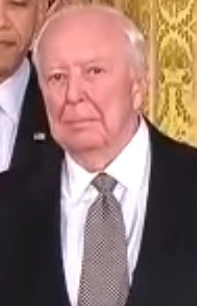
| 20 Quotes | |
| Occup. | Artist |
| From | USA |
| Born | May 15, 1930 Augusta, Georgia |
| Age | 95 years |
| Cite | |
Citation Formats
APA Style (7th ed.)
Jasper johns biography, facts and quotes. (2026, February 15). FixQuotes. https://fixquotes.com/authors/jasper-johns/
Chicago Style
"Jasper Johns biography, facts and quotes." FixQuotes. February 15, 2026. https://fixquotes.com/authors/jasper-johns/.
MLA Style (9th ed.)
"Jasper Johns biography, facts and quotes." FixQuotes, 15 Feb. 2026, https://fixquotes.com/authors/jasper-johns/. Accessed 25 Mar. 2026.
Early Life and Background
Jasper Johns was born May 15, 1930, in Augusta, Georgia, and raised largely in small-town South Carolina in the long shadow of the Depression and Jim Crow. His parents separated early; he was shuttled among relatives in places like Allendale and Lake Murray, growing up amid utilitarian objects, roadside signs, and the blunt emblems of American civic life. The ordinariness of that visual field - flags, numbers, targets, maps - would later become the raw material of an art that felt simultaneously anonymous and intimate.The lack of a local arts milieu shaped him as powerfully as any teacher. As he later recalled, “In the place where I was a child, there were no artists and there was no art, so I really didn't know what that meant. I think I thought it meant that I would be in a situation different than the one that I was in”. That longing for "a situation different" became a quiet motor: not a romantic escape, but a measured determination to build meaning from what was already at hand.
Education and Formative Influences
After high school Johns spent time at the University of South Carolina before moving to New York City in 1949, where he briefly attended the Parsons School of Design. The Korean War interrupted; he was drafted in 1951 and served mainly in South Carolina and Japan, a period that hardened his sense of discipline and detachment. Back in New York in 1953, he fell into the downtown crucible of artists, poets, and composers, forming key relationships with Robert Rauschenberg, Merce Cunningham, and John Cage - a circle that treated chance, everyday materials, and the "given" image as legitimate engines of form.Career, Major Works, and Turning Points
Johns' decisive turn came in 1954-55 when he began painting flags, targets, and numbers with encaustic, embedding newspaper and brushmarks into surfaces that looked at once manufactured and tenderly worked; the breakthrough "Flag" (1954-55) and "Target with Four Faces" (1955) announced a new logic for postwar American painting. His first solo show at Leo Castelli Gallery in 1958 sold out, and Alfred H. Barr Jr. quickly secured works for the Museum of Modern Art, confirming Johns as a pivot away from Abstract Expressionism's heroic subjectivity toward a cooler, object-like presence. Across the 1960s and after - through prints, bronzes of banal objects, crosshatch paintings, and later meditations on memory and mortality - he kept revising what an image could be: not a window, not a confession, but a stubborn fact that still carried feeling.Philosophy, Style, and Themes
Johns' art lives in the tension between the familiar sign and the private act of making. Flags and numbers are "things the mind already knows", which allowed him to relocate attention from what is depicted to how perception behaves under repetition, scale, and touch. Encaustic was crucial: wax both preserves and obscures, locking in newsprint while keeping the hand visible, as if the painting were a record of decisions that never fully resolve. His images seem public, yet their surfaces insist on the body - the drag of a brush, the pressed collage, the weight of an object - turning shared symbols into arenas where doubt, control, and contingency are negotiated.He resisted tidy explanations, and that resistance is psychological as much as aesthetic. “Everyone is of course free to interpret the work in his own way. I think seeing a picture is one thing and interpreting it is another”. The remark is not coy; it marks a boundary between sensation and story, an insistence that meaning begins in looking rather than in doctrine. Likewise, “Intention involves such a small fragment of our consciousness and of our mind and of our life”. Johns built paintings that behave like minds: layered, recursive, partly automatic, never fully transparent to themselves. Even his procedural repetitions - stencils, crosshatches, serial numbers - read as a way to keep the self from taking over, while still letting experience accumulate in the work's thickened skin.
Legacy and Influence
By making icons that were neither pure abstraction nor straightforward representation, Johns helped open the road to Pop, Minimalism, and Conceptual art while never belonging neatly to any of them. His example legitimized the "already-made" image as a serious subject and showed that material fact can carry emotion without theatricality. Museums and artists continue to study him not only for what he painted - flags, targets, maps, numbers - but for the ethical stance behind them: a commitment to attention, to the slow labor of revision, and to the idea that the most common signs can still become strange enough to make us look again.Our collection contains 20 quotes written by Jasper, under the main topics: Art - Deep - Live in the Moment - Work Ethic - Mental Health.
Other people related to Jasper: Marcel Duchamp (Artist)
Source / external links