
Jawaharlal Nehru Biography Quotes 34 Report mistakes
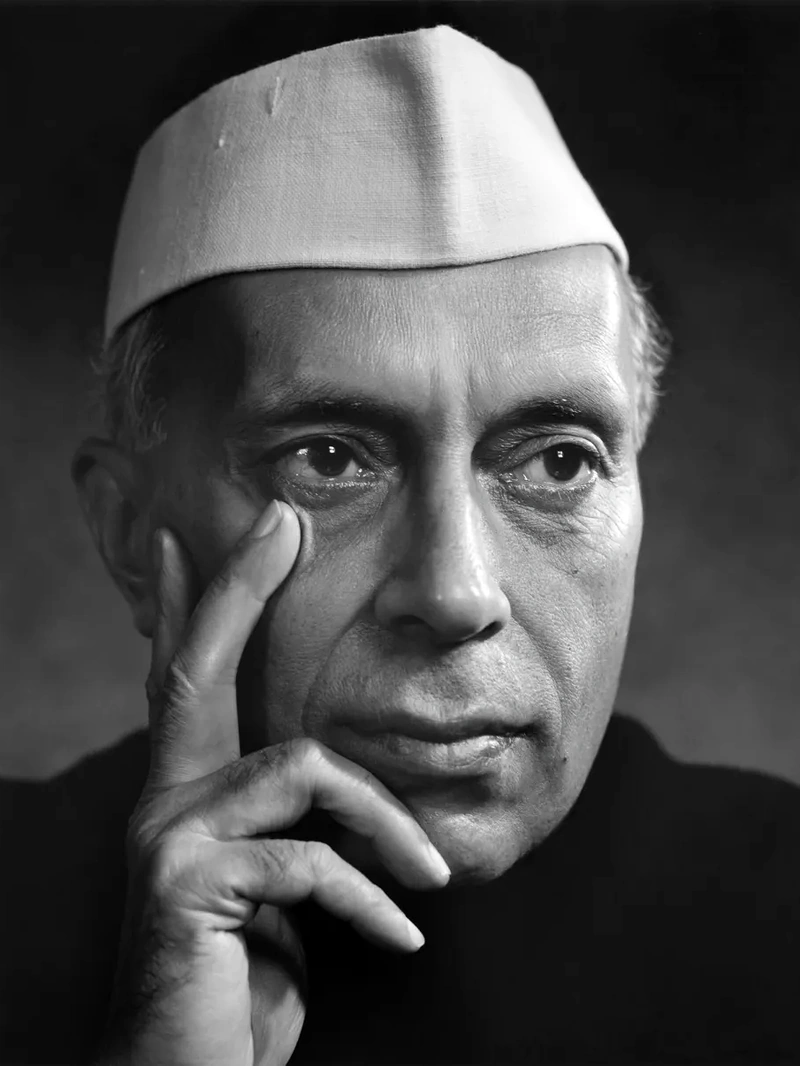
| 34 Quotes | |
| Known as | Pandit Nehru |
| Occup. | Leader |
| From | India |
| Born | November 14, 1889 Allahabad, India |
| Died | May 27, 1964 New Delhi, India |
| Aged | 74 years |
| Cite | |
Citation Formats
APA Style (7th ed.)
Jawaharlal nehru biography, facts and quotes. (2026, February 11). FixQuotes. https://fixquotes.com/authors/jawaharlal-nehru/
Chicago Style
"Jawaharlal Nehru biography, facts and quotes." FixQuotes. February 11, 2026. https://fixquotes.com/authors/jawaharlal-nehru/.
MLA Style (9th ed.)
"Jawaharlal Nehru biography, facts and quotes." FixQuotes, 11 Feb. 2026, https://fixquotes.com/authors/jawaharlal-nehru/. Accessed 4 Mar. 2026.
Early Life and Background
Jawaharlal Nehru was born on 1889-11-14 in Allahabad, in the North-Western Provinces of British India, into a Kashmiri Pandit family already acclimated to the power corridors of the Raj. His father, Motilal Nehru, was a prominent lawyer who rose from modest origins to wealth and political influence; his mother, Swarup Rani, anchored a household where Hindu tradition, English manners, and the anxieties of colonial subjection coexisted. The Nehru home - spacious, book-lined, and socially ambitious - gave the child security, but also early lessons in how empire distributed dignity unevenly.Privately, Nehru grew up with the loneliness of privilege: more tutored than socialized, more observed than understood. The late Victorian and Edwardian world that shaped his adolescence promised progress while administering humiliation to Indians in daily life; this contradiction helped form his lifelong habit of measuring ideals against facts. By the time Indian nationalism surged after the turn of the century, he carried both patrician confidence and a simmering impatience with inherited hierarchies, traits that would later collide and fuse in his politics.
Education and Formative Influences
Educated first by tutors, Nehru went to Harrow and then Trinity College, Cambridge, before training for the bar at the Inner Temple in London. England gave him intellectual polish and exposure to liberal and Fabian arguments, but also the outsider's clarity about how "universal" principles were often national self-justifications. Returning to India in 1912, he entered law, yet found the courtroom too narrow for a country awakening through protests, new vernacular press cultures, and the aftershocks of World War I; the Jallianwala Bagh massacre in 1919 hardened his moral sense of rupture with the Raj. His decisive formative relationship became Mohandas K. Gandhi, whose mass politics and discipline of self-suffering pulled Nehru from drawing-room nationalism toward the street.Career, Major Works, and Turning Points
Nehru rose through the Indian National Congress in the 1920s and 1930s as a leader identified with socialism, modern industry, and a secular national identity; he served as Congress president (notably in 1929 at Lahore, when the demand for complete independence was proclaimed) and endured repeated imprisonment. Jail became his workshop: he drafted "Glimpses of World History", wrote "An Autobiography" (1936), and later composed "The Discovery of India" (1946), texts that tried to knit India into a coherent civilizational narrative while preparing it for modern statehood. Independence in 1947 brought triumph laced with catastrophe as Partition tore apart Punjab and Bengal; as India's first prime minister, Nehru built parliamentary institutions, launched Five-Year Plans, championed scientific and industrial development, and navigated crises from Kashmir to the integration of princely states, culminating in the 1962 Sino-Indian War that damaged his aura and deepened his introspection. He remained in office until his death on 1964-05-27 in New Delhi, a founder who lived long enough to see his own blueprint contested.Philosophy, Style, and Themes
Nehru's inner life was a tension between romantic longing and administrative rationality. He wanted India to be modern without becoming spiritually hollow, and national without becoming sectarian. His own words often reveal a mind wary of moral self-deception: “Facts are facts and will not disappear on account of your likes”. That severity toward comforting illusions helped him defend constitutionalism and planning against both imperial nostalgia and revolutionary impatience, even as it made him vulnerable when facts - communal violence, poverty, military defeat - refused to yield to aspiration.At the same time, Nehru pursued a politics of mind and culture, not merely of borders. He treated education, art, and scientific temper as instruments of freedom, insisting that “Culture is the widening of the mind and of the spirit”. His internationalism - the anti-colonial solidarity of Asia and Africa, the moral vocabulary of nonalignment, the quest to keep India out of Cold War blocs - was rooted less in tactical neutrality than in an inward ideal of composure: “Peace is not a relationship of nations. It is a condition of mind brought about by a serenity of soul. Peace is not merely the absence of war. It is also a state of mind. Lasting peace can come only to peaceful people”. The psychological key is that Nehru sought serenity through institutions: a democratic state disciplined by reason, large enough to absorb difference, yet restrained enough to avoid the intoxicating simplicities of zeal.
Legacy and Influence
Nehru's legacy is structural and symbolic: parliamentary continuity, a largely secular constitutional ethos, and a developmental state that invested in dams, laboratories, and universities while sometimes underestimating the costs of centralized planning and party dominance. His writing remains a gateway through which many first encounter India as an argument across centuries rather than a mere geography; his speeches and letters helped set a civic tone that later leaders either invoked or rebelled against. Abroad, nonalignment and anti-colonial diplomacy carried his stamp - imperfect in execution, enduring in vocabulary. At home, he survives as both architect and caution: the leader who built democratic habits, and the visionary whose faith in reason met the stubborn complexity of history.Our collection contains 34 quotes written by Jawaharlal, under the main topics: Ethics & Morality - Wisdom - Truth - Art - Justice.
Other people related to Jawaharlal: Yousuf Karsh (Photographer), Vijaya Lakshmi Pandit (Diplomat), Morarji Desai (Politician), Stafford Cripps (Politician), Yuri Gagarin (Astronaut), Rajendra Prasad (Statesman), Lord Halifax (Politician), Tenzing Norgay (Explorer), Lal Bahadur Shastri (Leader)
Jawaharlal Nehru Famous Works
- 1946 The Discovery of India (Non-fiction)
- 1936 Toward Freedom (An Autobiography) (Autobiography)
- 1934 Glimpses of World History (Non-fiction)
- 1929 Letters from a Father to His Daughter (Children's book)