
J.D. Salinger Biography Quotes 24 Report mistakes
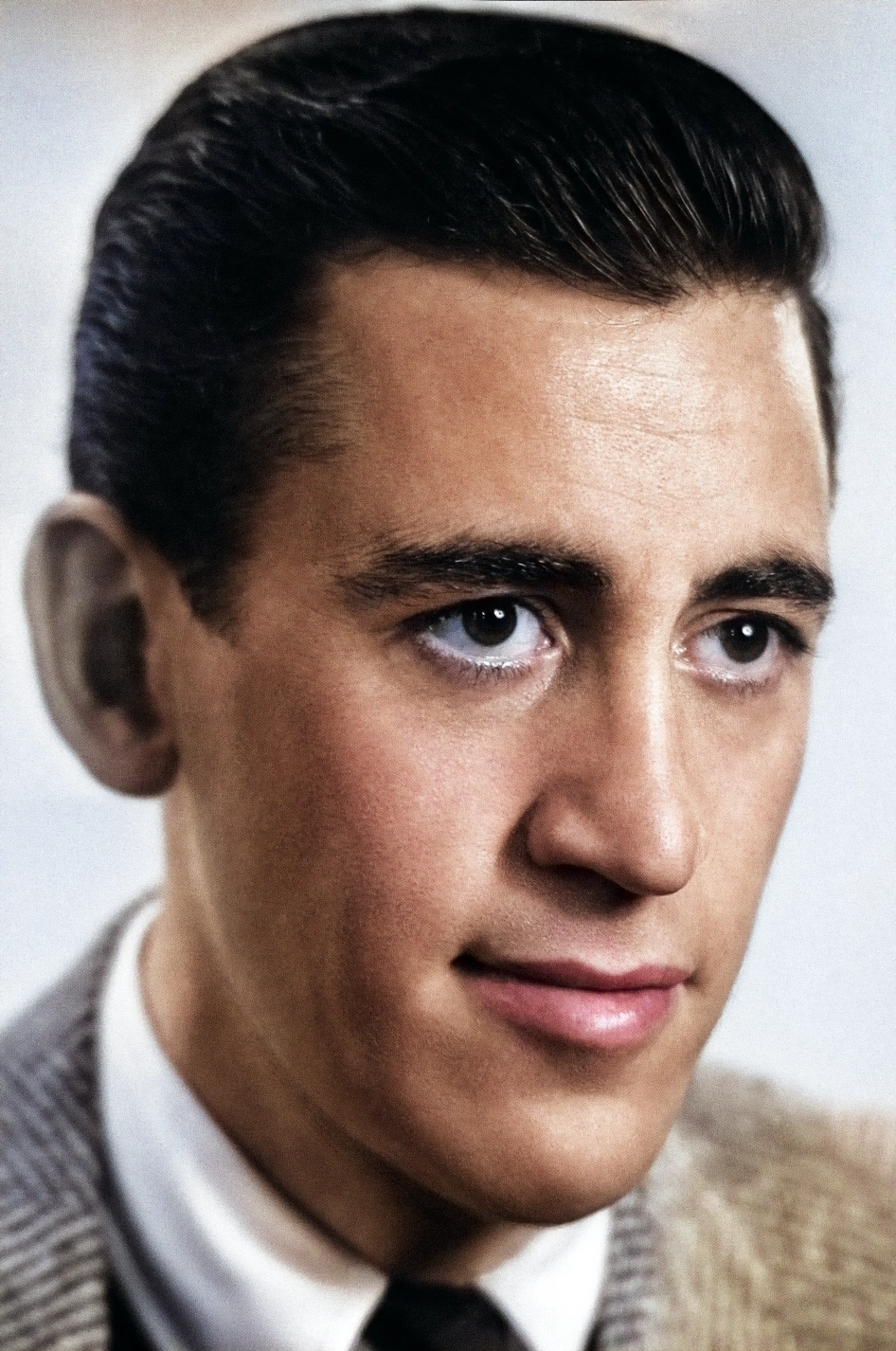
Attr: Lotte Jacobi, Public domain
| 24 Quotes | |
| Born as | Jerome David Salinger |
| Known as | J. D. Salinger |
| Occup. | Novelist |
| From | USA |
| Spouse | Claire Douglas (1955-1967) |
| Born | January 1, 1919 New York City, New York, USA |
| Died | January 27, 2010 Cornish, New Hampshire, USA |
| Aged | 91 years |
| Cite | |
Citation Formats
APA Style (7th ed.)
J.d. salinger biography, facts and quotes. (2026, February 11). FixQuotes. https://fixquotes.com/authors/jd-salinger/
Chicago Style
"J.D. Salinger biography, facts and quotes." FixQuotes. February 11, 2026. https://fixquotes.com/authors/jd-salinger/.
MLA Style (9th ed.)
"J.D. Salinger biography, facts and quotes." FixQuotes, 11 Feb. 2026, https://fixquotes.com/authors/jd-salinger/. Accessed 6 Mar. 2026.
Early Life and Background
Jerome David Salinger was born on January 1, 1919, in Manhattan, New York, to Sol Salinger, a Jewish importer with business ties to Europe, and Marie Jillich (who later used the name Miriam), a mother of Irish-Scottish background who converted to Judaism. He grew up amid the pressures of assimilation and status in interwar New York, absorbing the citys sharp class boundaries - the doorman buildings, private clubs, and private schools that would later become the natural habitat of his fiction. His early life was marked by a double consciousness: inside the family, an insistence on propriety and achievement; outside it, the messy, overheard, vernacular life of the city that he would learn to transcribe with uncanny accuracy.Adolescence brought restlessness and conflict. After difficulties in school, he was sent to Valley Forge Military Academy in Pennsylvania, an experience that hardened his distrust of institutional authority while sharpening his ear for teenage bravado, cruelty, and sudden tenderness. The late 1930s also introduced him to the worlds his father wanted him to inherit - commerce and practical security - and to the worlds he privately wanted instead: books, theater, and the secret hope that sentences could become a moral refuge. Even early on, Salinger tended to treat privacy less as a preference than as a kind of inner border control, defending whatever he felt was most authentic from both family expectation and social performance.
Education and Formative Influences
Salinger attended NYU briefly, then Ursinus College, before enrolling in a short-story course at Columbia University taught by Whit Burnett, editor of Story magazine, who became an important early advocate. He also traveled to Europe in 1937, including a stint in Vienna that later colored his view of innocence shadowed by history. These years were an apprenticeship in voice: he learned modernist compression, the New Yorkers pacing and wit, and the discipline of revision, while the eras anxieties - the approach of war, the fragility of cosmopolitan life, the pressure to choose a public role - pushed him toward characters who talk fast because they are afraid of what will happen if they stop.Career, Major Works, and Turning Points
His early stories appeared in the early 1940s, but World War II became the turning point that rearranged his inner life. Serving with U.S. Army counterintelligence after landing in Normandy, he witnessed the wars brutality at close range and later suffered what would now be called PTSD; the postwar years brought both professional breakthrough and a deepening recoil from publicity. In 1951 he published The Catcher in the Rye, whose narrator Holden Caulfield became an instant emblem of postwar alienation and adolescent moral rage; the novels success both freed and trapped him. He followed with Nine Stories (1953), Franny and Zooey (1961), and Raise High the Roof Beam, Carpenters and Seymour: An Introduction (1963), developing the Glass family as a spiritual and psychological laboratory. By the mid-1960s, after "Hapworth 16, 1924" (1965), he largely stopped publishing and moved into near-seclusion in Cornish, New Hampshire, fiercely guarding his work, routine, and family life while continuing to write privately for decades.Philosophy, Style, and Themes
Salingers style looks casual but is engineered: spoken American idiom shaped into rhythmic confession, with digressions that mimic thought under stress. The method is intimacy as defense - narrators who crack jokes, interrupt themselves, and judge everything in order to keep pain at bay. His best lines reveal how moral disgust can be both a compass and a mask; Holden says, “I'm sick of just liking people. I wish to God I could meet somebody I could respect”. Underneath the complaint is a hunger for an authority uncorrupted by performance, a search for purity in a world that sells everything.His themes orbit innocence, trauma, and the fear that adulthood is a spiritual compromise. He anatomized the modern condition of being overaware - of motives, hypocrisies, social scripts - and therefore unable to surrender to ordinary life without nausea. That strain surfaces in the paradoxical wish to vanish: “I'm sick of not having the courage to be an absolute nobody”. The line captures Salingers own dilemma after fame: the artist wants to be heard, then wants the hearing to stop. Yet his fiction also insists on everyday sanity, the humane measurement that keeps metaphysics from turning grandiose. In a world of pretension, he offers a deflating clarity: “How long should a man's legs be? Long enough to touch the ground”. It is a koan against false sophistication, and a reminder that moral life begins with ordinary contact - with the ground, with another person, with what is actually true.
Legacy and Influence
Salinger died on January 27, 2010, in Cornish, leaving behind a body of published work small in volume but massive in cultural penetration. The Catcher in the Rye became a permanent point of reference for adolescent interiority, while Nine Stories helped set the postwar standard for the American short storys blend of colloquial surface and metaphysical ache. His retreat from the public sphere helped create the modern myth of the reclusive genius, but his deeper legacy is artistic: he taught generations of writers how to write thought as speech, pain as comedy, and spiritual yearning without pious language. In the long afterlife of his books, the enduring Salinger is not the hermit but the moral eavesdropper - the novelist who listened so closely to the way people talk that he could reveal what they were trying, desperately, not to say.Our collection contains 24 quotes written by Salinger, under the main topics: Witty One-Liners - Truth - Art - Love - Sarcastic.
Other people related to Salinger: Joyce Maynard (Writer), Haruki Murakami (Writer)
J.D. Salinger Famous Works
- 1965 Hapworth 16, 1924 (Short Story)
- 1963 Raise High the Roof Beam, Carpenters and Seymour: An Introduction (Novella)
- 1961 Franny and Zooey (Novella)
- 1953 Nine Stories (Short Stories Collection)
- 1951 The Catcher in the Rye (Novel)
Source / external links