
Jean Alesi Biography Quotes 24 Report mistakes
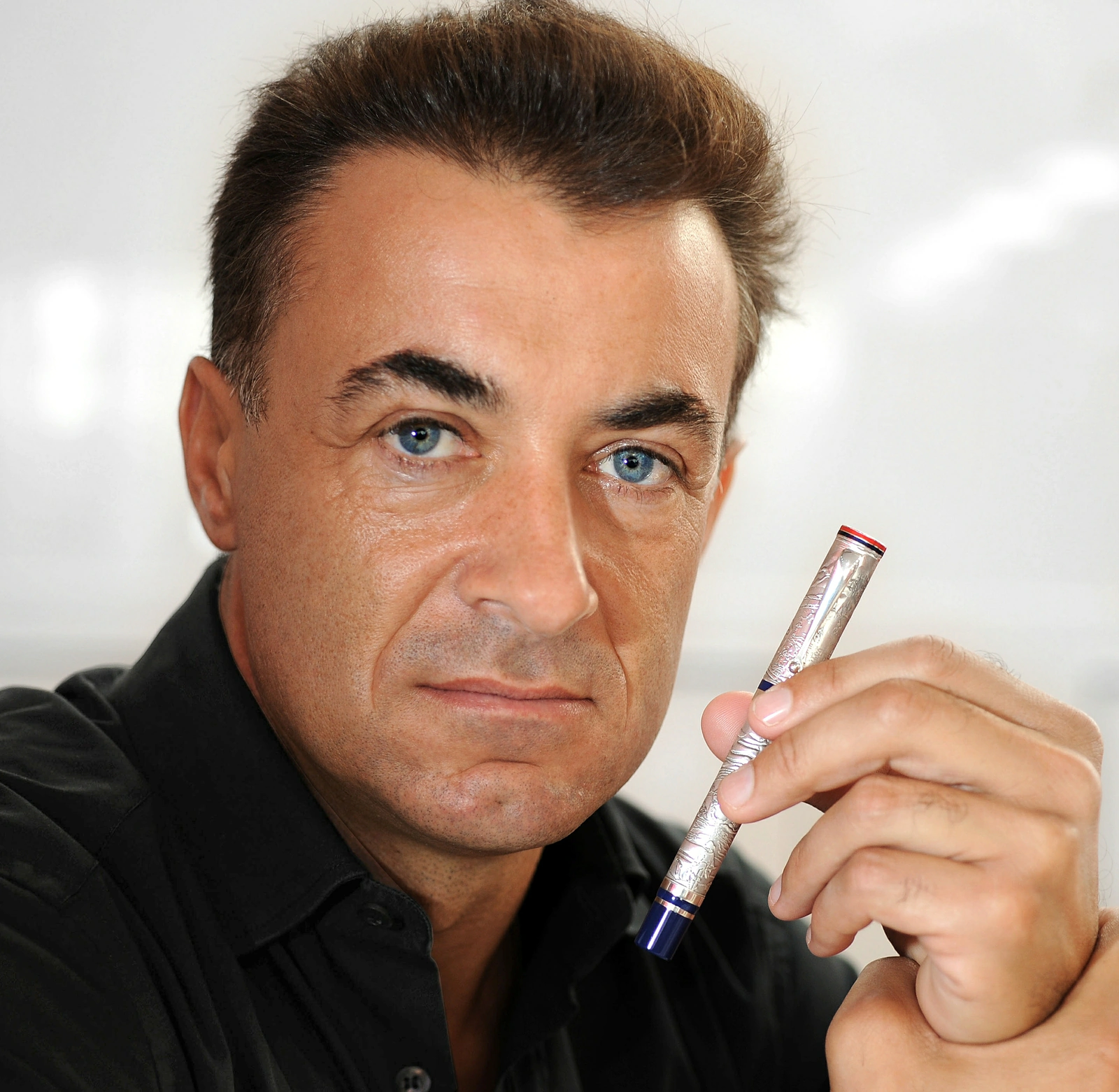
| 24 Quotes | |
| Born as | Giovanni Alesi |
| Occup. | Celebrity |
| From | France |
| Born | June 11, 1964 Avignon, Vaucluse |
| Age | 61 years |
| Cite | |
Citation Formats
APA Style (7th ed.)
Jean alesi biography, facts and quotes. (2026, March 5). FixQuotes. https://fixquotes.com/authors/jean-alesi/
Chicago Style
"Jean Alesi biography, facts and quotes." FixQuotes. March 5, 2026. https://fixquotes.com/authors/jean-alesi/.
MLA Style (9th ed.)
"Jean Alesi biography, facts and quotes." FixQuotes, 5 Mar. 2026, https://fixquotes.com/authors/jean-alesi/. Accessed 7 Mar. 2026.
Early Life and Background
Jean Alesi was born Giovanni Alesi on June 11, 1964, in Avignon, France, to Sicilian parents who had brought with them a tight-knit, work-first immigrant culture. He grew up in the orbit of his father, who ran a garage, and in a Provence where speed was not an abstraction but a practical craft - engines repaired by hand, habits learned by watching, pride earned with reliability. That apprenticeship in the everyday mechanics of survival helped form the adult Alesi: emotionally direct, fiercely loyal, and unusually sensitive to whether a team was pulling in the same direction.Avignon also placed him within reach of the French motorsport ladder at a time when Formula One was being reshaped by turbo power, rising sponsorship, and the early professionalization of driver training. Alesi arrived with raw aggression and a romantic attachment to the idea of racing as a personal duel, but his temperament was never cold. Even as fame later made him a recognizable face far beyond the paddock - the kind of driver treated as a celebrity as much as an athlete - he retained the reflex to measure success in felt moments: the grip of a corner, the trust of a crew, the noise of a crowd that believed.
Education and Formative Influences
Alesi did not come through an elite academy; his education was the racetrack and the workshop. He moved through French karting and junior formulas in the 1980s, then made his name by winning the 1989 French Formula 3 Championship, a season that advertised both his speed and his volatility - brilliant on attack, sometimes expensive on the limit. The next year he stepped into Formula 3000 with Eddie Jordan Racing, winning at Birmingham and finishing runner-up in the 1990 championship, a result that positioned him as one of the era's most coveted young talents just as Formula One teams were searching for drivers who could combine bravery with feedback.Career, Major Works, and Turning Points
Alesi debuted in Formula One with Tyrrell in 1989 and detonated expectations with a daring drive to second at the 1990 United States Grand Prix in Phoenix, where his late braking and refusal to concede air to faster cars announced a new kind of crowd hero. Ferrari signed him for 1991, and his years in red became the central drama of his career: immense popularity, recurrent near-misses, and a reputation forged as much in struggle as in trophies. In an era dominated by McLaren-Williams and, later, the Schumacher-Benetton axis, Alesi often had speed without the complete package, yet he still delivered the moment that defined him - victory at the 1995 Canadian Grand Prix, achieved on Ferrari's 412T2 and crowned by a celebratory ride back on Michael Schumacher's Benetton after his own car expired. Later chapters included stints with Benetton (1996-1997), Sauber (1998-1999), Prost (2000-2001), and Jordan in 2002, after which he transitioned to endurance and touring cars, extending his working life through adaptability rather than nostalgia.Philosophy, Style, and Themes
Alesi drove as if the race were a continuous act of persuasion - convincing the car, the tires, and his own nerves to accept one more meter of commitment. He believed performance was cumulative rather than magical: “Experience has taught me that you have to improve all the time-little bit by little bit-and not keeping starting everything from new”. The line captures a psychology built on craft, not illusion, and it explains why his most admired drives often came in imperfect machinery: he could extract momentum through feel, braking nuance, and a willingness to live close to the edge for long stretches.Yet he was never naive about the costs of modern celebrity and corporate racing. He could speak with disarming candor about the attention that followed him and the trade he had made with private life - “When I go back to France now, I spend all the my time with press and sponsors. I do not have a lot of time to spend at home with my family”. That tension - between the sensual purity of driving and the administrative reality surrounding it - runs through his Ferrari years in particular, when passion and pressure were fused. Even his confidence carried a gambler's realism: “I will be better in Monte Carlo than I was in Phoenix. If I can't win, maybe I will lead 50 laps”. It is the voice of a racer who measures dignity not only in outcomes but in episodes of authority, in the temporary act of shaping a race to his will.
Legacy and Influence
Alesi's legacy rests less on a statistical record than on the emotional vocabulary he gave Formula One in the 1990s: the idea that a driver could be both elite and visibly human, capable of incandescent laps and costly impatience, adored because he seemed to feel every consequence. For Ferrari supporters he became a symbol of loyalty during a fallow period - proof that charisma and courage could coexist with disappointment - and for younger drivers he modeled a kind of authenticity increasingly rare in a media-trained age. Long after his last Grand Prix, the name "Alesi" still evokes a specific image: a red car thrown into a corner with total commitment, and a driver who made people believe that effort itself could be beautiful.Our collection contains 24 quotes written by Jean, under the main topics: Motivational - Never Give Up - Victory - Sports - Success.
Source / external links