
Jean Baudrillard Biography Quotes 32 Report mistakes
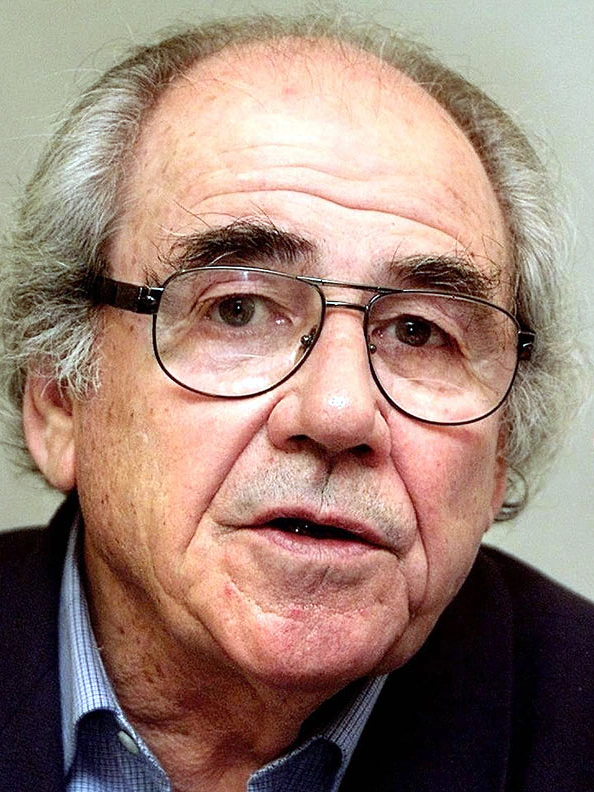
Attr: sociologicamente.it
| 32 Quotes | |
| Occup. | Sociologist |
| From | France |
| Born | July 29, 1929 Reims, France |
| Died | March 6, 2007 Paris, France |
| Aged | 77 years |
| Cite | |
Citation Formats
APA Style (7th ed.)
Jean baudrillard biography, facts and quotes. (2026, February 11). FixQuotes. https://fixquotes.com/authors/jean-baudrillard/
Chicago Style
"Jean Baudrillard biography, facts and quotes." FixQuotes. February 11, 2026. https://fixquotes.com/authors/jean-baudrillard/.
MLA Style (9th ed.)
"Jean Baudrillard biography, facts and quotes." FixQuotes, 11 Feb. 2026, https://fixquotes.com/authors/jean-baudrillard/. Accessed 23 Mar. 2026.
Early Life and Background
Jean Baudrillard was born on July 29, 1929, in Reims, in Frances Champagne region, a landscape of provincial commerce and postwar reconstruction that later sharpened his sensitivity to objects, surfaces, and the quiet tyranny of everyday signs. Unlike many Parisian intellectuals, he came from a modest family of civil servants; he was the first to pursue higher education, and the distance between his origins and the grandes ecoles milieu never fully closed. That social dislocation became a private motor: he wrote like an insider-outsider, intimate with the grammar of bourgeois life yet skeptical of its self-mythology.His adolescence unfolded under the long shadow of Occupation, Liberation, and the Fourth Republics political churn, with mass media and consumer goods beginning to reorganize desire. In the 1950s and early 1960s, Frances modernization offered not only prosperity but a new kind of conformity, where images promised freedom while standardizing experience. Baudrillard learned early to treat the ordinary as suspicious evidence: furniture, advertising, and leisure were not neutral comforts but clues to a changing regime of meaning.
Education and Formative Influences
Baudrillard studied German at the Sorbonne in Paris, reading both literature and the philosophical tradition that came with it; he translated authors including Bertolt Brecht and Peter Weiss, a craft that trained his ear for tone, irony, and the way language smuggles ideology. He taught in secondary schools before turning to sociology at the University of Paris Nanterre, where he encountered Marxism, structuralism, and the new social sciences, absorbing - and then disputing - the period's confidence that critique could reveal a stable reality beneath appearances.Career, Major Works, and Turning Points
He joined Nanterre as a lecturer and published the books that made his name: "The System of Objects" (1968), "The Consumer Society" (1970), and "For a Critique of the Political Economy of the Sign" (1972), which recast consumption as a code through which people communicate status and identity. The upheavals of May 1968 were a hinge: rather than confirming revolutionary transparency, they intensified his doubts about representation and political theater. In "Symbolic Exchange and Death" (1976) he broke more decisively with orthodox Marxism, and in "Simulacra and Simulation" (1981) he argued that late-modern culture produces copies without originals, an order of signs that no longer points back to a recoverable real. His later essays - including "America" (1986) and "The Gulf War Did Not Take Place" (1991) - pushed provocation into a method, insisting that events in the media age are staged, circulated, and consumed as scenarios as much as they are lived.Philosophy, Style, and Themes
Baudrillard's central obsession was the fate of reality under systems of communication: advertising, statistics, polling, and digital media do not merely report the world, they manufacture it as an inventory of legible, exchangeable units. His aphorism “Like dreams, statistics are a form of wish fulfillment”. captures both his epistemology and his psychology - a mind allergic to managerial certainty, convinced that what looks objective often expresses collective desire for control. For him, modernity is not a progressive awakening but an apparatus of signs that asks to be believed; politics, too, becomes credibility effects and scripted participation, a theater that replaces decision with spectacle. The corrosive edge of his writing - playful, paradoxical, sometimes cruel - served a defensive purpose: irony was his way of surviving a culture that, in his view, had made sincerity into just another marketable pose.He returned repeatedly to seduction, sexuality, and technology because they expose the gap between lived intensity and its simulated substitutes. “At the heart of pornography is sexuality haunted by its own disappearance”. is not prudishness but diagnosis: when experience is overexposed, quantified, and made immediately available, it loses its shadow - the very distance that makes desire possible. His skepticism toward technological triumphalism was equally pointed: “The sad thing about artificial intelligence is that it lacks artifice and therefore intelligence”. Here the wager is that intelligence is not raw processing power but the ability to play with masks, ambiguity, and appearances - the arts of deception that keep meaning alive. Underneath the glittering formulations is a consistent inner tension: he feared boredom and numbness less as moods than as civilizational outcomes, the flattening of the symbolic into the merely operational.
Legacy and Influence
Baudrillard died in Paris on March 6, 2007, leaving a body of work that continues to haunt debates about media, consumerism, virtuality, and political spectacle. He influenced cultural studies, sociology, art criticism, architecture, and film theory, and his vocabulary of simulation and hyperreality became shorthand for describing everything from theme-park politics to online life, even when used reductively. His lasting impact is not a single doctrine but a stance: a refusal to grant automatic dignity to facts, images, or technologies simply because they circulate widely. In an era defined by feeds, metrics, and performative public life, his most enduring lesson is methodological and moral - to read the surface as a system, to treat consensus as a sign, and to suspect that the real, when it matters, may be what the system cannot comfortably represent.Our collection contains 32 quotes written by Jean, under the main topics: Witty One-Liners - Ethics & Morality - Truth - Wisdom - Justice.
Other people related to Jean: Mark Poster (Writer)