
Jean-Claude Juncker Biography Quotes 6 Report mistakes
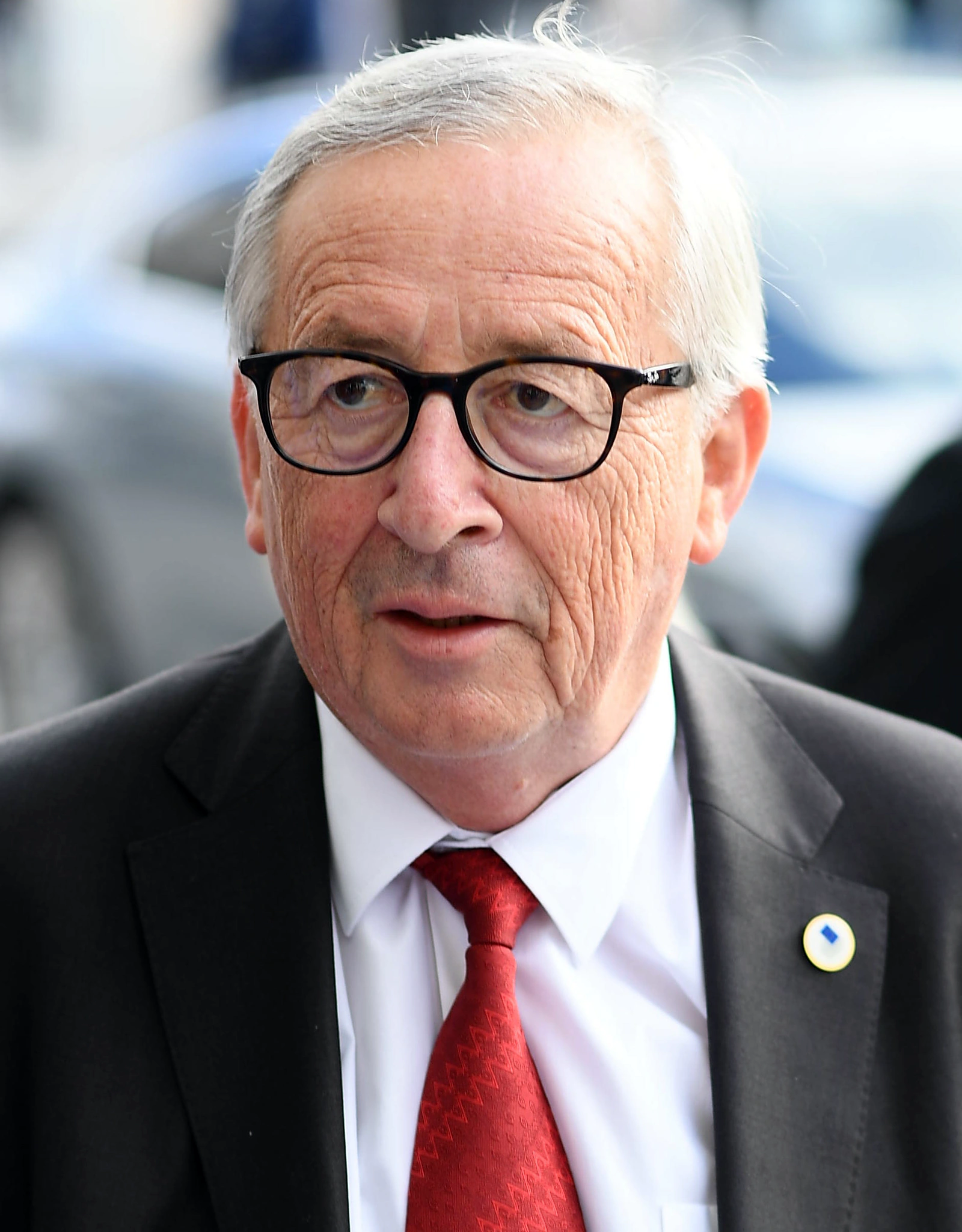
| 6 Quotes | |
| Occup. | Politician |
| From | Luxembourg |
| Spouse | Brigitte Juncker |
| Born | December 9, 1954 Redange-sur-Attert, Luxembourg |
| Age | 71 years |
| Cite | |
Citation Formats
APA Style (7th ed.)
Jean-claude juncker biography, facts and quotes. (2026, February 16). FixQuotes. https://fixquotes.com/authors/jean-claude-juncker/
Chicago Style
"Jean-Claude Juncker biography, facts and quotes." FixQuotes. February 16, 2026. https://fixquotes.com/authors/jean-claude-juncker/.
MLA Style (9th ed.)
"Jean-Claude Juncker biography, facts and quotes." FixQuotes, 16 Feb. 2026, https://fixquotes.com/authors/jean-claude-juncker/. Accessed 30 Mar. 2026.
Early Life and Background
Jean-Claude Juncker was born on December 9, 1954, in Redange-sur-Attert, a small town in western Luxembourg shaped by borderland pragmatism and postwar reconstruction. Luxembourg in his youth was a country of coal-and-steel memory and quiet prosperity, living in the long shadow of two world wars and the nearby giants of France and Germany. That geography produced a politics of survival: compromise as strategy, and Europe as a shield. Juncker absorbed early the idea that sovereignty for a microstate is not bravado but interdependence.His family life carried the moral imprint of the 20th century. His father, Joseph Juncker, had been conscripted into the German Wehrmacht during the Nazi occupation, an experience that left a lasting anti-nationalist reflex in the son. The household combined Catholic culture, social duty, and an instinctive distrust of ideologies that promised purity. Those origins helped explain a lifelong preference for incremental solutions and a suspicion of political theater - the sense that history punishes loud certainty and rewards institutions that make conflict boring.
Education and Formative Influences
Juncker attended the Lycée classique d'Echternach and studied law at the University of Strasbourg, graduating in the late 1970s. Strasbourg, a symbolic European capital on contested ground, offered more than coursework: it was a living argument for reconciliation built on treaties, courts, and shared rules. He joined Luxembourg's Christian Social People's Party (CSV) in 1974, aligning himself with a tradition that fused market economics with social protection and European integration. The mix of Catholic social teaching, legal training, and small-state realism formed his political temperament: patient, procedural, and oriented toward coalitions rather than crusades.Career, Major Works, and Turning Points
Juncker entered government early, serving as minister of labor and social security (1989-1994) and then minister of finance (1989-2009), before becoming prime minister (1995-2013), the longest-serving elected leader in the European Union during much of that period. He became a central architect of the euro era, chairing the Eurogroup of finance ministers (2005-2013) through the global financial crisis and the eurozone debt turmoil, where he often brokered late-night compromises among Germany, France, smaller member states, and the IMF. After domestic controversy over intelligence service oversight ended his premiership in 2013, he pivoted to the continental stage and served as president of the European Commission (2014-2019), pushing initiatives such as the Investment Plan for Europe (the "Juncker Plan"), a more coordinated response to the 2015 migration crisis, and a firmer line on rule-of-law and state aid questions, including high-profile clashes over tax rulings that touched his homeland's model.Philosophy, Style, and Themes
Juncker's inner political psychology is best read as a tension between idealism and the bruising knowledge of how power actually moves. He believed Europe was necessary not because it was romantic, but because it was functional for peace, prosperity, and relevance. His small-state vantage point made him sensitive to scale: grand where collective action is indispensable, restrained where local life should breathe. “I want a European Union that is bigger and more ambitious on big things, and smaller and more modest on small things”. The line is not only a policy slogan; it is an admission that overreach breeds backlash, and that legitimacy is earned by choosing battles.His style was that of the dealmaker-priest: confidential, moralizing, humorous, sometimes exasperated with the performance incentives of democracy. In crisis he argued for unity as leverage, warning that fragmentation shrinks Europe's weight in a world of rising powers and hard geopolitics. “When the European Union stands united, we can change the world”. Yet he was also famously candid about the political costs of necessary reforms, exposing the quiet cynicism that haunts governing classes. “We all know what to do, we just don’t know how to get re-elected after we’ve done it”. That sentence captures a core Juncker theme: the gap between technocratic solutions and public consent, and the need for leaders willing to spend political capital on long-term stability.
Legacy and Influence
Juncker's legacy is inseparable from the contradictions of European integration in the early 21st century: the euro's incomplete architecture, the moral strain of austerity debates, the migration shock, Brexit, and the return of geopolitics. To admirers, he embodied the EU's capacity to survive through compromise, keeping the currency union intact and defending the Commission's role as guardian of the treaties. To critics, he symbolized elite bargaining insulated from voters and a Luxembourg-centered comfort with permissive tax regimes. Even so, his career distilled the small-state European credo into a life of institutions: that peace is built not by declarations, but by patient rules, shared budgets, and the unglamorous art of keeping 27 interests moving in the same direction.Our collection contains 6 quotes written by Jean-Claude, under the main topics: Witty One-Liners - Motivational - Peace - Teamwork.
Other people related to Jean-Claude: Jacques Santer (Politician), Theresa May (Politician)
Source / external links