
Jean-Michel Basquiat Biography Quotes 9 Report mistakes
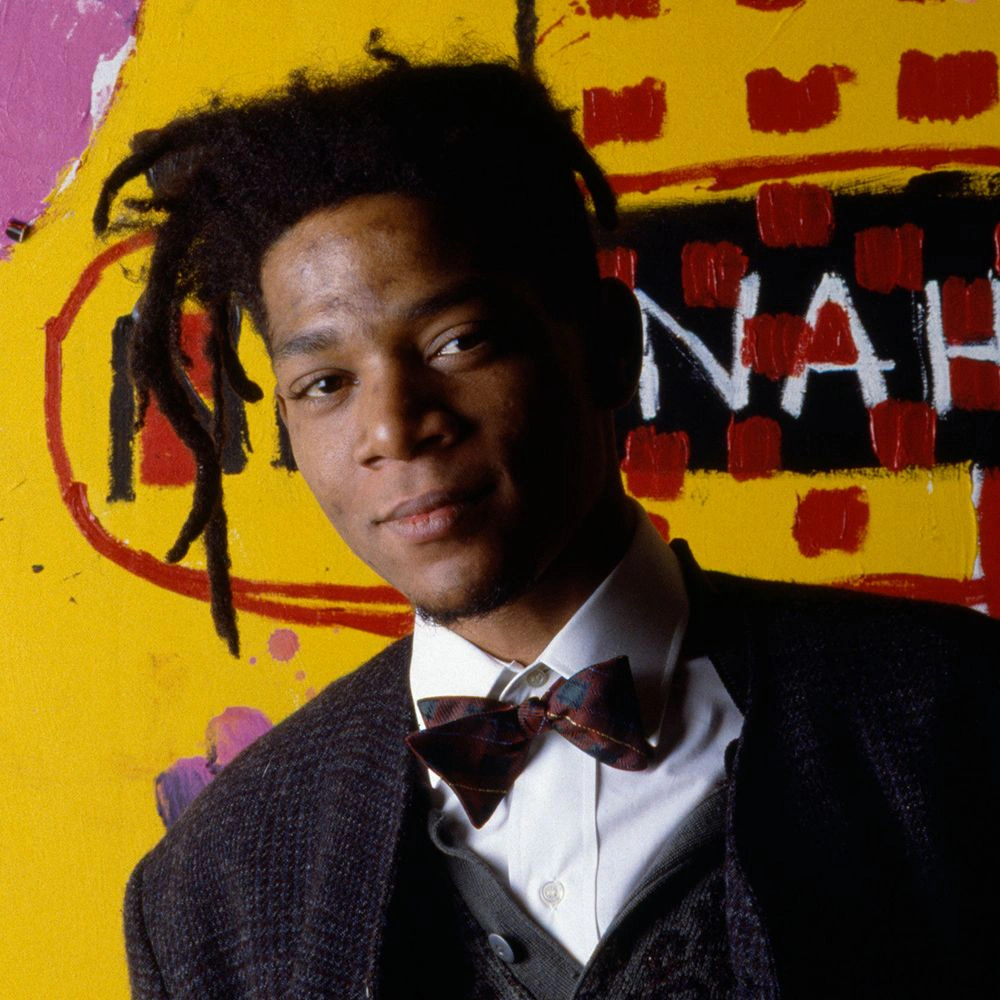
| 9 Quotes | |
| Known as | Jean-Michel |
| Occup. | Artist |
| From | USA |
| Born | December 22, 1960 Brooklyn, New York, USA |
| Died | August 12, 1988 New York City, New York, USA |
| Cause | Heroin overdose |
| Aged | 27 years |
| Cite | |
Citation Formats
APA Style (7th ed.)
Jean-michel basquiat biography, facts and quotes. (2026, February 23). FixQuotes. https://fixquotes.com/authors/jean-michel-basquiat/
Chicago Style
"Jean-Michel Basquiat biography, facts and quotes." FixQuotes. February 23, 2026. https://fixquotes.com/authors/jean-michel-basquiat/.
MLA Style (9th ed.)
"Jean-Michel Basquiat biography, facts and quotes." FixQuotes, 23 Feb. 2026, https://fixquotes.com/authors/jean-michel-basquiat/. Accessed 11 Mar. 2026.
Early Life and Background
Jean-Michel Basquiat was born on December 22, 1960, in Brooklyn, New York, at a moment when the city was both a cultural engine and a pressure cooker of inequality. His father, Gerard Basquiat, came from Haiti; his mother, Matilde Andrades, was Puerto Rican. The apartment world of Park Slope and later Boerum Hill gave him a trilingual ear (English, Spanish, French) and a mixed-heritage identity that would later sit at the center of his work - not as a slogan, but as lived friction: pride, alienation, and constant translation between scenes.Early trauma shaped his inner life. At seven, after being hit by a car, he spent time hospitalized and was given a copy of Gray's Anatomy, an image-text atlas that would echo for years in his paintings through bones, organs, and diagrammatic heads. His relationship with his mother - who encouraged museum visits and drawing - was profound, but her later struggles with mental illness destabilized the home. Basquiat grew up fast, drawn to the street as a testing ground for language, bravado, and survival.
Education and Formative Influences
Basquiat moved through New York's public schools and briefly attended Saint Ann's School in Brooklyn, where his gifts were obvious and his restlessness impossible to contain. He was expelled from Edward R. Murrow High School and did not finish; by his mid-teens he was already building a private education from museums, record stores, and friends' apartments. Punk, bebop, and the downtown mix of galleries, clubs, and graffiti formed his curriculum: Charlie Parker and Dizzy Gillespie alongside television, comic books, and the coded poetry of the street.Career, Major Works, and Turning Points
In the late 1970s he became visible as SAMO, a graffiti tag and aphorism project made with Al Diaz that turned Lower Manhattan walls into sharp, deadpan literature. By 1980, his jump from street legend to art-world phenomenon accelerated through the Times Square Show and his appearance in Glenn O'Brien's scene-making circle, followed by Rene Ricard's influential essay "The Radiant Child" (1981). Basquiat's first solo show at Annina Nosei Gallery in 1982 and his rapid run of paintings in 1981-83 - including Untitled (Skull) (1981), Untitled (1982), and the multi-panel, history-saturated canvases that braided crowns, saints, boxers, and executions - established him as both virtuoso and disruptor. The decade's boom economy amplified his market, but it also intensified scrutiny, racism, and the loneliness of fame; his friendship and collaboration with Andy Warhol (1983-85) brought new visibility and new attacks, and Warhol's death in 1987 deepened Basquiat's isolation. Struggling with heroin addiction, he died in Manhattan on August 12, 1988, aged 27.Philosophy, Style, and Themes
Basquiat painted like a writer under deadline: slashed marks, quick revisions, palimpsests of text, and sudden anatomical clarity. He insisted on a stubborn professionalism beneath the "primitive" caricature imposed on him. “Believe it or not, I can actually draw”. The sentence is both joke and defense, revealing a psyche cornered by condescension - an artist refusing to let the world misrecognize discipline as accident. His pictures often stage that fight: virtuoso draftsmanship buried under scabs of color, as if skill had to survive its own mythology.What drove him was not art-theory purity but an urgent, autobiographical historics - the way life in America writes on the body. “I don't think about art when I'm working. I try to think about life”. That credo clarifies the documentary force of his iconography: crowns for self-coronation and mourning; Black athletes and musicians as both heroes and exploited labor; medical diagrams as evidence; crossed-out words as a way to make language louder by partially erasing it. He sought celebrity but feared captivity by it - and his work turns repeatedly to the economics of looking, to who gets to be a subject rather than a specimen. “I am not a black artist, I am an artist”. The insistence is not denial of race; it is refusal of a cage, the demand to be read as fully human and formally ambitious, not as an anthropological exhibit in a white market.
Legacy and Influence
Basquiat's short life became a long afterlife: a blueprint for how painting could absorb hip-hop cadence, punk abrasion, historical citation, and raw feeling without losing formal intelligence. He helped shift contemporary art toward the street, toward Black history as central rather than marginal, and toward a new honesty about power, money, and authorship. Museums now treat his work as a key record of 1980s New York - its exuberance, its brutality, its speed - while younger artists study his example as permission to be interdisciplinary, self-mythologizing, and politically awake without becoming didactic. The crown remains a global symbol, but the deeper inheritance is his method: turning the noise of life into an image that remembers what the world tried to forget.Our collection contains 9 quotes written by Jean-Michel, under the main topics: Motivational - Art - Music.
Other people related to Jean-Michel: Jeffrey Wright (Actor), Keith Haring (Artist)
Source / external links