
Jean-Paul Marat Biography Quotes 2 Report mistakes
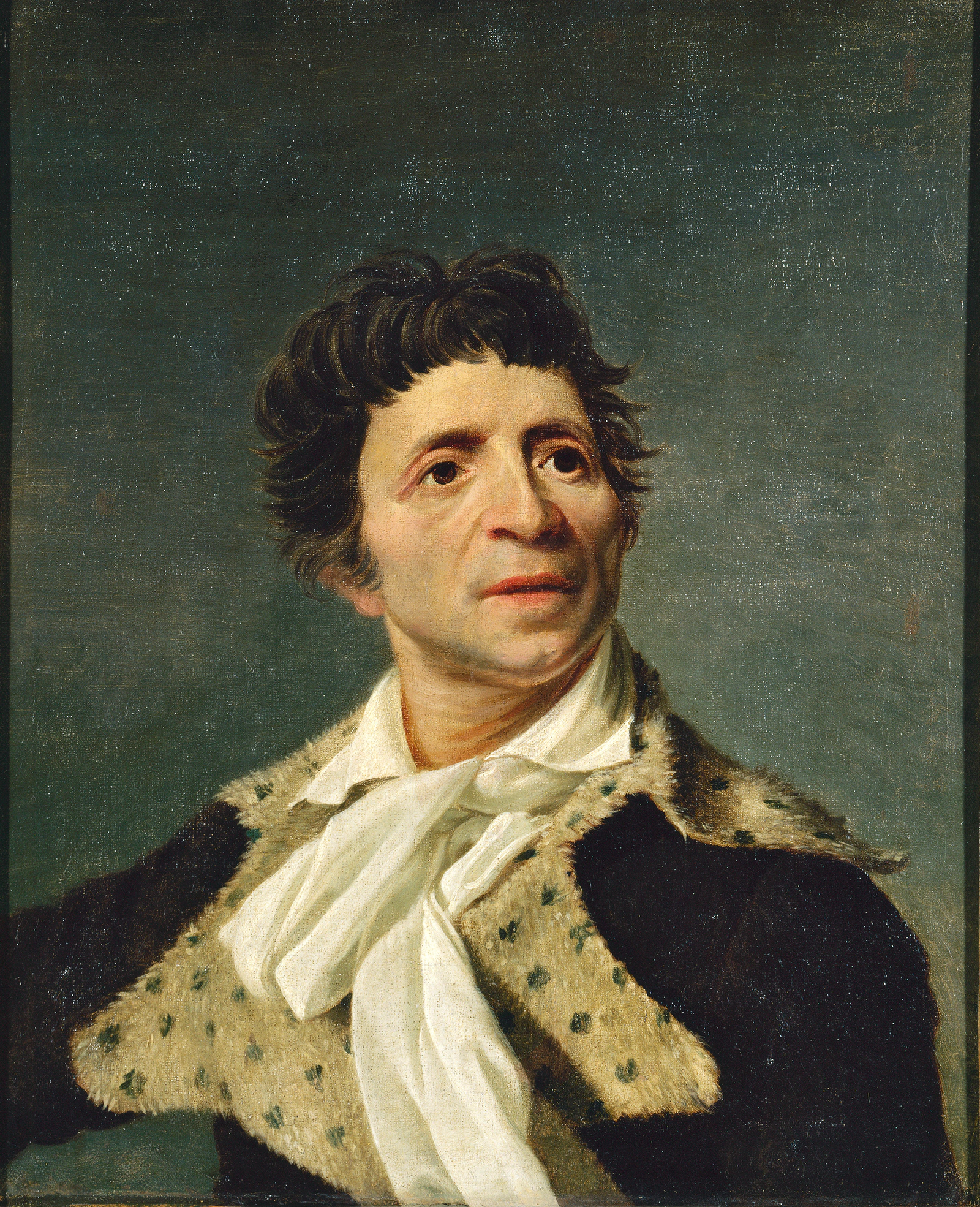
Attr: Joseph Boze
| 2 Quotes | |
| Occup. | Politician |
| From | Switzerland |
| Born | May 24, 1743 Boudry, Switzerland |
| Died | July 13, 1793 Paris, France |
| Cause | Assassination |
| Aged | 50 years |
| Cite | |
Citation Formats
APA Style (7th ed.)
Jean-paul marat biography, facts and quotes. (2026, February 11). FixQuotes. https://fixquotes.com/authors/jean-paul-marat/
Chicago Style
"Jean-Paul Marat biography, facts and quotes." FixQuotes. February 11, 2026. https://fixquotes.com/authors/jean-paul-marat/.
MLA Style (9th ed.)
"Jean-Paul Marat biography, facts and quotes." FixQuotes, 11 Feb. 2026, https://fixquotes.com/authors/jean-paul-marat/. Accessed 26 Mar. 2026.
Early Life and Background
Jean-Paul Marat was born on 1743-05-24 in Boudry, in the Principality of Neuchatel, a francophone Swiss territory then tied to the Prussian crown. His father, Jean Mara (later "Marat"), was a Sardinian-born former monk turned schoolmaster; his mother, Louise Cabrol, came from a Huguenot family. The household was educated but financially tight, and Marat grew up with the double consciousness of an outsider: a provincial Swiss in the orbit of French culture, and a poor, ambitious boy measuring himself against the privileges of birth.That early sense of exclusion mattered. In a Europe where patronage decided careers, Marat learned to compensate with intensity and self-invention. He left home young, drifted through the intellectual marketplaces of the Enlightenment, and developed a lifelong suspicion of established bodies - academies, courts, and elites - that conferred legitimacy while keeping men like him at the door.
Education and Formative Influences
Marat was largely self-made: trained in medicine and the natural sciences through apprenticeship and study across French- and English-speaking Europe, he built a practice in Britain in the 1760s and 1770s and moved in the orbit of metropolitan debate without secure institutional standing. He absorbed Enlightenment argumentation and its faith in reason, but also the period's darker lesson that "reason" could be monopolized by credentialed clubs; his later polemics bear the marks of a man who felt perpetually judged by gatekeepers.Career, Major Works, and Turning Points
Before the Revolution made him notorious, Marat sought distinction as a physician and scientific author, publishing works that ranged from political theory (including an early critique of despotism and legal inequality) to physiology and optics; in France he served for a time as a doctor attached to the household of the Comte d'Artois, the future Charles X. He also battled the scientific establishment, claiming priority and attacking academicians he believed dismissed him unfairly, a feud that sharpened his combative public voice. In 1789 he reinvented himself as a revolutionary journalist and tribune of the Parisian poor through L'Ami du peuple, a newspaper that fused reporting, denunciation, and calls to action; repeated threats of prosecution pushed him into hiding and then back into the streets with greater notoriety. His influence peaked in 1792-1793 amid war, scarcity, and factional struggle: he aligned with the Montagnards against the Girondins, was elected to the National Convention, and became both symbol and lightning rod. On 1793-07-13, Charlotte Corday, a Girondin sympathizer, stabbed him in his bath, where he worked while suffering a chronic skin condition; his death was immediately politicized and sanctified by allies as martyrdom.Philosophy, Style, and Themes
Marat's inner life reads as a volatile braid of moral certainty, wounded pride, and genuine identification with the vulnerable. His writing voice is intimate and prosecutorial - as if he is speaking directly to "the people" over the heads of institutions - and it treats politics as emergency medicine: diagnose corruption, excise it, cauterize the wound. That temperament made him exquisitely sensitive to betrayal and conspiracy, not only as tactics of opponents but as existential threats to a revolution he believed could be strangled at birth.Two convictions organize his themes: that misery is structural, and that violence can be preventative. His sympathy for the dispossessed was not sentimental; it was accusatory, grounded in a quasi-theological sense of the world's injustice, captured in the bleak aphorism, “God has always been hard on the poor”. In Marat, pity turns quickly into indictment of luxury and complacency. From that moral absolutism came his most infamous counsel, the belief that terror could secure liberty, epitomized by the chilling arithmetic of repression: “Five or six hundred heads cut off would have assured your repose, freedom and happiness”. The sentence is not mere bloodlust but a window into his psychology - a man who experienced politics as siege, who translated fear into numbers, and who sought certainty through irreversible acts.
Legacy and Influence
Marat's legacy is inseparable from the Revolution's argument about means and ends. To admirers, he embodied incorruptible vigilance and gave language to the hunger and anger of the sans-culottes when polite reform seemed to fail; to critics, he exemplified how moral passion can metastasize into persecution. His assassination and Jacques-Louis David's iconic image of him turned a polarizing journalist into a secular saint, ensuring that "Marat" would persist as a symbol - of radical empathy, of conspiratorial politics, and of the perilous temptation to make violence the proof of virtue.Our collection contains 2 quotes written by Jean-Paul, under the main topics: Justice - War.
Other people related to Jean-Paul: Marquis de Condorcet (Philosopher)
Source / external links