
Jeff Bezos Biography Quotes 217 Report mistakes
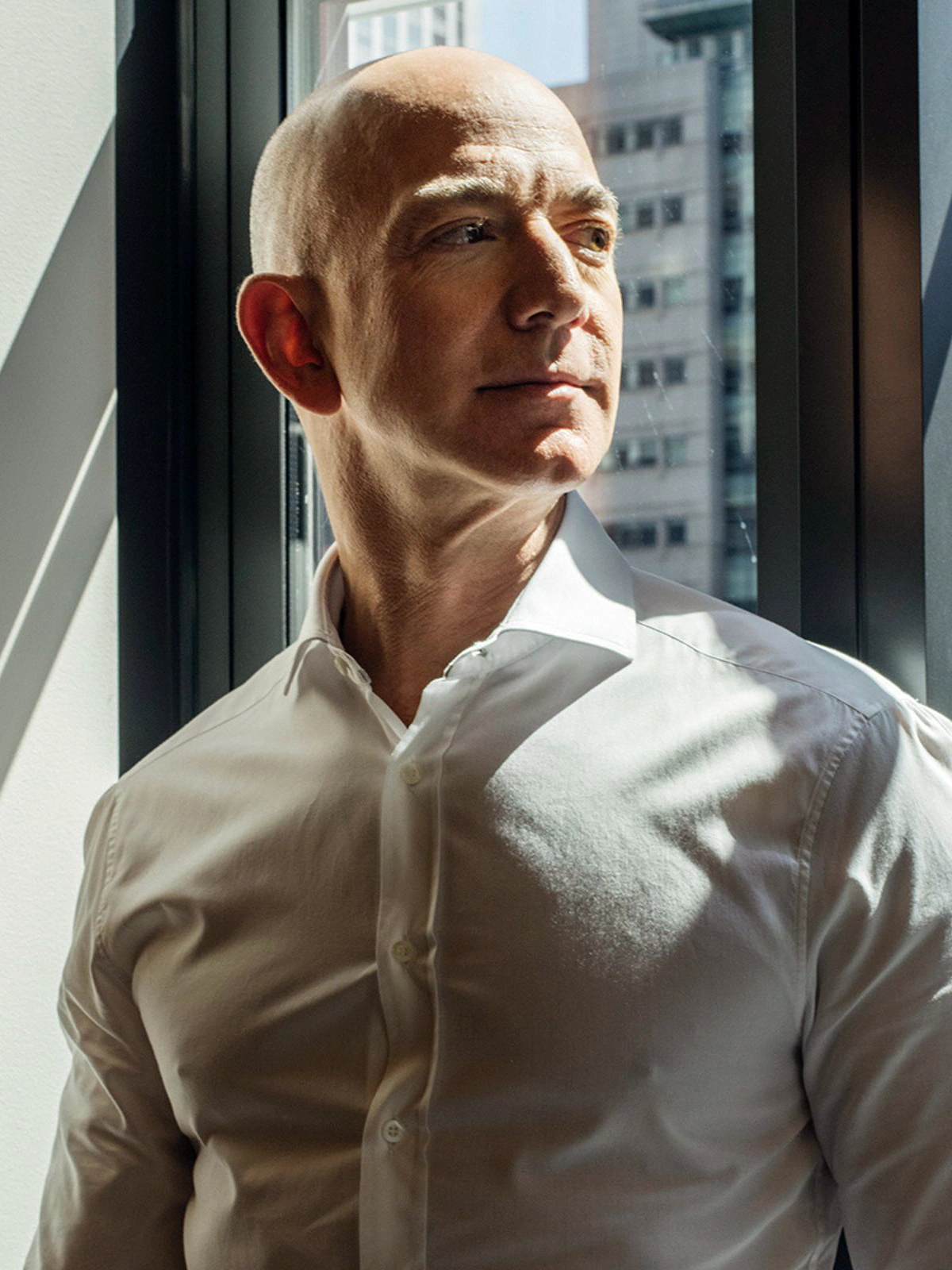
| 217 Quotes | |
| Born as | Jeffrey Preston Jorgensen |
| Known as | Jeffrey Preston Bezos |
| Occup. | Businessman |
| From | USA |
| Born | January 12, 1964 Albuquerque, New Mexico, United States |
| Age | 62 years |
| Cite | |
Citation Formats
APA Style (7th ed.)
Jeff bezos biography, facts and quotes. (2026, March 25). FixQuotes. https://fixquotes.com/authors/jeff-bezos/
Chicago Style
"Jeff Bezos biography, facts and quotes." FixQuotes. March 25, 2026. https://fixquotes.com/authors/jeff-bezos/.
MLA Style (9th ed.)
"Jeff Bezos biography, facts and quotes." FixQuotes, 25 Mar. 2026, https://fixquotes.com/authors/jeff-bezos/. Accessed 27 Mar. 2026.
Early Life and Background
Jeff Bezos was born Jeffrey Preston Jorgensen on January 12, 1964, in Albuquerque, New Mexico, at a moment when the United States was turning spaceflight and microelectronics into national obsessions. His biological parents, Jacklyn Gise and Ted Jorgensen, were teenagers; the marriage quickly unraveled, and the instability of that early household left him with a sharpened appetite for control, systems, and self-reliance. When his mother married Miguel "Mike" Bezos, a Cuban immigrant who had come to America as a child refugee, the family relocated - first to Houston, then to Miami - and Jeff took his stepfathers surname, absorbing a story of risk and reinvention that would later rhyme with his own.As a boy he displayed a mechanics-minded intensity: taking things apart, running small projects, and showing a preference for the clean logic of machines over the ambiguity of people. Summers on his maternal grandparents ranch in Texas gave him another template: long days, real consequences, and the practical dignity of work, which he later translated into a corporate culture that prized measurable output. Even early, he seemed driven by an internal bargain - defer comfort now, build optionality later - a temperament well-suited to the coming age of networks, capital, and scale.
Education and Formative Influences
Bezos attended Princeton University, graduating in 1986 with degrees in electrical engineering and computer science, studying under the ambient influence of Cold War computing and the emerging belief that software would reorganize everything it touched. After Princeton he moved through the elite pipeline of technical finance and strategy - Fitel, Bankers Trust, and then D.E. Shaw in New York - where he rose quickly and learned how models, incentives, and feedback loops can shape reality. At Shaw he encountered the early internet as a statistical anomaly with a growth curve too steep to ignore; the era rewarded those who treated new infrastructure as destiny rather than novelty, and Bezos trained himself to act before consensus arrived.Career, Major Works, and Turning Points
In 1994 he left D.E. Shaw, drove west with a business plan written en route, and founded Amazon in a garage in Bellevue, Washington, choosing books as the first product because they were standardized, plentiful, and catalogable. Amazon.com launched in 1995 and went public in 1997, then survived the dot-com crash by tightening operations while continuing to invest in logistics, software, and selection. Turning points followed: Marketplace (third-party sellers), Prime (membership and shipping scale), AWS (cloud computing beginning in 2006), and the Kindle (2007), each extending Amazon from retailer to infrastructure company. Parallel ambitions hardened: Blue Origin, founded in 2000, pursued reusable rockets with a long time horizon; The Washington Post was purchased in 2013, reflecting his belief in durable institutions rebuilt with modern tools. His public profile shifted again with personal upheaval - the 2019 divorce from MacKenzie Scott and subsequent relationship with Lauren Sanchez - and with a planned transition from day-to-day Amazon leadership, culminating in stepping down as CEO in 2021 while remaining executive chairman.Philosophy, Style, and Themes
Bezos psychology is best read as a blend of engineer and gambler: he wants the world decomposed into variables, yet he is willing to wager heavily when the expected value is asymmetrical. His core managerial instinct is customer-centeredness not as sentiment but as discipline and compulsion - “We see our customers as invited guests to a party, and we are the hosts. It's our job every day to make every important aspect of the customer experience a little bit better”. That metaphor reveals an inner need to choreograph the environment, to remove friction until trust becomes automatic, and to treat reputation as an output of repeated, audited behaviors rather than charisma.He paired that hospitality with a fear of stasis: “What's dangerous is not to evolve”. In practice, evolution meant institutionalizing mechanisms that force change - written narratives instead of slide decks, metrics that punish complacency, and a tolerance for being misunderstood while building capabilities ahead of demand. His work on Kindle also embodies his method of inversion: “There are two ways to extend a business. Take inventory of what you're good at and extend out from your skills. Or determine what your customers need and work backward, even if it requires learning new skills. Kindle is an example of working backward”. The emotional subtext is revealing: he mistrusts comfort, prefers systems that keep him restless, and uses long horizons to justify short-term discomfort, whether in thin margins, relentless pace, or the audacity of private spaceflight.
Legacy and Influence
Bezos helped define the platform era: Amazon reshaped retail, warehousing, and delivery expectations, while AWS became a foundational layer of the modern internet economy, enabling startups and enterprises alike to rent computing at scale. His methods popularized "day one" urgency, data-driven decision-making, and the idea that logistics and software are strategic weapons; admirers see a builder of consumer convenience and digital infrastructure, critics point to labor intensity, market power, and the societal costs of hyper-optimization. Through Blue Origin and his public advocacy for long-term thinking, he also pressed a once-fringe argument back into the mainstream: that civilization can expand its frontier if it is willing to invest for decades. Whatever verdict history renders, his enduring influence lies in converting a personal temperament - obsessive, future-tilted, and mechanism-driven - into institutions that changed how people buy, build, and imagine scale.Our collection contains 217 quotes written by Jeff, under the main topics: Resilience - Embrace Change - Customer Service - Vision & Strategy - Business.
Other people related to Jeff: Jason Kilar (American)
Source / external links