
Jenny Shipley Biography Quotes 19 Report mistakes
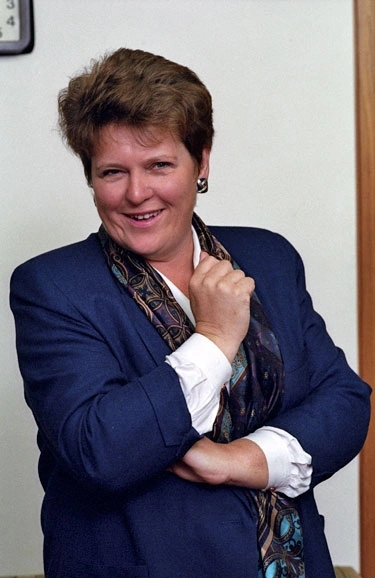
| 19 Quotes | |
| Occup. | Statesman |
| From | New Zealand |
| Born | February 4, 1952 |
| Age | 74 years |
| Cite | |
Citation Formats
APA Style (7th ed.)
Jenny shipley biography, facts and quotes. (2026, February 19). FixQuotes. https://fixquotes.com/authors/jenny-shipley/
Chicago Style
"Jenny Shipley biography, facts and quotes." FixQuotes. February 19, 2026. https://fixquotes.com/authors/jenny-shipley/.
MLA Style (9th ed.)
"Jenny Shipley biography, facts and quotes." FixQuotes, 19 Feb. 2026, https://fixquotes.com/authors/jenny-shipley/. Accessed 6 Mar. 2026.
Early Life and Background
Jennifer Mary Shipley was born on February 4, 1952, in Gore, Southland, New Zealand, into a provincial, church-shaped world where community standing and self-reliance were closely linked. Growing up in the lower South Island in the postwar decades meant absorbing a politics of practicality - farms, small towns, and school committees mattered as much as Parliament - and it also meant learning the moral language of duty and restraint that later colored her public positions on social policy.Her early adulthood coincided with a country renegotiating its identity: Britain was turning toward Europe, the welfare state was under strain, and debates over Maori rights, nuclear policy, and economic deregulation were moving from the margins to the center. Shipley carried into national life the sensibility of someone who had watched institutions up close - churches, schools, local councils - and who believed that social order was something constructed daily rather than assumed.
Education and Formative Influences
Shipley trained as a teacher and worked in education before entering politics, experiences that formed her instinct for administration and measurement - targets, standards, accountability - and sharpened her interest in how policy touches households. In the 1970s and 1980s, as New Zealand moved through rapid economic restructuring and cultural argument, she gravitated to the National Party tradition that emphasized enterprise and personal responsibility, while also learning, as a woman in public life, how power often travels through informal networks rather than official job descriptions.Career, Major Works, and Turning Points
Elected to Parliament in 1987 as National MP for the rural electorate of Ashburton, Shipley rose quickly in opposition and then in government after National's 1990 victory. She served in major portfolios including Social Welfare and Health, where she became a prominent advocate for tightening incentives and reshaping state services, positions that attracted both admiration and fierce critique during an era still marked by the aftershocks of "Rogernomics". A decisive turning point came in December 1997 when, after internal party conflict, she replaced Jim Bolger and became New Zealand's first woman Prime Minister from the National Party. Her premiership (1997-1999) unfolded under the new Mixed Member Proportional system, demanding coalition discipline and constant negotiation; she led the government through the Asian financial crisis headwinds and into the contentious sale of a stake in Wellington airport, before losing office in the 1999 election to Helen Clark's Labour-led coalition. She remained in Parliament until 2002, later moving into governance and advisory roles that kept her connected to regional development, corporate oversight, and international policy networks.Philosophy, Style, and Themes
Shipley's inner political grammar combined moral conviction with managerial confidence. She tended to see the state not as a distant benefactor but as a set of levers that could - and should - reshape behavior, especially around welfare, health, and family policy. That outlook could sound stern, even prosecutorial, yet it also reflected a belief that dignity is tied to participation and that policy without expectations can trap people in dependence. The teacher's habit remained: define the problem, set a standard, measure progress, then insist institutions deliver.On the world stage, however, her language often widened from household discipline to a more pluralist internationalism, especially regarding the Pacific and women's role in peace and development. “It is important to remember that the Pacific Ocean covers a quarter of the world's surface and that each Pacific country has its own cultural, historical and ethnic identity”. That sentence captures a recurring Shipley theme: sovereignty is not only legal but cultural, and small states require recognition as distinct actors rather than as extensions of larger powers. Her statements on gender and security reveal a second theme - that representation is not symbolic but operational: “Too often the desire for peace has been expressed by women while the stewardship of the mechanisms which are used to attempt to secure peace in the short and medium term are dominated by male decision-making structures and informal arrangements. This must change”. And behind both sits an ethic of vigilance about stability in a turbulent post-Cold War order: “Peace is a fragile thing. It takes courage to secure it. It takes wisdom to maintain it”. Together these ideas show a politician who could be uncompromising at home yet strategically attentive abroad - convinced that systems, whether welfare agencies or global institutions, reflect the values and blind spots of those who run them.
Legacy and Influence
Shipley's legacy is inseparable from the 1990s transformation of New Zealand politics: the new coalition era, the hard arguments over welfare reform, and the demonstration that women could reach - and fight to keep - the highest office inside traditionally male party structures. To supporters, she modeled decisiveness and a willingness to impose clarity on messy policy domains; to critics, she personified an austere turn in social policy. Yet beyond partisan judgment, her career marked a durable shift in expectations about leadership and representation, and her later public roles extended her influence into the overlapping worlds of governance, regional diplomacy, and the continuing debate over how a small Pacific democracy exercises power with both discipline and empathy.Our collection contains 19 quotes written by Jenny, under the main topics: Parenting - Equality - Peace - Military & Soldier - Human Rights.
Source / external links