
Jens Stoltenberg Biography Quotes 19 Report mistakes
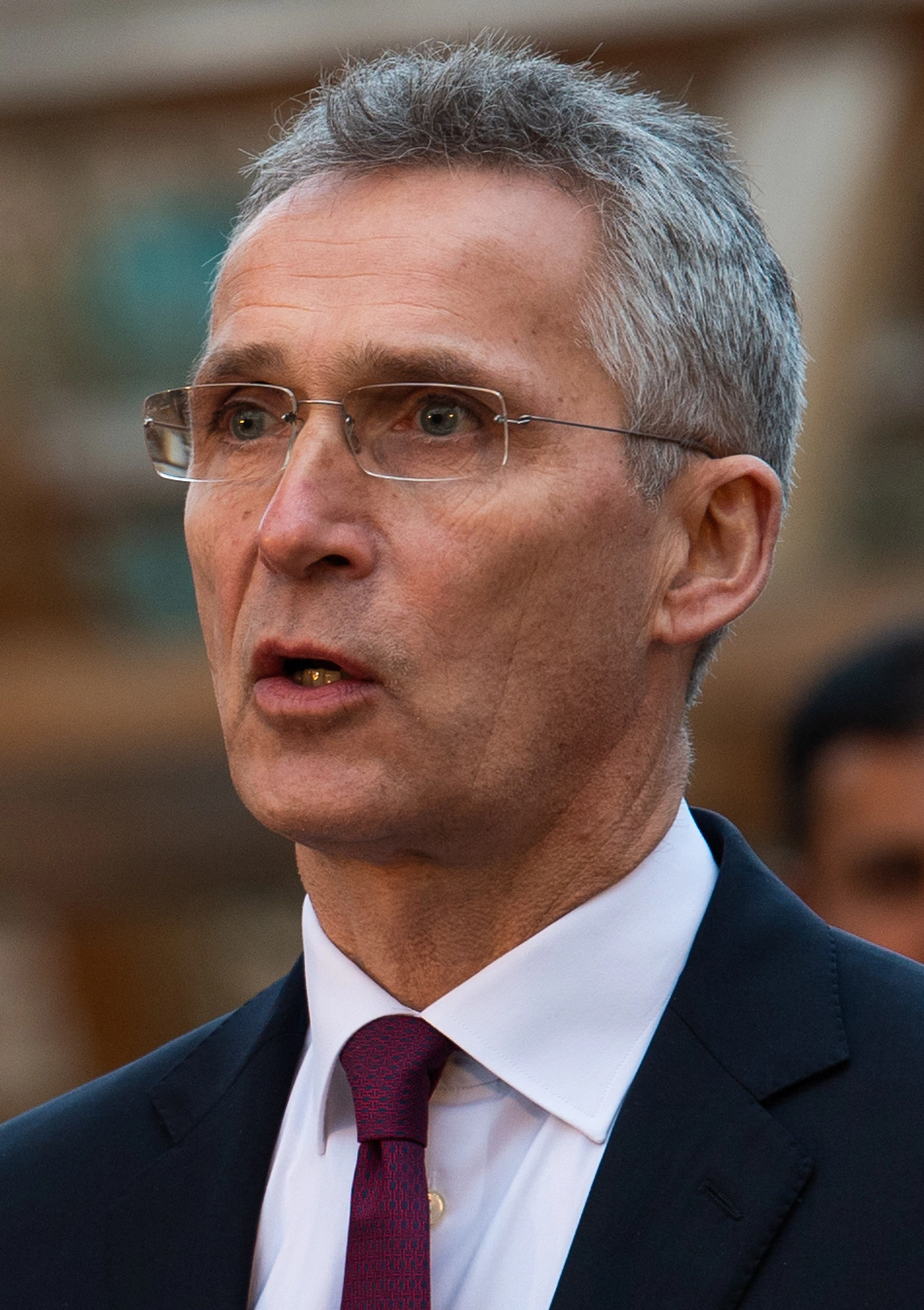
| 19 Quotes | |
| Occup. | Politician |
| From | Norway |
| Spouse | Ingebjørg Godskesen |
| Born | March 16, 1959 Oslo, Norway |
| Age | 67 years |
| Cite | |
Citation Formats
APA Style (7th ed.)
Jens stoltenberg biography, facts and quotes. (2026, February 11). FixQuotes. https://fixquotes.com/authors/jens-stoltenberg/
Chicago Style
"Jens Stoltenberg biography, facts and quotes." FixQuotes. February 11, 2026. https://fixquotes.com/authors/jens-stoltenberg/.
MLA Style (9th ed.)
"Jens Stoltenberg biography, facts and quotes." FixQuotes, 11 Feb. 2026, https://fixquotes.com/authors/jens-stoltenberg/. Accessed 27 Mar. 2026.
Early Life and Background
Jens Stoltenberg was born on March 16, 1959, in Oslo, into a family whose daily life was steeped in public service and international outlook. His father, Thorvald Stoltenberg, became a prominent Labour Party figure and later foreign minister; his mother, Kari Stoltenberg, was a senior civil servant. In a small, wealthy Nordic state that nonetheless lived in the shadow of the Cold War, the Stoltenberg household embodied the postwar Norwegian belief that security, prosperity, and moral obligation were inseparable from engagement abroad.Childhood for Stoltenberg was shaped by a Norway balancing social-democratic consensus with the new dilemmas of oil wealth. The country had discovered petroleum in the North Sea in the late 1960s, and by the 1970s it was learning what it meant to be rich without losing its egalitarian instincts. That tension - between markets and welfare, extraction and stewardship, national interests and international rules - would later become the recurring problem set of his political life.
Education and Formative Influences
Stoltenberg studied economics at the University of Oslo (cand.oecon.), an education that gave him a technocratic vocabulary for problems Labour leaders had long framed ethically: employment, redistribution, and the state as investor. He also moved through the organized left of his generation, including youth politics and anti-nuclear activism, developing a pragmatic temperament that favored coalition-building over purity. By the time Norway debated Europe, energy, and defense in the 1980s, he had absorbed the lessons of a small-state strategy: competence at home, credibility abroad.Career, Major Works, and Turning Points
He rose through the Labour Party in the 1980s and 1990s, served as minister of industry and energy (1993-1996), and then as minister of finance (1996-1997), jobs that put him at the center of Norway's management of petroleum revenues and state ownership. Stoltenberg became prime minister twice - first briefly in 2000-2001, then in the long governing stretch from 2005 to 2013 leading the "red-green" coalition with the Centre Party and Socialist Left. Those years demanded crisis management as much as reform: the 2008 financial shock tested the resilience of Norway's mixed economy, while the July 22, 2011 terrorist attacks by Anders Behring Breivik forced Stoltenberg to speak for a wounded nation, defending open society and democratic patience rather than vengeance. In 2014 he pivoted from national leadership to alliance stewardship when he became secretary general of NATO, a role he held through a decade defined by Russia's aggression against Ukraine, intensified great-power rivalry, and the political strain of keeping democracies aligned.Philosophy, Style, and Themes
Stoltenberg's politics are often described as cautious, but the deeper pattern is managerial idealism: he treats solidarity not as sentiment but as infrastructure. At home he argued for a state that insures risk and expands capability, consistent with his long defense of the Nordic model's blend of welfare and competition. Abroad he translated the same logic into alliance language, insisting that credibility depends on cohesion and predictable commitments. The point is not charisma but reassurance - a steady voice that assumes institutions can outlast shocks if leaders refuse panic.Three themes recur in his own formulations: alliance unity, democratic peace, and the moral accounting of energy wealth. “Solidarity among Allies is NATO's center of gravity. It is the bond that unites us, and our unity is our greatest strength”. In that sentence is his psychology as a leader of coalitions: the fear is fragmentation; the remedy is ritual, consultation, and shared burden. He couples deterrence to restraint, reflecting Norway's small-state realism: “NATO is a defensive alliance, and our aim is to preserve peace, not provoke conflict”. And he consistently frames climate and petroleum as a responsibility problem, not an identity war: “Oil and gas have been important drivers of Norway's economic growth, but we must invest in renewable energy and new technologies to secure a sustainable future”. The throughline is an ethic of guardianship - over security, over welfare, and over the future costs of present prosperity.
Legacy and Influence
Stoltenberg's legacy is less a single reform than an approach that helped define Norway's modern governing style: evidence-based, distribution-conscious, and anchored in international cooperation. As prime minister, he presided over an era when the sovereign wealth fund became a symbol of disciplined resource management and intergenerational fairness, and when the nation confronted terrorism without abandoning democratic norms. As NATO secretary general, he became the alliance's consensus-maker during years when unity was repeatedly tested - by renewed war in Europe, by questions about deterrence, and by the politics of burden-sharing - reinforcing the idea that institutions endure not automatically, but because leaders keep them intellectually coherent and emotionally habitable for their members.Our collection contains 19 quotes written by Jens, under the main topics: Nature - Equality - War - Peace - Vision & Strategy.
Other people related to Jens: Kay Bailey Hutchison (Politician), Anders Fogh Rasmussen (Statesman)
Source / external links