
Jerome Lawrence Biography Quotes 12 Report mistakes
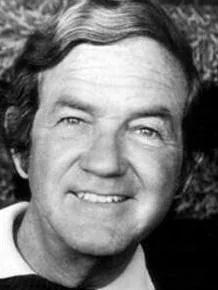
| 12 Quotes | |
| Occup. | Playwright |
| From | USA |
| Born | July 14, 1915 |
| Died | February 29, 2004 |
| Aged | 88 years |
| Cite | |
Citation Formats
APA Style (7th ed.)
Jerome lawrence biography, facts and quotes. (2026, February 2). FixQuotes. https://fixquotes.com/authors/jerome-lawrence/
Chicago Style
"Jerome Lawrence biography, facts and quotes." FixQuotes. February 2, 2026. https://fixquotes.com/authors/jerome-lawrence/.
MLA Style (9th ed.)
"Jerome Lawrence biography, facts and quotes." FixQuotes, 2 Feb. 2026, https://fixquotes.com/authors/jerome-lawrence/. Accessed 12 Feb. 2026.
Early Life and Background
Jerome Lawrence was born July 14, 1915, in Cleveland, Ohio, into a Midwestern America that prized practicality but was beginning to discover mass culture through radio, film, and the expanding newspaper press. He grew up during the long shadow of World War I and came of age as the Great Depression pressed families toward thrift and public life toward debate about authority, labor, and civic freedom. Those pressures, and the cadence of American speech he heard in streets and ballparks, later fed a theater that sounded colloquial while arguing about first principles.The young Lawrence was drawn early to storytelling as a form of public participation. Long before Broadway, he learned how audiences gather around a narrative - and how easily a crowd can be steered by certainty, fear, or spectacle. That social awareness, sharpened by the era's ideological noise, became the seed of his central concern: what happens to a community when it confuses conformity with virtue.
Education and Formative Influences
Lawrence studied at Ohio State University and found in campus life a laboratory for American character - ambition, insecurity, showmanship, and idealism colliding in public. He moved naturally into radio, a medium that trained him to write with speed, clarity, and an ear for performance, and he worked as a writer and editor for stations in Ohio and later in New York. Radio also gave him an apprenticeship in collaboration and rewriting under pressure, disciplines that would later define his partnership with Robert E. Lee.Career, Major Works, and Turning Points
After serving in the U.S. Army Air Forces during World War II, Lawrence returned to a nation reshaped by victory and anxiety, where patriotism could harden into suspicion. He and Lee formed one of the most productive writing teams in American theater, blending entertainment with argument. Their Broadway breakthrough came with Inherit the Wind (1955), a courtroom drama inspired by the 1925 Scopes "Monkey Trial" yet aimed squarely at the 1950s climate of blacklisting and ideological policing; it became a landmark of postwar liberal conscience and a durable repertory staple. They followed with Auntie Mame (1956), a high-spirited defense of chosen family and nonconformity, later adapted into film and musical; and later works including The Night Thoreau Spent in Jail (1970), which used Henry David Thoreau as a lens on dissent and civic obligation during a decade defined by Vietnam and protest.Philosophy, Style, and Themes
Lawrence wrote as a dramatist of persuasion: his plays are built to entertain first, then to corner the audience into recognizing its own assumptions. He believed the stage could be a civic classroom without becoming a lecture, and he treated craft as a kind of moral engineering - pacing, jokes, and reversals in service of an argument about freedom. "A play is a passion". That line captures his inner motor: an appetite for the immediacy of performance and the risk of live response, where an idea is tested not in print but in breathing bodies.The partnership with Lee honed a style that made seriousness palatable - wit as a solvent for fear, and warmth as a bridge into controversy. Lawrence was skeptical of ideological certainty, preferring characters who learn under pressure and communities that reveal their contradictions in public. "The aftermath of the war is what inspired us to write many of our plays. The whole reason for our writing Inherit the Wind was that we were appalled at the blacklisting. We were appalled at thought control". His humor often served as a diagnostic tool, a way to show the mind protecting itself with fantasies and labels: "A neurotic is a man who builds a castle in the air. A psychotic is the man who lives in it. A psychiatrist is the man who collects the rent". Beneath the joke is a playwright's suspicion of self-deception - and of institutions that profit when people surrender complexity for certainty.
Legacy and Influence
Lawrence died February 29, 2004, but his work remains a practical repertoire for schools, community theaters, and major stages because it combines strong roles with arguments that never stop being current: how a society handles disagreement, who gets to define "American", and what courage looks like when it is unpopular. Inherit the Wind, in particular, endures as a portable parable for eras of censorship and cultural panic, while Auntie Mame continues to model generosity as a form of rebellion. His lasting influence is the proof that civics can be theatrical - not by flattening conflict into slogans, but by turning it into human scenes where laughter and fear compete in the same room.Our collection contains 12 quotes written by Jerome, under the main topics: Witty One-Liners - Wisdom - Art - Music - Writing.
Jerome Lawrence Famous Works
- 1978 First Monday in October (Play)
- 1970 The Night Thoreau Spent in Jail (Play)
- 1956 Auntie Mame (stage adaptation) (Play)
- 1955 Inherit the Wind (Play)