
Jessamyn West Biography Quotes 30 Report mistakes
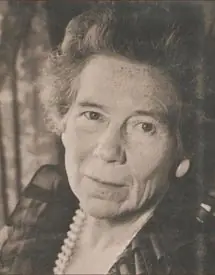
| 30 Quotes | |
| Occup. | Author |
| From | USA |
| Born | June 18, 1902 |
| Died | February 23, 1984 |
| Aged | 81 years |
Jessamyn West was born June 18, 1902, in Vernon, Indiana, into a Quaker lineage that gave her both a moral vocabulary and a suspicion of showy certainty. When she was still young her family moved to the citrus-and-dust edges of Southern California, settling in Whittier, a town shaped by Friends meetings, progressive schooling, and the practical optimism of the early West. That combination - Midwestern inwardness and California light - became the emotional climate of her books.
West grew up watching how communities enforce belonging: through church, family reputation, and the daily barter of kindness and judgment. The First World War, the 1918 influenza aftermath, and the accelerating modernity of the 1920s arrived in Whittier as pressures on courtship, gender roles, and faith - the very pressures that would later animate her most famous fiction about marriage, conscience, and the quiet heroism of ordinary women.
Education and Formative Influences
She attended Whittier College, a Quaker institution where literature and ethics were not separate subjects, and then earned an MA at the University of California, Berkeley. Teaching followed, and with it a disciplined attentiveness to how people tell the truth indirectly - in anecdotes, in omissions, in the way a classroom or a meetinghouse polices speech. Quaker practice, especially the idea of listening for an inward guide while remaining answerable to a community, trained her to dramatize moral choice without melodrama.
Career, Major Works, and Turning Points
West began publishing fiction in the 1930s, but the decisive turn came during World War II when she worked at the Douglas Aircraft plant in Santa Monica, helping to write training materials for riveters and aircraft workers - a front-row seat to a nation reorganizing itself, and to women suddenly asked to be both competent and invisible. In 1945 she published The Friendly Persuasion, a linked set of stories about the Birdwell family, Quakers in Indiana facing the Civil War; it became her signature work, later adapted for the screen as Friendly Persuasion (1956). West went on to write prolifically - novels, stories, essays, and memoir - often returning to Southern California and to the long aftershocks of belief, desire, and duty in American domestic life.
Philosophy, Style, and Themes
West wrote with a plainspoken lyricism that trusted small scenes to carry large arguments: a kitchen conversation, a meetinghouse silence, a child's private panic. Her realism is not hard-edged but morally acute, intent on the hidden cost of speech and the ways families transmit injury with the best intentions. She understood language as an instrument of tenderness and harm, insisting that "A broken bone can heal, but the wound a word opens can fester forever". That sentence is not just an aphorism; it is her psychological key, a writer's fear that cruelty can be casual, and that forgiveness is often asked of the wounded too quickly.
Her most characteristic conflict is between peaceable principle and the body's insistence on action - the Quaker testimony of nonviolence tested by war, masculinity, and self-defense. West's characters want to be good and are not sure what "good" costs; they are drawn to love, status, and security, and then startled by how those cravings compromise conscience. She also held a novelist's faith in imaginative knowledge: "Fiction reveals truths that reality obscures". The claim doubles as self-justification and method - she uses invented lives to reach what politeness, memory, and ideology conceal. And she wrote candidly about women's inward accounting under patriarchy, admitting how early social training narrowed ambition to being chosen: "In my time and neighborhood (and in my soul) there was only one standard by which a woman measured success: did some man want her?" The bleak honesty of that line shows her refusal to sentimentalize either Quaker virtue or female self-sacrifice.
Legacy and Influence
West endures as a major interpreter of American conscience in the domestic key, a writer who made faith and family drama intellectually serious without turning it into sermon or satire. The Friendly Persuasion remains a classic of Quaker-themed literature and a rare Civil War portrait built from pacifist tension rather than battlefield spectacle, while her broader body of work influenced later writers interested in moral psychology, women's interior lives, and the ethics of everyday speech. She died February 23, 1984, in California, leaving a reputation for clarity, compassion, and an unsparing sense that the hardest battles are often fought in kitchens, classrooms, and the silence after words have landed.
Our collection contains 30 quotes who is written by Jessamyn, under the main topics: Witty One-Liners - Wisdom - Truth - Justice - Writing.
Jessamyn West Famous Works
- 1975 The Massacre at Fall Creek (Novel)
- 1966 A Matter of Time (Novel)
- 1953 Cress Delahanty (Novel)
- 1951 The Witch Diggers (Novel)
- 1945 The Friendly Persuasion (Novel)
Source / external links