
Jesse Owens Biography Quotes 13 Report mistakes
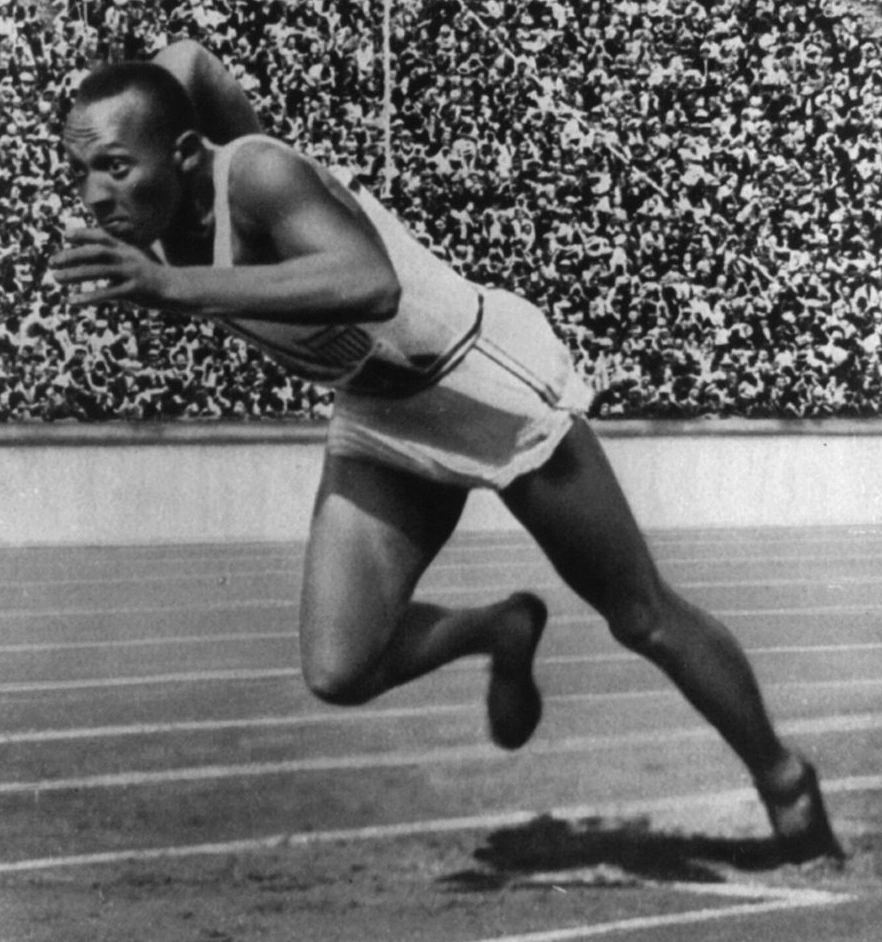
| 13 Quotes | |
| Born as | James Cleveland Owens |
| Occup. | Athlete |
| From | USA |
| Born | September 12, 1913 Oakville, Alabama, USA |
| Died | March 31, 1980 Tucson, Arizona, USA |
| Cause | Lung Cancer |
| Aged | 66 years |
| Cite | |
Citation Formats
APA Style (7th ed.)
Jesse owens biography, facts and quotes. (2026, February 11). FixQuotes. https://fixquotes.com/authors/jesse-owens/
Chicago Style
"Jesse Owens biography, facts and quotes." FixQuotes. February 11, 2026. https://fixquotes.com/authors/jesse-owens/.
MLA Style (9th ed.)
"Jesse Owens biography, facts and quotes." FixQuotes, 11 Feb. 2026, https://fixquotes.com/authors/jesse-owens/. Accessed 5 Apr. 2026.
Early Life and Background
James Cleveland "Jesse" Owens was born on September 12, 1913, in Oakville, Alabama, the youngest of ten children in a family of Black sharecroppers. He arrived in a Jim Crow world where poverty was structural and aspiration was policed; asthma and bouts of illness in childhood sharpened his sense that the body could be both burden and instrument. The Owens household was disciplined, church-centered, and practical, and the boy learned early that labor was not optional. His given name, "J.C.", would later be misheard by a teacher as "Jesse", a small accident of schooling that became a public identity.In 1922 the family joined the Great Migration north to Cleveland, Ohio, chasing factory wages and a measure of safety. The move widened his horizons but did not erase constraint - housing segregation and limited job prospects framed daily life even as the city offered organized sport, public schools, and a more visible Black middle class. On Cleveland tracks he discovered a kind of order: lanes, times, and measurable progress that seemed to reward what the outside world often refused to recognize.
Education and Formative Influences
Owens attended Fairmount Junior High and then East Technical High School in Cleveland, where coach Charles Riley became the crucial early architect of his talent, insisting on technique, routine, and calm under pressure. Owens balanced training with work to support his family, a pattern that made athletics feel less like play than craft. Recruited to Ohio State University, he studied business and trained under track coach Larry Snyder, but lived the contradictions of the 1930s: celebrated on Saturdays, barred from many campus and hotel accommodations, and often forced to eat separately while traveling. Those frictions did not romanticize his ambition; they clarified it.Career, Major Works, and Turning Points
Owens exploded onto the national stage in May 1935 at the Big Ten meet in Ann Arbor, Michigan, producing what became known as "the greatest 45 minutes ever in sport": world records in the 220-yard dash and 220-yard low hurdles, and a world-tying long jump of 26 feet 8 1/4 inches (8.13 m). At the 1936 Berlin Olympics, under the glare of Nazi propaganda and global radio, he won four gold medals (100 m, 200 m, long jump, and 4x100 relay), a feat that made him an emblem of athletic excellence and, unwillingly, of political rebuttal. Yet the post-Olympic America that applauded him offered few durable pathways: he left Ohio State without graduating, struggled financially, and took publicity work and exhibitions - even racing horses - to earn a living. In later decades he found steadier footing as a speaker and goodwill ambassador, including roles tied to youth programs and the U.S. Information Agency, while wrestling with the price of fame in a segregated society. He died of lung cancer on March 31, 1980, in Tucson, Arizona.Philosophy, Style, and Themes
Owens ran with an economy that looked effortless but was engineered - high turnover, minimal braking, and a long jumper's sense of rhythm at speed. He spoke about performance as compression: years of repetition distilled into a brief public test, “A lifetime of training for just ten seconds”. That sentence is less slogan than autobiography. It shows how he interpreted the world as a ledger of preparation, where chance visits everyone but rewards the already-formed. It also hints at a private anxiety: that one slip, one false step, could squander what poverty had forced him to build so painstakingly.Just as central was his insistence that the real contest was internal. “The battles that count aren't the ones for gold medals. The struggles within yourself - the invisible, inevitable battles inside all of us - that's where it's at”. Coming from a man used as a symbol by others, this theme reads as self-protection: he redirected attention from pageantry to conscience, from crowds to character. His clearest political insight arrived without rhetoric: “Although I wasn't invited to shake hands with Hitler, I wasn't invited to the White House to shake hands with the President either”. Owens refused easy binaries. Berlin did not make him naive about American racism; it made him precise about it, and that precision shaped his mature voice - proud of achievement, skeptical of ceremonies, and alert to the gap between applause and justice.
Legacy and Influence
Owens endures as more than the four-gold headline. He reshaped expectations for sprinting and long jumping in the modern era, and his Berlin performances became a touchstone in debates about sport and propaganda, the uses of Black excellence, and the limits of symbolic victory. Yet his life after 1936 is equally instructive: it exposed how a nation could celebrate a champion while denying him full citizenship, and how fame could be both platform and trap. For later athletes navigating politics, endorsement economies, and racial scrutiny, Owens offered a template of dignity under pressure and a warning about the short half-life of public gratitude. His name remains a moral shorthand for preparation meeting history - and for the sober truth that medals do not automatically translate into freedom.Our collection contains 13 quotes written by Jesse, under the main topics: Motivational - Friendship - Victory - Sports - Equality.
Other people related to Jesse: Major Taylor (Athlete), Leni Riefenstahl (Director)
Source / external links