
Jessica Hagedorn Biography Quotes 18 Report mistakes
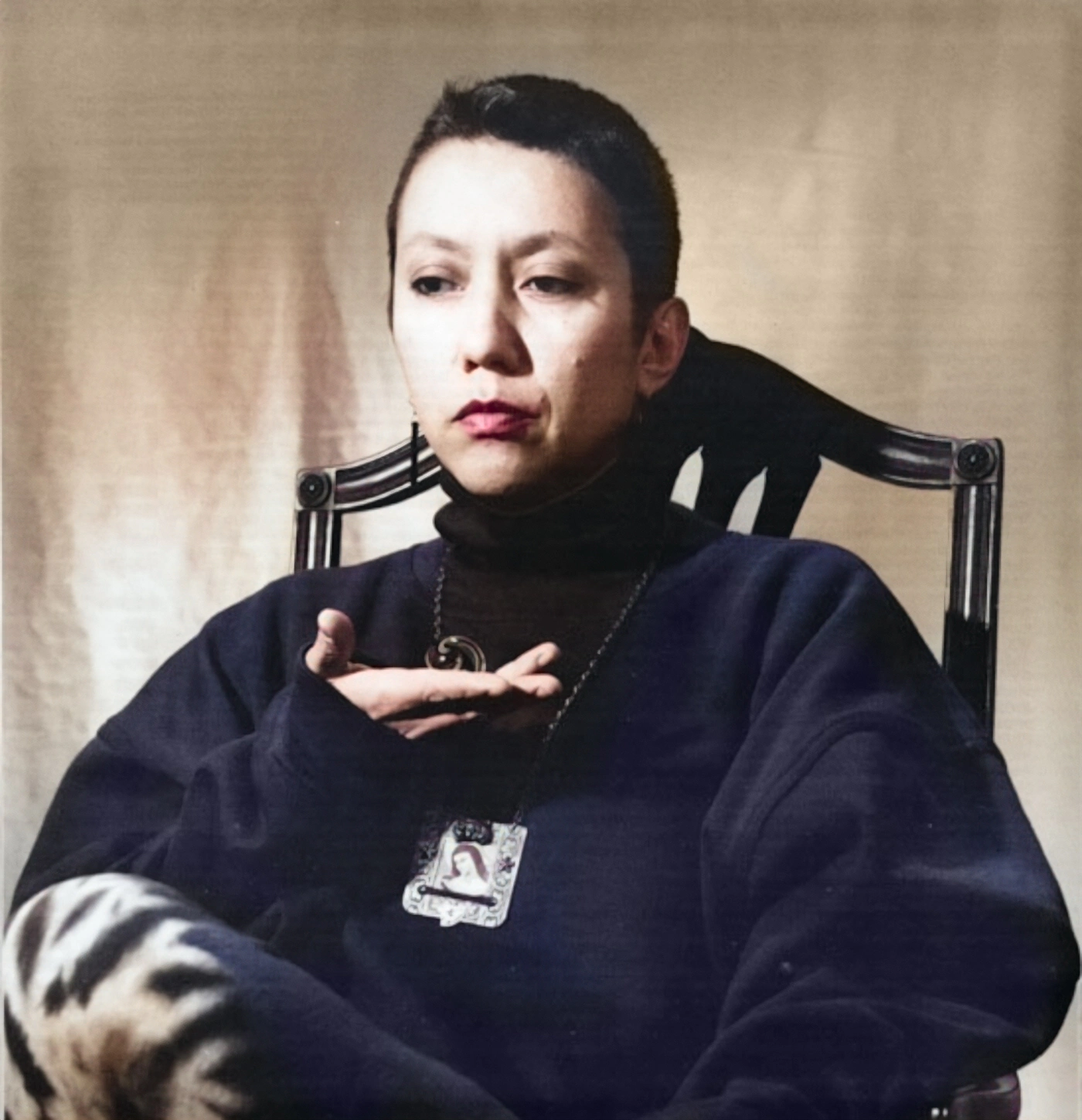
| 18 Quotes | |
| Born as | Jessica Tarahata Hagedorn |
| Occup. | Playwright |
| From | Philippines |
| Born | April 29, 1949 Manila, Philippines |
| Age | 76 years |
| Cite | |
Citation Formats
APA Style (7th ed.)
Jessica hagedorn biography, facts and quotes. (2026, February 11). FixQuotes. https://fixquotes.com/authors/jessica-hagedorn/
Chicago Style
"Jessica Hagedorn biography, facts and quotes." FixQuotes. February 11, 2026. https://fixquotes.com/authors/jessica-hagedorn/.
MLA Style (9th ed.)
"Jessica Hagedorn biography, facts and quotes." FixQuotes, 11 Feb. 2026, https://fixquotes.com/authors/jessica-hagedorn/. Accessed 28 Mar. 2026.
Early Life and Background
Jessica Tarahata Hagedorn was born on April 29, 1949, in the Philippines, into a society still negotiating the aftershocks of war, U.S. colonial inheritance, and the newly choreographed optimism of post-independence Manila. That layered atmosphere - Catholic ritual beside imported pop, local languages beside American media - formed her early sense that identity could be performed, edited, and remixed. From the beginning, she absorbed public life as spectacle: politics staged like theater, celebrity as civic currency, and class difference as a daily, visible script.Family memory mattered as much as national history. Hagedorn has repeatedly traced her imaginative compass to elders and ancestry, describing how her sense of self is anchored in kinship and lineage rather than abstract categories. Her attention to the intimate textures of home - voices, gossip, radio, song, the charged private life behind public manners - became a lifelong method: to treat the personal not as escape from history, but as history's most revealing evidence.
Education and Formative Influences
In her teens she left the Philippines for the United States, an uprooting that would become both wound and instrument, sharpening her ear for code-switching, slang, and the social theater of assimilation. She studied in the Bay Area, and by the early 1970s moved through the countercultural worlds of San Francisco and New York, where readings, music scenes, experimental theater, and activist politics overlapped. Those milieus rewarded hybridity, speed, and collage - and they also exposed how immigrant and postcolonial artists were expected to explain themselves on demand, turning identity into a public audition.Career, Major Works, and Turning Points
Hagedorn emerged first as a poet and performance writer, then as a playwright and novelist whose signature form is the ensemble - a chorus of voices, genres, and media. Her breakout novel, "Dogeaters" (1990), mapped Marcos-era Manila through beauty queens, movie idols, dissidents, and servants, using montage to show how dictatorship and entertainment feed each other. Later works extended her transpacific canvas, including the novel "The Gangster of Love" (1996) and the story collection "Danger and Beauty" (2002), while her theater work embraced music, documentary texture, and urban vernacular; she also contributed to film and performance collaborations. Across mediums, the turning point is consistent: she refuses a single protagonist or a single "authentic" angle, insisting instead on the messy simultaneity that empire and migration produce.Philosophy, Style, and Themes
Hagedorn's art is built from the conviction that mixedness is not confusion but a resource. “Hybridity keeps me from being rigid about most things. It has taught me to appreciate the contradictions in the world and in my life. I scavenge from the best”. Psychologically, that scavenger ethic reads as both defense and liberation - a way to survive the demand for purity by turning contradiction into craft. Her characters often live with the postcolonial suspicion that they are never quite "enough": not native enough, not American enough, not respectable enough, not safe enough. Rather than resolve that tension, she stages it, letting fragmentation become a truthful mirror of lives formed under unequal histories.Her style favors montage: quick cuts, overheard dialogue, song lyrics, media glare, and street-level intimacy. Music is not ornament but engine, shaping rhythm, repetition, and the emotional logic of scenes. Just as crucial is her insistence on ancestry as imaginative bedrock: “My identity is linked to my grandmother, who's pure Filipino, as pure as you can probably get. And that shaped my imagination. So that's how I identify”. The line reveals a private counterweight to her public hybridity - a need for an internal home base even while her work celebrates mixture. Yet her theater, especially, aims for endurance rather than despair: “But I think there's a genuine joy, too, a sense that no matter what, even if my stomach's growling, I'm going to dance. That's what I want to leave people with at the end of the play. After all this, people still know how to live”. That joy is hard-won, an ethical choice against the deadening spectacle of power.
Legacy and Influence
Hagedorn helped define an Asian diasporic and specifically Filipina/o American modernism that is urban, musical, and politically alert without becoming programmatic. "Dogeaters" remains a touchstone for writers and dramatists confronting authoritarian memory, celebrity culture, and the psychic residue of U.S. empire, while her collage techniques anticipated later multimedia theater and genre-blending fiction. Her enduring influence lies in permission: to be multiple without apology, to treat pop culture as archive, and to make the stage and page sound like the crowded cities that formed her - places where history talks through gossip, radio, prayer, and song.Our collection contains 18 quotes written by Jessica, under the main topics: Ethics & Morality - Wisdom - Music - Writing - Equality.
Frequently Asked Questions
- Dogeaters Jessica Hagedorn Summary: 'Dogeaters' is a novel by Jessica Hagedorn that presents a multifaceted portrait of Filipino society and politics through interwoven stories set in late 20th-century Manila.
- Jessica Hagedorn plays: Jessica Hagedorn's notable plays include 'Dogeaters,' 'The Gangster of Love,' and 'Airport Music,' exploring themes of diaspora and identity.
- Jessica Hagedorn poems: Jessica Hagedorn is known for her poetry collection 'Dangerous Music' which reflects on cultural identity and the immigrant experience.
- How old is Jessica Hagedorn? She is 76 years old
Jessica Hagedorn Famous Works
- 2011 Toxicology (Novel)
- 2003 Dream Jungle (Novel)
- 1996 The Gangster of Love (Novel)
- 1990 Dogeaters (Novel)
Source / external links