
Jim Barksdale Biography Quotes 29 Report mistakes
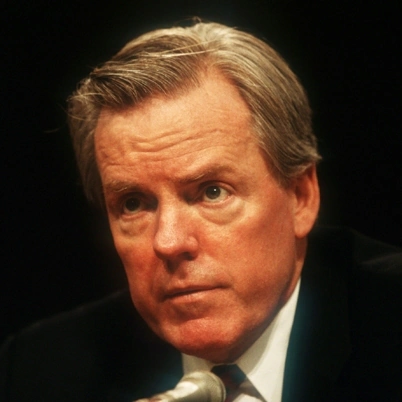
| 29 Quotes | |
| Known as | James Love Barksdale |
| Occup. | Businessman |
| From | USA |
| Born | January 24, 1943 Jackson, Mississippi |
| Age | 83 years |
| Cite | |
Citation Formats
APA Style (7th ed.)
Jim barksdale biography, facts and quotes. (2026, February 11). FixQuotes. https://fixquotes.com/authors/jim-barksdale/
Chicago Style
"Jim Barksdale biography, facts and quotes." FixQuotes. February 11, 2026. https://fixquotes.com/authors/jim-barksdale/.
MLA Style (9th ed.)
"Jim Barksdale biography, facts and quotes." FixQuotes, 11 Feb. 2026, https://fixquotes.com/authors/jim-barksdale/. Accessed 12 Feb. 2026.
Early Life and Background
Jim Barksdale was born on January 24, 1943, in Jackson, Mississippi, into a segregated South where public institutions, business networks, and everyday etiquette were rigidly stratified. That environment could produce either resignation or restlessness; in Barksdale it seemed to forge a pragmatic hunger to move, measure, and win. He grew up close enough to see how power operated - through courts, banks, and civic hierarchies - and far enough from it to feel the urgency of competence as a kind of passport.Even before he became a technology executive, Barksdale had the bearing of a field commander: direct speech, a preference for numbers over sentiment, and a low tolerance for process that did not lead to results. The formative tension in his early life was between place and possibility. Mississippi could feel like an economy of inherited limits, and his adult career would read like a long argument against that idea - an insistence that speed, merit, and execution could reorder outcomes.
Education and Formative Influences
Barksdale attended the University of Mississippi, then entered the U.S. Navy and trained as a fighter pilot, a discipline that prized checklists, rapid decisions, and accountability under pressure; he later earned an MBA from the Owen Graduate School of Management at Vanderbilt University. The mix mattered: aviation gave him risk-management instincts and a command style built on clarity, while business school refined his feel for incentives, sales cycles, and organizational design. Together they shaped a leader who treated strategy as something proven in the air and on the balance sheet, not merely in slide decks.Career, Major Works, and Turning Points
After early sales and operations roles, Barksdale rose at Federal Express in the 1970s and 1980s, helping scale a logistics model that turned time into a product, then became chief executive of McCaw Cellular Communications, guiding the company through the explosive growth of mobile telephony and its 1994 sale to AT&T. His defining public chapter began in 1995 when he joined Netscape Communications as CEO, a moment when the web browser was becoming the main door to the internet; under him, Netscape professionalized its business, fought the browser wars against Microsoft, and became a symbol of Silicon Valley speed and vulnerability. He later served as a general partner at Barksdale Management Corporation and as a prominent philanthropist, with significant gifts to education and public policy institutions, including major support for the University of Mississippi.Philosophy, Style, and Themes
Barksdale led with a salesman's anthropology: people move when value is made legible and urgent, and organizations drift when they confuse motion with progress. His most quoted line is not about technology at all: "Of course, nothing happens until somebody sells something". Psychologically, it reveals his mistrust of prestige without proof. In his world, the market is a truth serum: if customers do not buy, the story is wrong, the product is wrong, or the team is avoiding accountability. That belief made him a blunt counterweight to the late-1990s tendency to treat web traffic and buzz as substitutes for revenue.At Netscape he framed the internet as an operational revolution rather than a mere consumer novelty, emphasizing speed of feedback and the collapse of distance: "We can collaborate with a Netscape employee or partner who's halfway around the world. We can distribute information and software to customers and shareholders, and get their feedback". The quote carries his inner optimism - not naive, but managerial - that communication technologies could discipline organizations by shortening the loop between action and consequence. Yet he also understood that disruptive eras punish certainty; he admitted the discomfort of leading in conditions where the past cannot be copy-pasted: "There are no pat answers - we're pushing through some new frontiers, and lessons of the past don't always apply". Taken together, these lines show a leader who steadied himself by execution while accepting that the map was incomplete.
Legacy and Influence
Barksdale remains a key interpreter of the early commercial internet: a CEO who treated the browser not as a toy but as infrastructure, and who translated technological upheaval into operational language boards could hear. His influence shows up in the enduring Silicon Valley emphasis on selling, shipping, and shortening feedback cycles - and in the cautionary memory of Netscape as both pioneer and casualty when platform power consolidates. As a civic donor and public voice, he also modeled a regional arc from Mississippi origins to national impact, arguing by example that merit, speed, and institutional investment can widen what a person - or a place - believes is possible.Our collection contains 29 quotes written by Jim, under the main topics: Justice - Success - Honesty & Integrity - Work - Embrace Change.
Other people related to Jim: Frederick W. Smith (Businessman), Jim Clark (Businessman)
Source / external links