
Jim Gibbons Biography Quotes 4 Report mistakes
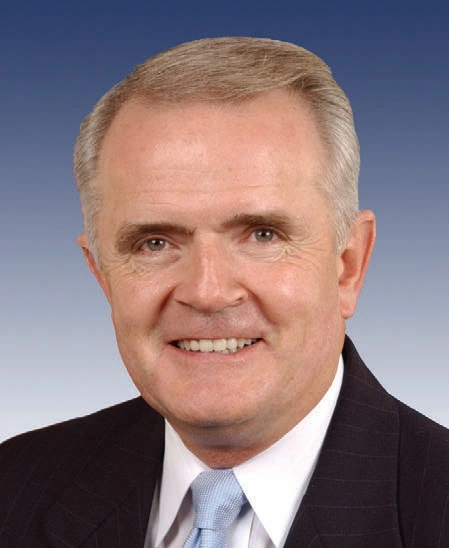
| 4 Quotes | |
| Born as | James Arthur Gibbons |
| Occup. | Politician |
| From | USA |
| Born | December 16, 1944 Sparks, Nevada, U.S. |
| Age | 81 years |
| Cite | |
Citation Formats
APA Style (7th ed.)
Jim gibbons biography, facts and quotes. (2026, March 26). FixQuotes. https://fixquotes.com/authors/jim-gibbons/
Chicago Style
"Jim Gibbons biography, facts and quotes." FixQuotes. March 26, 2026. https://fixquotes.com/authors/jim-gibbons/.
MLA Style (9th ed.)
"Jim Gibbons biography, facts and quotes." FixQuotes, 26 Mar. 2026, https://fixquotes.com/authors/jim-gibbons/. Accessed 28 Mar. 2026.
Early Life and Background
James Arthur Gibbons was born on December 16, 1944, in Sparks, Nevada, and grew up in a state whose politics were defined by distance, federal land control, mining cycles, ranching, and the persistent tension between local autonomy and Washington authority. Nevada in his youth was not yet the explosive Sun Belt state of later decades; it was still a place where military installations, rail lines, and small communities gave political leaders a strong instinct for self-reliance. That environment mattered. Gibbons came of age with an identification not only with the American West but with a specifically Nevadan grievance: that decisions affecting water, land use, defense, and growth were too often made elsewhere.
His biography is inseparable from service culture. Before he became a congressman or governor, he absorbed the values of discipline, chain of command, and patriotic obligation that would define both his public rhetoric and his emotional self-conception. He married, raised a family, and built a life that connected military experience, technical training, and conservative politics. In public he often projected blunt certainty rather than introspection, yet the consistency of his positions suggests a man whose inner life was organized around honor, loyalty, and duty - ideals that can inspire steadiness but can also harden into moral absolutism.
Education and Formative Influences
Gibbons attended the University of Nevada, Reno, where he studied geology, an apt discipline for a politician shaped by the physical realities of the Great Basin. He later pursued graduate work and underwent rigorous military training, eventually serving as a pilot in the United States Air Force and then in the Nevada Air National Guard. He flew combat missions in Vietnam, an experience central to his worldview. Vietnam veterans of his generation often emerged with a sharpened suspicion of elite opinion and a deep identification with ordinary servicemen asked to bear the costs of policy. Gibbons's later political style - combative, anti-bureaucratic, and intensely patriotic - was forged at the intersection of technical education, military aviation, and Western resource politics.
Career, Major Works, and Turning Points
Gibbons entered elective office in the Nevada Assembly in the late 1980s and moved to the U.S. House of Representatives after winning election in 1996 from Nevada's 2nd Congressional District, a vast territory that suited his image as spokesman for rural and exurban Nevada. In Congress he aligned with conservative Republicans on taxes, defense, abortion, and public lands, and he cultivated a reputation for constituent-minded attention to veterans, military facilities, and federal land policy. He served five terms, then won the governorship in 2006. His governorship, beginning in 2007, was quickly battered by the national financial crisis, Nevada's housing collapse, budget shortfalls, and a series of personal and ethical controversies that damaged his authority. A state once buoyed by growth turned into one of the recession's harshest casualties, and Gibbons, never a deft coalition-builder, struggled to translate ideological conviction into effective crisis leadership. He lost support within his own party and did not survive the 2010 Republican primary, a sharp fall that turned his career into a study in how military bearing and congressional combativeness do not always adapt to executive governance.
Philosophy, Style, and Themes
Gibbons's political philosophy was a synthesis of social conservatism, fiscal indignation, military reverence, and Western property-rights populism. He saw government less as a creative instrument than as a structure that should defend freedom, reward work, and stop wasting money. That instinct appears clearly in his attack on procurement excess: “To pay out millions upon millions of dollars in bonuses for incomplete work, poor performance, and unacceptable products is the height of government waste and mismanagement”. The sentence is not elegant, but its psychology is revealing. Gibbons spoke in the idiom of moral offense, not technocratic adjustment; incompetence was not merely inefficient, it was a betrayal. The same cast of mind animated his defense of rural Nevada: “Patenting and purchase of lands are absolutely vital to the health of Nevada's rural communities”. Here his politics become regional and intimate. Land policy, for him, was not abstraction but survival, dignity, and the right of sparse communities to endure against distant control.
His rhetoric also exposed the absolutist core that energized supporters and limited his reach. On abortion and war he framed politics as a test of moral consistency, saying, “I want to know how these very people who are against war because of loss of life can possibly be the same people who are for abortion? They are the same people who are for animal rights, but they are not for the rights of the unborn”. The statement shows how he understood public argument: as confrontation between incompatible ethical camps, not as negotiation among partial goods. Even his patriotic language had a devotional intensity: “I thank God tonight for freedom - those who bought and paid for it with their lives in the past - those who will protect it in the present and defend it in the future”. This was more than ceremonial speech. It reflected a man whose identity depended on locating himself inside a lineage of sacrifice. His style was therefore direct, pugnacious, and often unmodulated - powerful in campaigns, riskier in the compromises of governance.
Legacy and Influence
Jim Gibbons remains a significant, if uneven, figure in modern Nevada political history. He represented a durable current in the state: pro-military, anti-Washington, skeptical of regulation, protective of rural interests, and culturally conservative even as Nevada's population and economy became more urban and more complex. His congressional years captured the ascendancy of that politics in the 1990s and early 2000s; his governorship exposed its limits during systemic crisis. He did not leave behind a body of landmark legislation or a transformative executive model, but he did embody a political temperament that shaped Nevada Republicans for a generation. His career endures as both emblem and warning - a portrait of how conviction, service, and regional authenticity can build power, and how the same traits, when joined to rigidity and controversy, can narrow it.
Our collection contains 4 quotes written by Jim, under the main topics: Freedom - Human Rights - Investment - Management.
Other people related to Jim: Sharron Angle (Politician)
Source / external links