
Jim Valvano Biography Quotes 21 Report mistakes
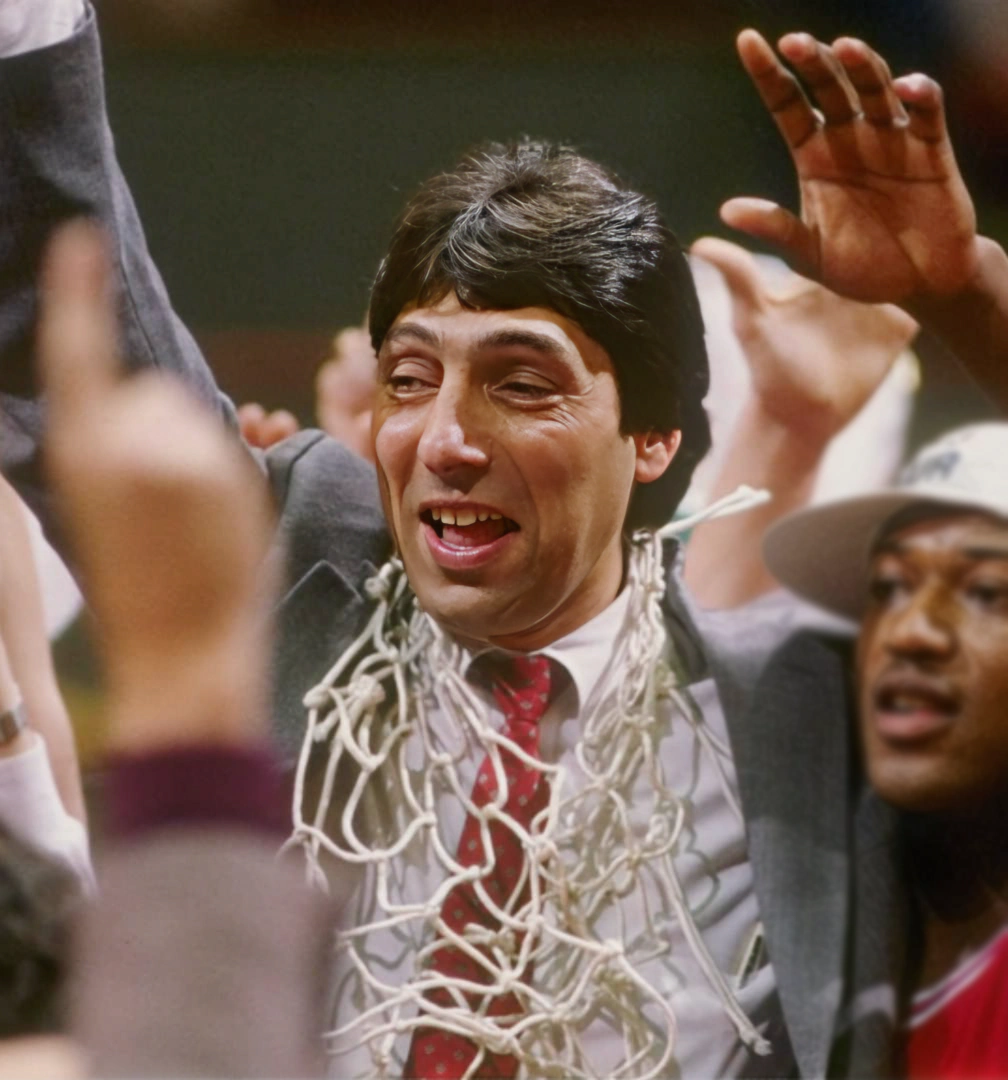
| 21 Quotes | |
| Born as | James Thomas Anthony Valvano |
| Occup. | Coach |
| From | USA |
| Born | March 10, 1946 Queens, New York, USA |
| Died | April 28, 1993 Durham, North Carolina, USA |
| Aged | 47 years |
| Cite | |
Citation Formats
APA Style (7th ed.)
Jim valvano biography, facts and quotes. (2026, February 11). FixQuotes. https://fixquotes.com/authors/jim-valvano/
Chicago Style
"Jim Valvano biography, facts and quotes." FixQuotes. February 11, 2026. https://fixquotes.com/authors/jim-valvano/.
MLA Style (9th ed.)
"Jim Valvano biography, facts and quotes." FixQuotes, 11 Feb. 2026, https://fixquotes.com/authors/jim-valvano/. Accessed 28 Mar. 2026.
Early Life and Background
James Thomas Anthony Valvano was born on March 10, 1946, in Queens, New York, into an Italian American, working-class neighborhood culture where loyalty, humor, and competitiveness were social currency. He grew up in a close family that treated talk, food, and sports as daily rituals, and he learned early how to hold a room with stories as well as how to fight for space on New York playground courts.That outer ease covered an inner drive: Valvano wanted to matter, and he wanted the people around him to feel seen. The boroughs in the postwar years were a proving ground for confidence and improvisation, and he absorbed a style that later defined his sideline persona - loud without being empty, theatrical without being fake. He carried with him a deep gratitude for belief given at the right time, saying, “My father gave me the greatest gift anyone could give another person, he believed in me”. , a line that functioned less as sentiment than as an origin story for his own coaching faith in others.
Education and Formative Influences
Valvano attended Rutgers University, playing point guard and graduating in the late 1960s before entering coaching through the Northeast pipeline of assistants, gyms, and long bus rides. The era mattered: college basketball was hardening into television spectacle, but it still ran on relationships, regional recruiting, and the authority of head coaches who were part tactician, part dean, part family surrogate. Valvano studied the craft under established programs and learned that systems win possessions, but trust wins seasons - an insight that shaped how he taught, recruited, and talked to players.Career, Major Works, and Turning Points
After early head-coaching success at Iona College in the mid-1970s, Valvano became head coach at North Carolina State in 1980, inheriting expectations in the ACC cauldron alongside Dean Smith and Mike Krzyzewski. His career apex came in 1983, when NC State's "Cardiac Pack" won the NCAA championship, culminating in Lorenzo Charles' last-second dunk to beat Houston and Valvano sprinting across the floor in search of someone to hug - a moment that fused his public image with unfiltered joy. Later seasons were more turbulent; allegations of recruiting violations and academic irregularities led to his resignation in 1990, a painful coda that complicated his record even as it revealed his resilience. He pivoted into broadcasting and public speaking, where his charisma found a new court, until cancer reframed everything.Philosophy, Style, and Themes
Valvano coached as if emotion were a competitive advantage. He loved the pressure cooker, but he defused it with comedy, inviting players to feel the game rather than fear it. Even his jokes carried a lesson about authority and human fallibility: “I asked a ref if he could give me a technical foul for thinking bad things about him. He said, of course not. I said, well, I think you stink. And he gave me a technical. You can't trust em”. Beneath the punchline was a coach teaching his teams to manage injustice - to expect bad breaks, keep poise, and play the next possession.His most enduring theme was a deliberate fullness of living, a refusal to let intensity shrink life into only wins and losses. “If you laugh, you think, and you cry, that's a full day. That's a heck of a day. You do that seven days a week, you're going to have something special”. That credo exposed his psychology: he needed experience to be total, not partial, because he sensed how quickly time could be stolen by regret. When diagnosed with metastatic cancer, he did not become a different person so much as a more concentrated version of himself, insisting, “Now I'm fighting cancer, everybody knows that. People ask me all the time about how you go through your life and how's your day, and nothing is changed for me”. It was a declaration of agency - that identity, humor, and love would not be surrendered to illness.
Legacy and Influence
Valvano died on April 28, 1993, but his influence multiplied after his death: his ESPY speech became a modern American text on courage, gratitude, and urgency, and the V Foundation for Cancer Research, launched from his final campaign, has raised and funded research at a scale few coaches ever touch. As a strategist, he is remembered for adaptive game planning and for turning an underdog roster into champions; as a public figure, he is remembered for translating sport into moral language without piety. His life remains a study in how charisma can be used not just to win, but to give people permission to hope, to laugh, and to keep going.Our collection contains 21 quotes written by Jim, under the main topics: Witty One-Liners - Motivational - Never Give Up - Mortality - Hope.
Other people related to Jim: Dick Vitale (Celebrity)
Frequently Asked Questions
- Jim Valvano cause of death: Jim Valvano died from complications related to metastatic adenocarcinoma.
- What kind of cancer did Jim Valvano have: Jim Valvano had metastatic adenocarcinoma, a type of glandular cancer.
- Jim Valvano height: Jim Valvano's height was approximately 6 feet 1 inch (185 cm).
- Jim Valvano wife remarried: Jim Valvano's wife, Pamela Levine Valvano, did remarry after his death.
- Jim Valvano daughters: Jim Valvano had three daughters: Nicole, Jamie, and Leanne.
- Jim Valvano speech: Jim Valvano's famous 'Don't Give Up, Don't Ever Give Up' speech was delivered at the 1993 ESPY Awards.
- How old was Jim Valvano? He became 47 years old
Source / external links