
Jimmy Carter Biography Quotes 40 Report mistakes
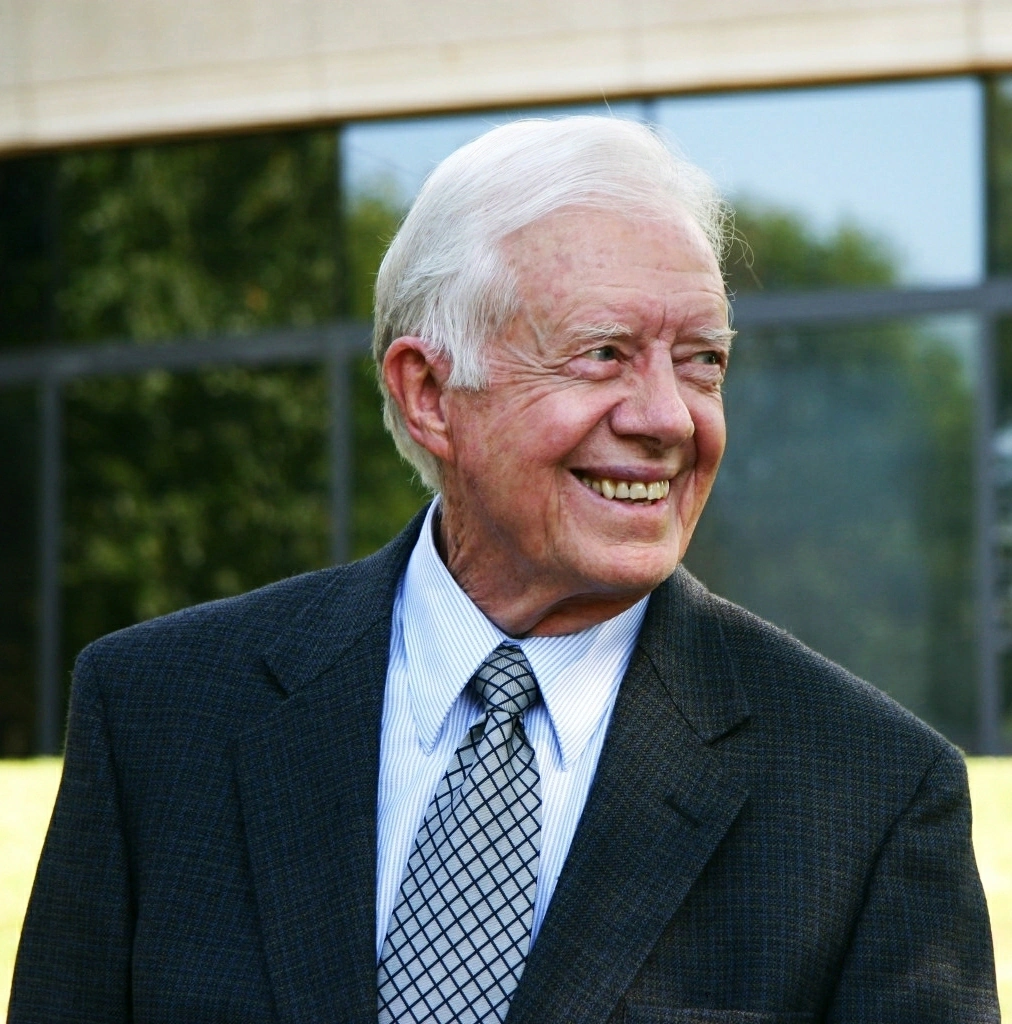
| 40 Quotes | |
| Born as | James Earl Carter Jr. |
| Occup. | President |
| From | USA |
| Spouse | Rosalynn Smith Carter (1946-2023) |
| Born | October 1, 1924 Plains, Georgia, USA |
| Died | December 29, 2024 Plains, Georgia, USA |
| Aged | 100 years |
| Cite | |
Citation Formats
APA Style (7th ed.)
Jimmy carter biography, facts and quotes. (2026, February 11). FixQuotes. https://fixquotes.com/authors/jimmy-carter/
Chicago Style
"Jimmy Carter biography, facts and quotes." FixQuotes. February 11, 2026. https://fixquotes.com/authors/jimmy-carter/.
MLA Style (9th ed.)
"Jimmy Carter biography, facts and quotes." FixQuotes, 11 Feb. 2026, https://fixquotes.com/authors/jimmy-carter/. Accessed 22 Mar. 2026.
Early Life and Background
James Earl Carter Jr. was born on October 1, 1924, in Plains, Georgia, and grew up between the small town and the family farm in nearby Archery during the hard edge of the Great Depression. His father, James Earl Carter Sr., was a businessman and farmer who also served in local politics; his mother, Lillian Gordy Carter, was a nurse whose independent streak and blunt compassion left a lasting imprint. Carter came of age in the rural Jim Crow South, where the intimacy of Black and white lives in farm country coexisted with rigid public separation - a moral contradiction he later treated not as abstract history but as a personal summons.The young Carter absorbed the disciplines of farm work, the rhythms of a tight-knit Baptist community, and the quiet pressure to be both respectable and useful. In 1946 he married Rosalynn Smith, his closest partner in both ambition and conscience; their marriage would become the most stable institution in his life, a corrective to his tendencies toward solitary self-scrutiny. When his father died in 1953, Carter returned from the Navy to Plains to run the family peanut business, entering a period of financial risk, local compromise, and patient reputation-building that taught him how power in small places is won - and what it costs.
Education and Formative Influences
Carter attended Georgia Southwestern College and Georgia Tech before graduating from the U.S. Naval Academy in 1946, then served as a naval officer in the surface fleet and the emerging nuclear submarine program under Adm. Hyman Rickover, whose exacting standards sharpened Carter's sense that competence is a moral category. The Navy gave him a cosmopolitan baseline beyond rural Georgia and an engineer's faith in systems; Plains returned him to the human reality of race, poverty, and church life. Those two worlds - technocratic rigor and intimate moral accounting - formed the tension that defined his public career.Career, Major Works, and Turning Points
Carter moved from local boards to the Georgia State Senate (1963-1967), then became governor of Georgia (1971-1975), staking out a New South message that challenged segregationist habits while promising efficient government. Elected the 39th president of the United States (1977-1981) in the post-Watergate hunger for decency, he pursued energy reform, deregulation in key industries, environmental protection, and a human-rights-centered foreign policy; the Camp David Accords (1978) between Egypt and Israel became his signature diplomatic achievement. His presidency was battered by inflation and the 1979 oil shock, political trench warfare in Washington, and the Iran hostage crisis (1979-1981), culminating in a landslide defeat to Ronald Reagan in 1980. Carter then executed one of the most consequential second acts in modern public life through the Carter Center (founded 1982), election monitoring, conflict mediation, and global health campaigns, and he wrote widely - including An Hour Before Daylight, Keeping Faith, Palestine: Peace Not Apartheid, and Faith: A Journey for All - turning personal memory into public argument.Philosophy, Style, and Themes
Carter's inner life was defined by an unusually explicit moral ledger: he believed character is measured not only by deeds but by the motives and temptations behind them. That candor, most famously in his 1976 Playboy interview, was less a bid for shock than a Baptist practice of self-examination that made him appear both honest and, to adversaries, politically naive. His humor often worked the same seam, disarming without escaping responsibility: “I have often wanted to drown my troubles, but I can't get my wife to go swimming”. The joke lands because it implies the underlying truth - trouble is constant, and partnership is the only sustainable way to bear it.As president and later as a citizen-diplomat, Carter preferred patient process over theatrical domination, and he treated pluralism as a civic asset rather than a threat. His best rhetoric aimed to widen the moral circle, insisting that a nation is not purified by sameness but strengthened by shared dignity: “We become not a melting pot but a beautiful mosaic. Different people, different beliefs, different yearnings, different hopes, different dreams”. Yet he was never sentimental about power. His warnings about authoritarian momentum reflected a realist's fear of precedent - that violations left unanswered become habits: “Aggression unopposed becomes a contagious disease”. Across speeches, policies, and later humanitarian work ran the same themes: conscience without cruelty, competence as service, and faith as an engine for action rather than a badge of belonging.
Legacy and Influence
Carter died on December 29, 2024, in Plains, having lived long enough to see his presidency reassessed through the lenses of energy vulnerability, Middle East diplomacy, and the maturation of human-rights advocacy in U.S. policy. His failures - especially the limits of managerial virtue in a polarized era and the bruising lesson of Iran - became case studies in the costs of underestimating politics as combat. But his enduring influence rests on the model he made plausible: that a former president can be most powerful after leaving office, using prestige to reduce suffering, strengthen democratic norms, and practice a public humility that is neither performance nor retreat.Our collection contains 40 quotes written by Jimmy, under the main topics: Witty One-Liners - Motivational - Justice - Never Give Up - Nature.
Other people related to Jimmy: Mattie Stepanek (Poet), Warren Christopher (Statesman), Zbigniew Brzezinski (Politician), Walter F. Mondale (Lawyer), Alexis Herman (Public Servant), Bert Lance (Politician), Rosalynn Carter (First Lady), Bob Dole (Politician), Mary Landrieu (Politician), Omar Torrijos Herrera (Soldier)
Frequently Asked Questions
- Biden Jimmy Carter: President Joe Biden visited Jimmy Carter in April 2021, highlighting a relationship between two Democratic Presidents.
- Jimmy Carter children: Jimmy and Rosalynn Carter have four children: Jack, James III, Donnel, and Amy.
- Jimmy Carter, wife: His wife is Rosalynn Carter, and they are known for their long-term partnership and humanitarian work.
- Jimmy Carter health: As of his last years, Jimmy Carter faced health challenges but remained active in public service.
- Was Jimmy Carter a good president: Public opinion is mixed; praised for peace efforts and criticized for economic challenges.
- How old was Jimmy Carter? He became 100 years old
Jimmy Carter Famous Works
- 2018 Faith: A Journey For All (Book)
- 2015 A Full Life: Reflections at Ninety (Book)
- 2006 Palestine: Peace Not Apartheid (Book)
- 2001 An Hour Before Daylight (Book)
- 1998 The Virtues of Aging (Book)