
Joan of Arc Biography Quotes 13 Report mistakes
| 13 Quotes | |
| Known as | Jeanne d'Arc |
| Occup. | Celebrity |
| From | France |
| Born | January 6, 1412 Domrémy, Duchy of Bar, Kingdom of France |
| Died | May 30, 1431 Rouen, Normandy |
| Aged | 19 years |
| Cite | |
Citation Formats
APA Style (7th ed.)
Joan of arc biography, facts and quotes. (2026, February 11). FixQuotes. https://fixquotes.com/authors/joan-of-arc/
Chicago Style
"Joan of Arc biography, facts and quotes." FixQuotes. February 11, 2026. https://fixquotes.com/authors/joan-of-arc/.
MLA Style (9th ed.)
"Joan of Arc biography, facts and quotes." FixQuotes, 11 Feb. 2026, https://fixquotes.com/authors/joan-of-arc/. Accessed 5 Mar. 2026.
Early Life and Background
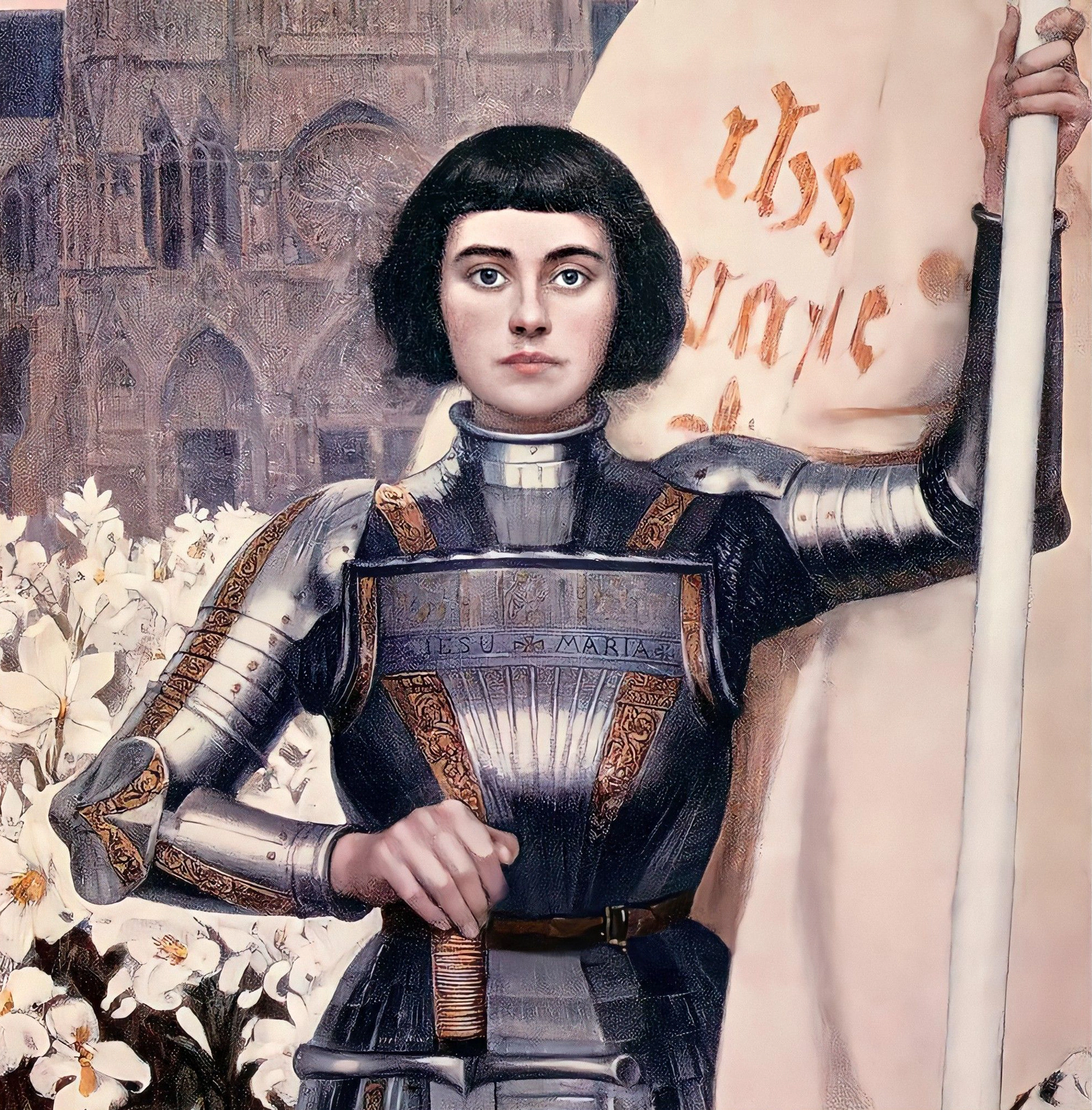
Joan of Arc was born on 1412-01-06 in Domremy, a small village on the edge of the kingdom of France near the Meuse, where loyalties were divided in the later phases of the Hundred Years' War. Her parents, Jacques d'Arc and Isabelle Romee, were peasant farmers with enough standing to hold local responsibilities, and Joan grew up among church feasts, hard seasonal labor, and the constant rumor of raiding. Northern and eastern France had become a patchwork of garrisons and burned fields: English power advanced under the terms of the Treaty of Troyes (1420), while the Burgundian alliance with England deepened civil fracture inside France itself.The village world that formed her was both intensely local and violently international. Refugees passed through Domremy; nearby towns changed hands; familiar roads carried soldiers. In that pressure cooker, piety was not an ornament but a survival language. Joan learned the saints as living patrons and conceived "France" less as an abstraction than as a sacred inheritance threatened by foreign rule and internal betrayal.
Education and Formative Influences
Illiterate by later courtroom standards yet thoroughly catechized, Joan absorbed doctrine through sermon, ritual, and oral culture, and she developed an unusually disciplined devotional life for a rural teenager. Around age 13 she reported hearing voices associated with St. Michael, St. Catherine, and St. Margaret, experiences she interpreted as commands to personal purity and national deliverance; the fear, secrecy, and persistence of these episodes shaped her into a figure who could argue with priests, resist intimidation, and treat inner conviction as a binding summons rather than a private comfort.Career, Major Works, and Turning Points
In 1428-1429 Joan broke through layers of male authority to reach the Dauphin Charles at Chinon, persuading his counselors to test her and then to deploy her as a galvanizing symbol at a moment when the siege of Orleans threatened to collapse the Armagnac cause. Clad in armor and carrying a banner, she joined the relief expedition and helped drive the English from key positions in May 1429, then pressed for a bold campaign that culminated in Charles VII's coronation at Reims in July 1429 - a political sacrament that reasserted legitimacy against the English claim. Her momentum stalled at Paris, and in May 1430 she was captured outside Compiegne by Burgundian forces, sold to the English, and tried at Rouen for heresy and relapse; the proceedings, managed by Pierre Cauchon and shaped by English interests, ended with her execution by burning on 1431-05-30. A rehabilitation trial in 1455-1456 annulled the verdict, and she was canonized in 1920, but her decisive turning point remained the transformation of a peasant girl into a state instrument - and then into a legal target once that instrument became inconvenient.Philosophy, Style, and Themes
Joan's inner life was organized around a severe, almost legal notion of fidelity: conscience as contract, and God as the highest sovereign. In her testimony she refused to let inquisitorial categories trap her into blasphemy or despair, revealing a mind that could be both literal and strategically precise. “If I am not, may God put me there; and if I am, may God so keep me”. The sentence is both prayer and self-defense: she acknowledges uncertainty not as weakness but as reverence, shifting judgment from the court to the divine and protecting the integrity of her experience without pretending omniscience.Her style was direct, martial, and oddly tender toward ordinary people, but implacable toward what she perceived as sin or treason. “I would rather die than do something which I know to be a sin, or to be against God's will”. That absolutism explains both her charisma and her vulnerability - it powered daring action at Orleans and Reims, and it made compromise in Rouen psychologically intolerable. Yet her courage was not reckless bravado; it was a vocational certainty that fused identity with mission. “I am not afraid... I was born to do this”. In Joan, sanctity and nationalism interlocked: the "voices" provided personal governance, while the battlefield offered the arena where inward obedience could become public history.
Legacy and Influence
Joan of Arc endures because she sits at the crossroads of mysticism, propaganda, gender, and state formation: a teenager who forced princes to act, then exposed how power rewrites holiness as criminality. French monarchy later used her as proof of divine favor; republicans later reframed her as a people-made hero; feminists found in her clothing, command, and trial record a case study in policing female authority; writers from Shakespeare to Voltaire to Mark Twain to modern filmmakers returned to her because the archive preserves her voice under pressure. Her life, bounded by 1412-01-06 and 1431-05-30, remains a template for moral courage - and a warning that conviction, once politicized, can be celebrated as miracle and punished as threat by the same society.Our collection contains 13 quotes written by Joan, under the main topics: Motivational - Truth - Justice - Meaning of Life - Faith.
Other people related to Joan: Charles Peguy (Philosopher), Robert Southey (Poet), Jean Anouilh (Playwright), Jacques Rivette (Director), Milla Jovovich (Model), Leelee Sobieski (Actress), Ernest Hello (Critic), Nicole Sullivan (Actress), Luc Besson (Director), Jules Michelet (Historian)
Source / external links