
Joanna Southcott Biography Quotes 18 Report mistakes
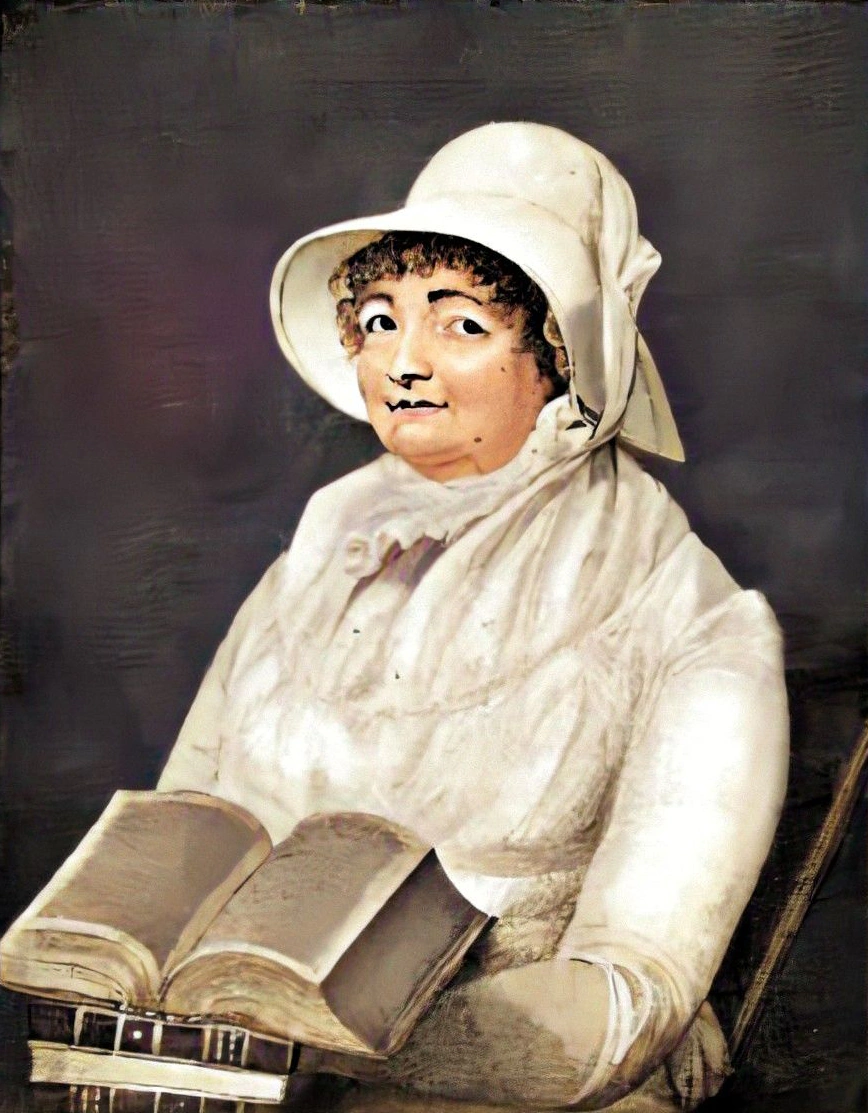
Attr: Wm. Sharp
| 18 Quotes | |
| Occup. | Celebrity |
| From | England |
| Born | April 5, 1750 England |
| Died | October 29, 1814 England |
| Cause | Natural causes |
| Aged | 64 years |
| Cite | |
Citation Formats
APA Style (7th ed.)
Joanna southcott biography, facts and quotes. (2026, February 11). FixQuotes. https://fixquotes.com/authors/joanna-southcott/
Chicago Style
"Joanna Southcott biography, facts and quotes." FixQuotes. February 11, 2026. https://fixquotes.com/authors/joanna-southcott/.
MLA Style (9th ed.)
"Joanna Southcott biography, facts and quotes." FixQuotes, 11 Feb. 2026, https://fixquotes.com/authors/joanna-southcott/. Accessed 5 Mar. 2026.
Early Life and Background
Joanna Southcott was born in rural Devon, England, in 1750 or thereabouts, into a farming family near Exeter. Raised in a world shaped by parish life, seasonal labor, and the pulpit, she worked for years as a domestic servant and later in trades associated with household goods and upholstery. The social and religious climate of her youth was marked by the Methodist revival and the spread of lay preaching, currents that would profoundly influence her spiritual imagination and sense of vocation.Religious Awakening
By the early 1790s Southcott had moved from being a devout participant in evangelical religion to claiming a role as a prophet. She believed she was receiving communications from God and came to identify herself with the Woman Clothed with the Sun from the Book of Revelation. Her assertions were rooted in apocalyptic reading of scripture, particularly Revelation and prophetic passages in Isaiah, and she addressed her writings to a public anxious about war, social upheaval, and the moral direction of the nation. Early pamphlets announced judgment and consolation together, promising a divine intervention that would vindicate the faithful.Prophetic Writings and Mission
Southcott dictated and published a steady stream of tracts and letters, often framed as messages given under inspiration. Among the titles that circulated were warnings to the nation and commentaries on the unfolding of prophecy. She argued that her messages were authenticated by fulfilled signs and challenged church authorities to test her writings fairly. The material, typically printed in small runs and passed hand to hand, sought an audience beyond the pulpit, aiming to gather the scattered faithful into a recognized people prepared for the approaching millennial age.Gathering a Following
From the 1790s onward she won adherents across England, especially among artisans, tradespeople, and some members of the gentry who were drawn to her certainty and biblical reasoning. Her movement became known informally as the Southcottians. She instituted the practice of sealing: followers received written seals declaring them among the 144, 000 of Revelation, a symbolic assurance of protection and election. This act, reserved for those who professed faith and moral reform, created a sense of covenant community that bound her supporters to one another and to her prophetic role.Supporters and Collaborators
Southcott was not a solitary figure; her work was shaped by allies who copied, printed, and defended her writings. Ann Underwood served as a close assistant and scribe, helping to systematize and preserve the mass of dictated material. The engraver William Sharp, a prominent figure in the London art world, became one of her best-known advocates, lending credibility and resources to the cause. Clergyman Thomas Foley engaged seriously with her claims and correspondence, representing the strand of Anglican interest that, while not mainstream, gave her ideas a hearing. In her final years she also drew patronage from sympathetic lay believers who helped finance publication and distribution.Conflict, Testing, and Public Controversy
Church officials, physicians, and many printers and booksellers viewed her with skepticism or hostility. She repeatedly challenged bishops to examine her writings openly, appealing to a fair test by learned clergy rather than dismissal by rumor. Her insistence on scriptural testing of prophecy placed her at odds with ecclesiastical caution. As her profile rose, so did the controversy: newspapers and pamphleteers debated her authenticity, sometimes with ridicule, sometimes with guarded respect for the sincerity of her faith and the earnestness of her followers.Move to London and National Notoriety
By the early nineteenth century Southcott had shifted her base of operations to London, where the print trade and the density of religious societies amplified her reach. The capital, already alive with reformist energies and millenarian speculation, made her a national figure. Her prophecies began to intersect with wider anxieties about war with France, political unrest, and the prospects of moral regeneration. The movement spread through correspondence networks, meeting rooms, and private homes where her texts were read aloud and discussed.Shiloh and the Final Years
In 1814 Southcott announced that, despite her age, she was to bear a child named Shiloh, a messianic figure whose arrival would inaugurate a new dispensation. The claim electrified supporters and critics alike. Physicians were drawn into the public debate: Dr. Richard Reece examined her and issued opinions that questioned the physical possibility of the pregnancy. Nevertheless, Southcott maintained her conviction and continued to prepare her circle for the promised birth. The episode, intensely scrutinized by the press, epitomized the tension between empirical testing and prophetic assertion that had marked her career.Death and Immediate Aftermath
Joanna Southcott died in late 1814. After her death, examinations did not confirm a pregnancy, a result widely reported and used by critics to discredit her. Her followers, however, distinguished between the fallibility of human understanding and the reality of divine promises, and many continued to cherish her writings as a key to the times. They also preserved a sealed box associated with her, said to contain prophecies and tokens, with instructions that it be opened only in a moment of grave national peril and in the presence of 24 bishops of the Church of England.The Sealed Box and Later Movements
The legend of Southcott s box persisted into the twentieth century. There were attempts to identify and open a container purported to be hers, but followers contended that these efforts did not meet the conditions she had stipulated and that the objects produced were not authentic. Separate but related religious groups drew on her legacy, most notably the Panacea Society in Bedford, which campaigned for the box to be opened by bishops as a remedy for national ills. These later movements kept Southcott s name alive, arguing that her mission had been misunderstood and remained unfinished.Ideas and Influence
Southcott fused evangelical piety with apocalyptic interpretation, insisting that ordinary people could discern the signs of the times through scripture, prayer, and moral reform. She offered dignity to those excluded from ecclesiastical authority by locating spiritual authority in prophetic vocation and communal sealing. Her critics saw delusion; her followers saw a providential challenge to complacent religion. The debates around her anticipated later disputes over the boundary between charismatic inspiration and institutional oversight, and between personal conviction and public verification.Reputation and Historical Assessment
In her lifetime Joanna Southcott became a national curiosity and, to her adherents, a messenger sent for a turbulent age. William Sharp s advocacy and Thomas Foley s engagement ensured that her case could not be dismissed as mere eccentricity, while Dr. Richard Reece s examinations gave her story a clinical, public dimension unusual for religious movements of the time. Historians now situate her among the lay prophets and visionaries who, in the wake of revivalism and political revolution, sought scriptural meaning in contemporary events. Whether viewed as a mistaken enthusiast, a sincere visionary, or a social phenomenon, she stands as one of the most striking religious figures in England at the turn of the nineteenth century.Our collection contains 18 quotes written by Joanna, under the main topics: Truth - Music - Writing - Knowledge - Faith.
Source / external links