
Joe Biden Biography Quotes 22 Report mistakes
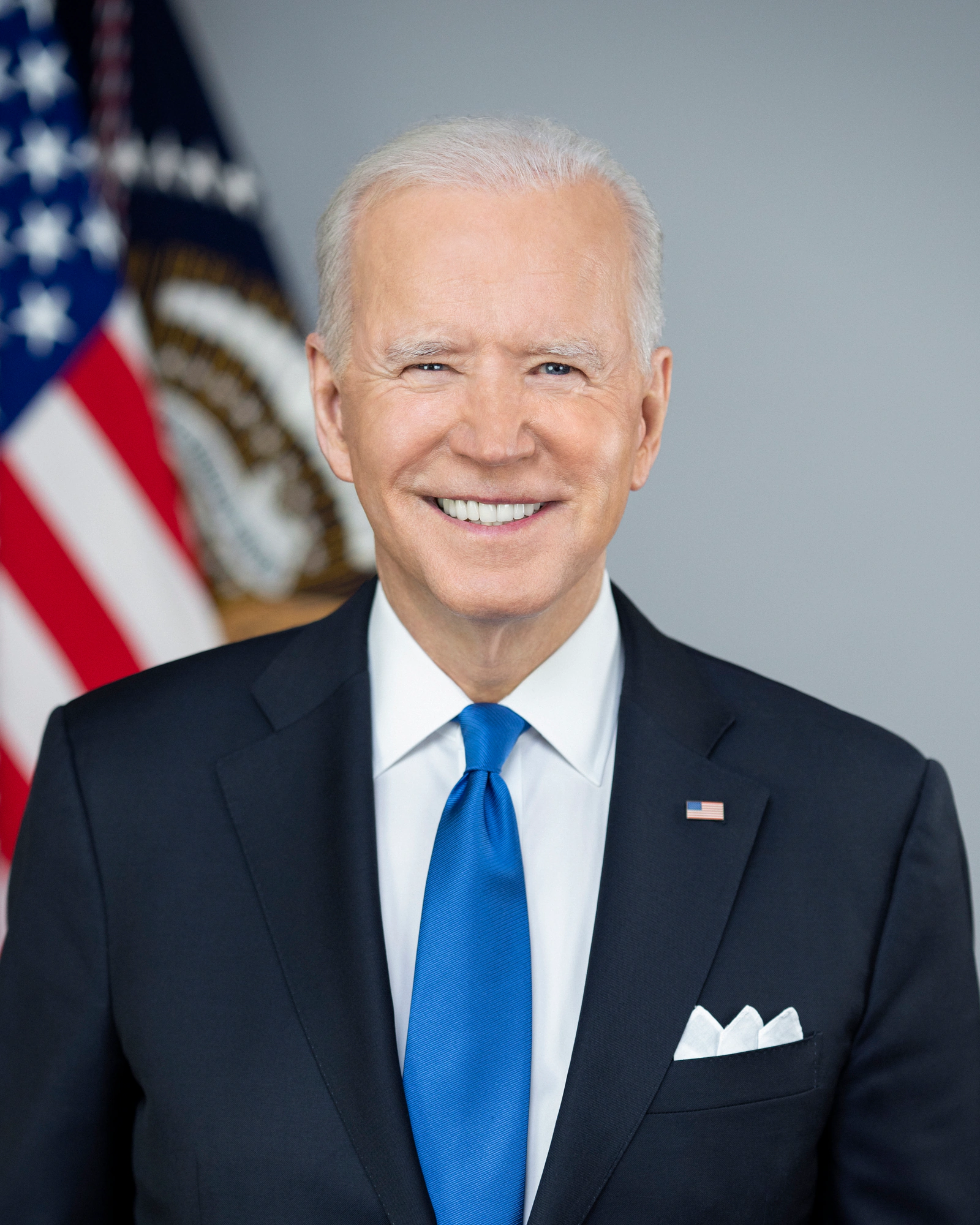
Attr: Attr.: Adam Schultz
| 22 Quotes | |
| Born as | Joseph Robinette Biden Jr. |
| Occup. | President |
| From | USA |
| Born | November 20, 1942 Scranton, Pennsylvania, USA |
| Age | 83 years |
| Cite | |
Citation Formats
APA Style (7th ed.)
Joe biden biography, facts and quotes. (2026, March 2). FixQuotes. https://fixquotes.com/authors/joe-biden/
Chicago Style
"Joe Biden biography, facts and quotes." FixQuotes. March 2, 2026. https://fixquotes.com/authors/joe-biden/.
MLA Style (9th ed.)
"Joe Biden biography, facts and quotes." FixQuotes, 2 Mar. 2026, https://fixquotes.com/authors/joe-biden/. Accessed 27 Mar. 2026.
Early Life and Background
Joseph Robinette Biden Jr. was born on November 20, 1942, in Scranton, Pennsylvania, the first of four children of Joseph R. Biden Sr. and Catherine Eugenia "Jean" Finnegan. Scranton was a Catholic, union-shaped city still shadowed by the Depression and wartime sacrifice, and Biden later treated it as an origin story about dignity through work and the humiliations of economic insecurity. His family moved in the 1950s to Delaware, where the promise of suburbia sat alongside the anxieties of slipping status.Biden carried a private burden into public life: a childhood stutter that forced him to rehearse speech, memorize lines, and will himself through moments of shame. That struggle helped produce the traits that became both strength and vulnerability - an instinct to connect emotionally, a tolerance for other people's pain, and a sometimes over-personal style that could read as intimacy or intrusion depending on the moment. In adulthood, repeated bereavement would harden this emotional reflex into a political identity built around grief, endurance, and the idea that suffering can be metabolized into service.
Education and Formative Influences
He attended Archmere Academy in Claymont, Delaware, then the University of Delaware (BA, 1965), and Syracuse University College of Law (JD, 1968). Biden came of age during the Cold War and the civil rights revolution, when politics became a moral arena rather than merely a career. Catholic social teaching, Delaware's border-state pragmatism, and the era's televised clashes over war and rights shaped him into a Democrat whose instincts ran to the mainstream but whose rhetoric leaned on empathy, obligation, and national purpose.Career, Major Works, and Turning Points
After practicing law and serving on the New Castle County Council, Biden won election to the US Senate from Delaware in 1972 at age 29. Weeks later, his wife Neilia and daughter Naomi were killed in a car crash; his sons Beau and Hunter were badly injured, and he began commuting by train from Wilmington, a ritual that reinforced his "working Amtrak" persona. In the Senate (1973-2009), he rose through the Judiciary Committee and later chaired it, helping shape consequential fights over crime policy and Supreme Court nominations, including the 1991 Clarence Thomas hearings; he also became a foreign policy fixture, chairing the Foreign Relations Committee and engaging the Balkans, NATO, and post-Cold War strategy. As Barack Obama's vice president (2009-2017), he was tasked with legislative dealmaking and the 2009 Recovery Act, and he became a prominent voice on Iraq and Afghanistan debates. Biden returned to presidential politics after Beau Biden's death in 2015, then won the 2020 election amid the COVID-19 pandemic and political polarization, becoming the 46th president in 2021 and pushing major domestic spending, infrastructure, and industrial policy while steering US support for Ukraine after Russia's 2022 invasion.Philosophy, Style, and Themes
Biden's political psychology is anchored in a conviction that government is not an abstract machine but a tool to spare families humiliation and loss. His emphasis on economic stabilization over austerity reflects a belief that state capacity is a form of national self-rescue: “Now, people when I say that look at me and say, 'What are you talking about, Joe? You're telling me we have to go spend money to keep from going bankrupt?' The answer is yes, that's what I'm telling you”. This is less a technocrat's formula than a moral wager - that failing to act is a choice with casualties, and that legitimacy comes from protecting ordinary life when markets and institutions wobble.His style is relational, sometimes disarmingly so: he argues from lived feeling as much as constitutional architecture, and he often tests policy by asking what it does to parents, children, and the bereaved. “Just talk to me as a father - not what the Constitution says. What do you feel?” That line captures a defining habit: converting political argument into a scene of private conscience, with himself positioned as witness and confessor. Beneath it lies a hard-earned realism about limits and tradeoffs - “Life is a matter of really tough choices”. - which helps explain his centrist bargaining reputation as well as his periodic willingness, as president, to wager big on spending, alliances, and industrial policy when he judges the costs of inaction to be worse.
Legacy and Influence
Biden's long arc - senator of the post-Vietnam era, vice president during the Great Recession, president during pandemic aftershocks and renewed great-power conflict - makes him a bridge figure between Democratic coalition politics of the late 20th century and the interventionist, labor-tinged economic nationalism of the 2020s. Admirers credit him with restoring conventional governance norms after the Trump years, passing large-scale infrastructure and climate-linked investments, and rallying alliances against Russian aggression; critics point to the burdens of age, Afghanistan's chaotic 2021 withdrawal, and a record that includes hard-edged 1990s crime policy and contested moments in confirmation politics. Whatever final judgments, his enduring influence rests on a distinct public ethic: that leadership is measured not only by ideology or eloquence, but by an almost stubborn insistence that the state can, and must, show up for people when their lives break.Our collection contains 22 quotes written by Joe, under the main topics: Justice - Freedom - Hope - Kindness - Health.
Other people related to Joe: Jay Carney (Public Servant), Christine O'Donnell (Politician), Anita Dunn (Public Servant), Brian Higgins (Politician), Jennifer M. Granholm (Politician), Jeff Flake (Politician), Randi Weingarten (American), Anthony Kennedy (Judge), Tom Vilsack (Politician), Peter Orszag (Economist)
Frequently Asked Questions
- Joe Biden 2021: In 2021, he was inaugurated as the 46th President of the United States on January 20, 2021.
- Joe Biden 2010: He served as Vice President of the United States in 2010 under President Barack Obama. During that year, he continued his role as a senior administration official and adviser.
- Joe Biden 2008: He was the Democratic vice-presidential nominee in 2008 and ran with Barack Obama. After the election, he became Vice President of the United States in January 2009.
- Joe Biden, wife: He is married to Jill Biden, whom he wed on June 17, 1977. His first wife, Neilia Hunter Biden, died in a car accident in 1972.
- Joe Biden young: He was born November 20, 1942, in Scranton, Pennsylvania, and grew up in Delaware. He earned a bachelor’s degree from the University of Delaware and a law degree from Syracuse University.
- Joe Biden health: His health has been discussed publicly due to his age, and the White House has released physician summaries during his presidency. In 1988, he underwent surgery for two brain aneurysms.
- How old is Joe Biden? He is 83 years old
Source / external links